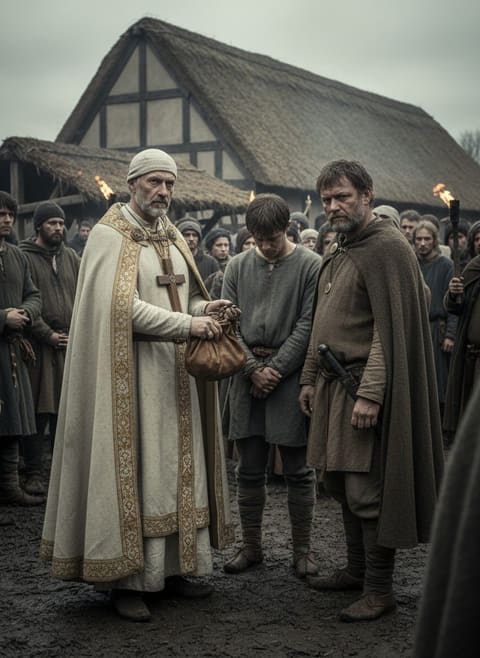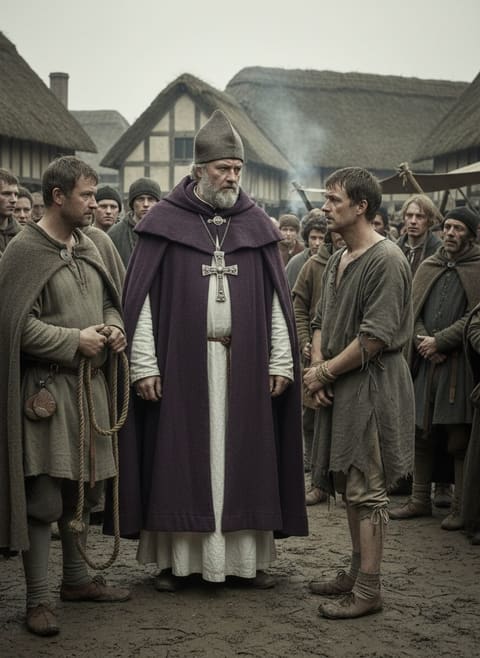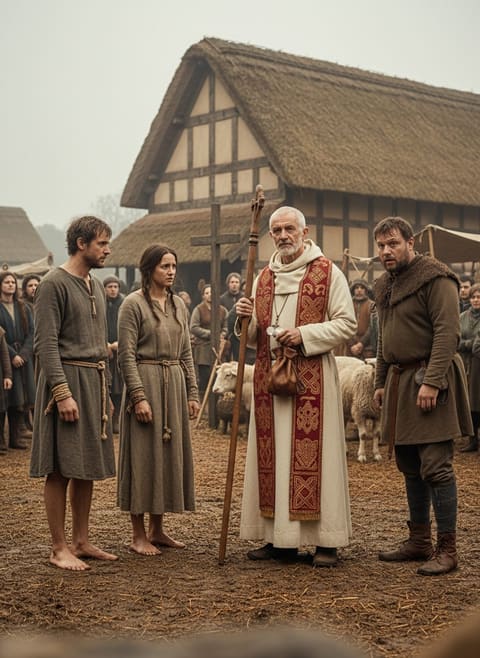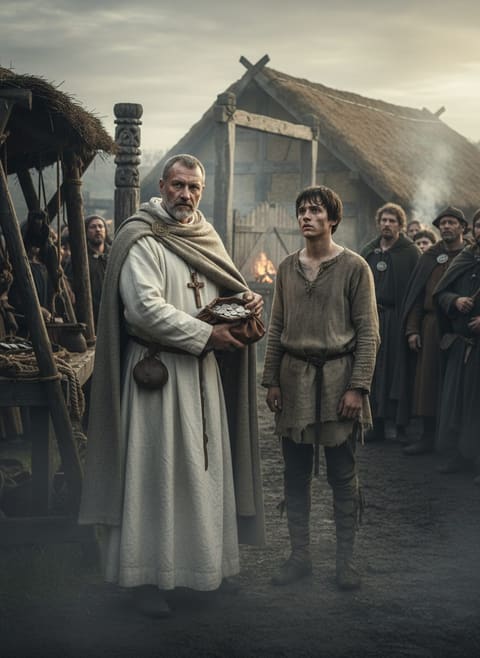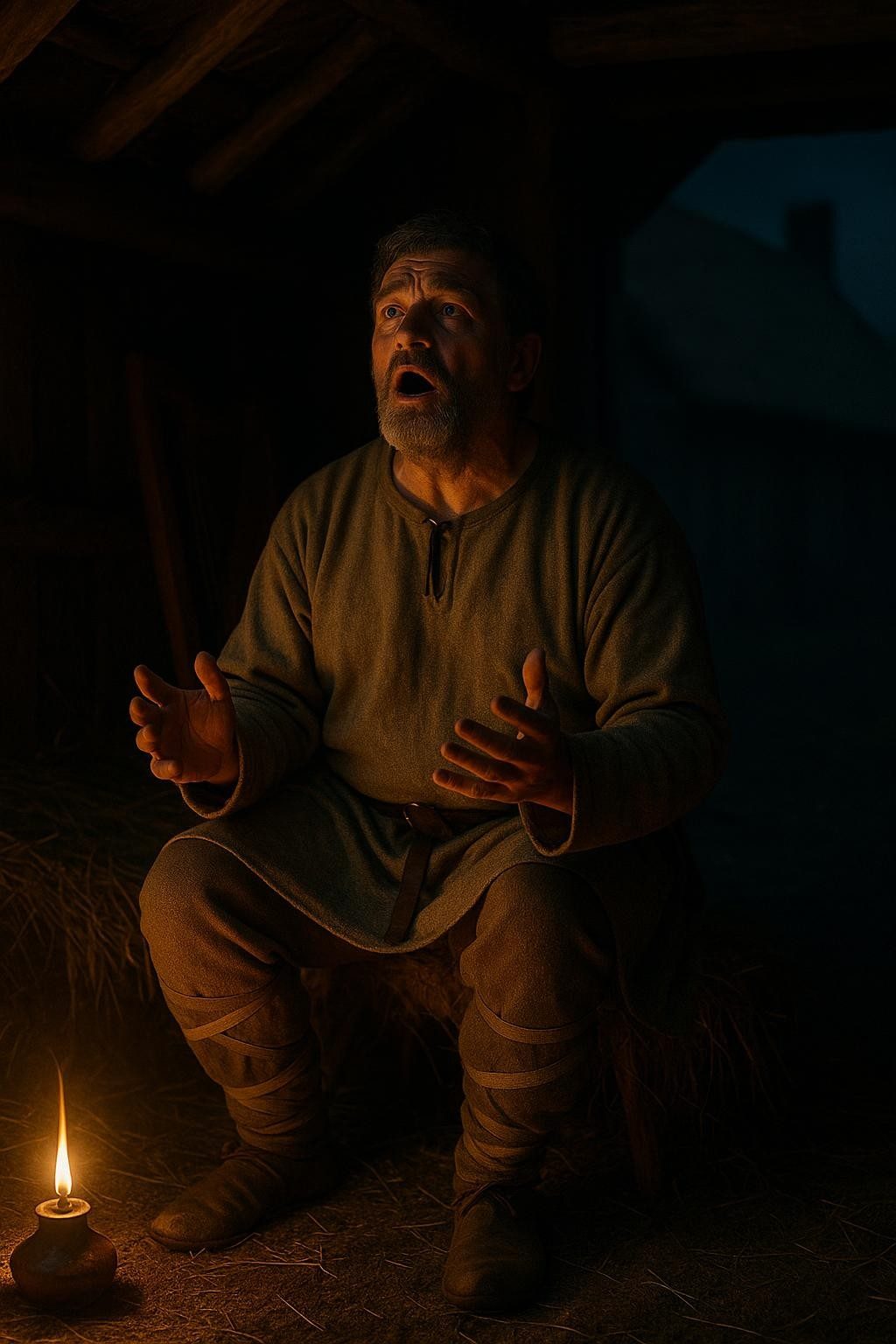
The wind whipped furiously across the northern woods of Whitby, its chilling gusts racing down from the clifftops, conspiring with the sea to etch the landscape with its raw vitality. The night was thickly shrouded, cloaked in a mantle of stars, their ancient light trickling through the brisk autumn air. Near the abbey, the lowly flicker of hearth fires painted a warm glow against the solid, weathered stone of the hall. This was an evening not unlike many others in the turbulent year of 680 AD — an era pregnant with the clash of burgeoning Christian ideals against the ancient pagan beliefs of yore. Yet what was to unfold in the strangeness of this night would pivot the spiritual axis of an entire culture.
The Cowherd's Lament
Caedmon, a humble stable hand at the prominent Whitby Abbey, wore the burden of a peculiar discord. Within the teeming life of the abbey, he was often viewed as an outsider, not for lack of devotion, but for the simple, shameful fact that he could not sing. In the spirit of merriment during frequent feasts, the sailing notes of a harp would beckon each guest to lend their voice in song — a custom embracing both pagan and Christian hearts alike. Caedmon fled these feasts, overwhelmed by silence that echoed his inability.
This averageness of song was punctuated by an extraordinary vision. In his humble lodging, one night, as the culture of both cross and sword lay stitched against the dark, he dreamt a dream so vivid, it lit a torch in the stillness of his soul. A voice — not one of human timbre but of ethereal grace — enjoined him to sing. "Sing," it commanded, "about the creation of all things." Caedmon, who had never felt the fervor of song warm his tongue, found words weaving of their own into a hymn of origins.
The following morning, Caedmon, akin to a prophet in his newfound wisdom, approached Abbess Hilda, Whitby's revered spiritual leader. Hilda was known not just as an exemplar of monastic discipline, but also as a custodian of learning and song. When Caedmon recounted his vision and sang his hymn, accompanied by the slight tremor of uncertain novelty, Hilda listened, not with skepticism, but with a reverence reserved for the miraculous. She recognized the touch of divine providence, commissioning Caedmon to steward his newfound gift of song amid the abbey. In that moment, an era bereft of its own poetic voice witnessed the birth of its first poet.
Read next: The Day a Saxon Abbess Stood Between a King and His Rage
Echoes in the Hall
The change wrought by Caedmon’s transformation was like a seed taking root in the fertile soil of a transitioning culture. As his song spread through the stone corridors of Whitby, a new narrative began to unfurl. It was a narrative that melded the oral tradition of epic poetry with the burgeoning Christian faith that was reshaping the spiritual geography of Anglo-Saxon England.
His verses, simple yet transcendental, became instant canon amongst the faithful and beyond. The words touched a deep chord, expressing themes of creation, existence, and divine beauty — ideas both ancient and revolutionary in their dissemination through the aegis of Christianity. In their language, these poems bore the melodic remnants of pagan oral storytelling, but their spirit sung brightly of Christian ideals. To the ears of the 7th-century Anglo-Saxon, bound by rhythms of the tribally geeing world, there was a familiar comfort in the cadence — a whispered nostalgia even as new faith roots took hold.
Caedmon's transformation was not just a solitary miracle but marked a cultural shift. The fact that a humble cowherd became the mouthpiece of this divine revelation blurred societal lines and emphasized the power of divine inspiration over earthly status. His journey from the margin to the center of monastic life reverberated through the communities, challenging the rigid hierarchies with a new paradigm of spiritual equality.
Read next: The Day a Small Island's Language Conquered the World
The Unseen Legacy
If history is a tapestry, Caedmon’s thread weaves a vibrant pattern of unlikely influence. His verses, though only fragments remain today, became a cornerstone for later Christian poetry in English. Bede, the venerable monk and scholar, immortalized Caedmon's story in his "Ecclesiastical History of the English People," offering an invaluable glance into the past through this poetic prism.
More than just a tale of divine revelation, Caedmon’s journey invites us to consider the transformative power of latent potential within us all. His story shines as an early beacon of the synthesis of pagan tradition with new Christian ideology — a merging that characterized much of the transition period across Northern Europe. In the halls of Whitby, where tides scourged relentless under winter skies and monks chanted Gregorian hymns, Caedmon left an indelible mark, one unnoticed by passerby eyes yet undeniably profound in the echoes of Anglo-Saxon intellectual and artistic history.
In our chronicles of history where battles, reigns, and politics often reign supreme, the simple yet profound tale of Caedmon beckons us to recall the silent, overlooked transformations that occur not through force, but through vision and voice. It is these stories that ripple outward in unseen ways, shaping not just the narrative of a people but the heartbeats of future generations.