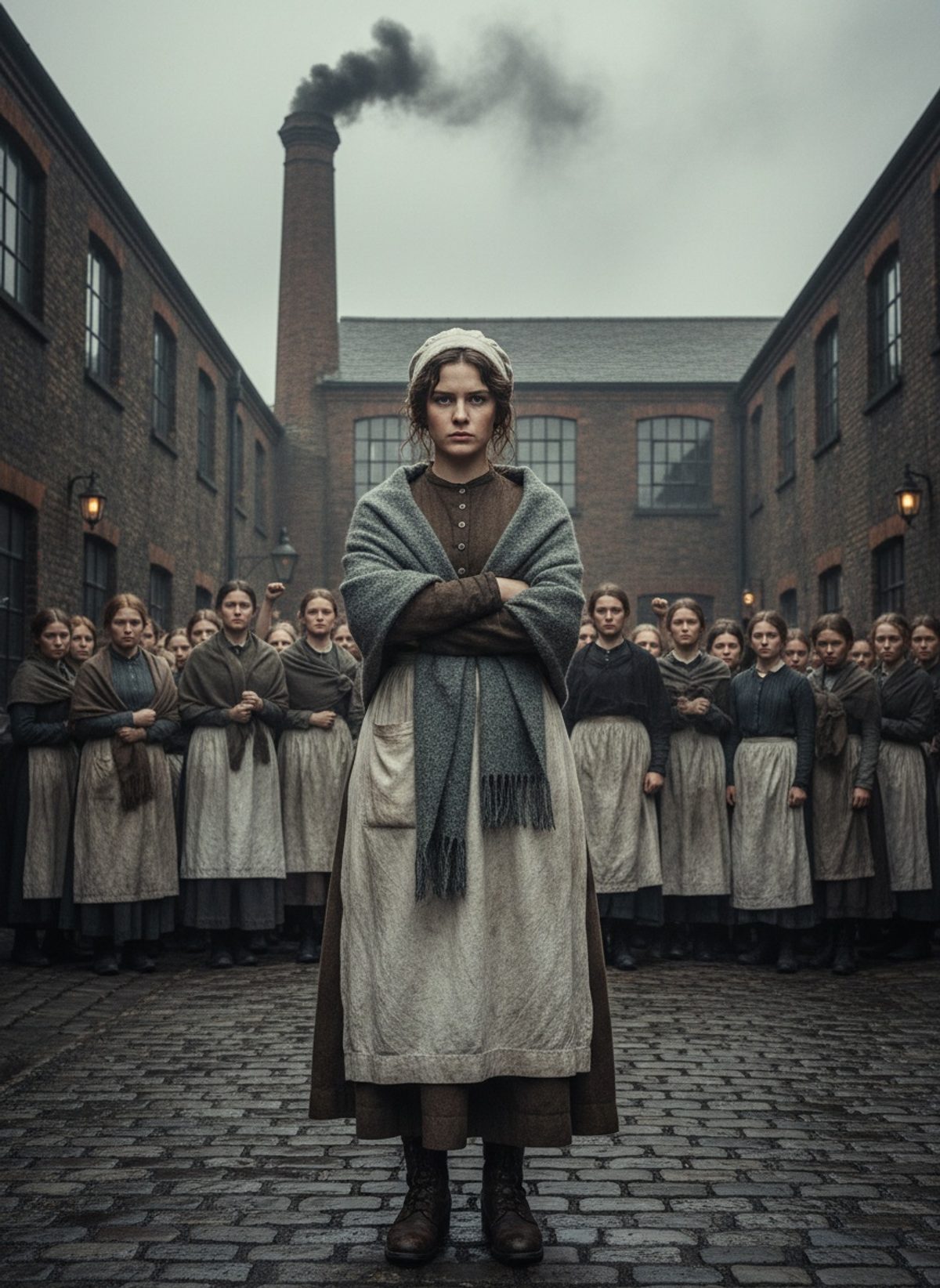
The factory floor buzzed with the clatter of machinery, the air thick with the acrid scent of phosphorus. Mary gritted her teeth as she wrapped her apron tighter, her hands nimble but weary from a grueling fourteen-hour shift. The foreman’s eyes bore down on the girls with a silent warning not to falter, not to waste a single matchstick. But then, something extraordinary cut through the oppressive atmosphere: the scrape of a stool against the floor. Mary rose from her station, a boldness in her eyes that startled her peers, and for a moment, all the clanking and whirring ceased.
A Flicker in the Shadows
The match girls of Bryant and May were no strangers to adversity. The year was 1888 in London—a world alive with the hum of industry and progress, yet shrouded in the haze of inequality. Teenage girls, many in their early teens, labored under harsh conditions that often seemed insurmountable. The factory, like many of its time, bore the stench of injustice. Fines were levied for the pettiest of offenses—docked wages for speaking, diminished pay for dropped matchsticks—creating a cycle of exploitation that was hard to escape.
Phosphorus necrosis, known grimly as “phossy jaw,” lurked like a specter among them, its telltale glow an ominous reminder of the risks they bore for a pittance. Their plight was largely invisible to those outside the forge walls, their struggles muted behind the clamor of machines. It was almost expected that the silence would endure, but beneath the surface, a quiet defiance was kindling.
Sparks of Rebellion
The tinder that ignited the rebellion was not a single grievance but a collection, a litany of injustices that accumulated over time like renit talus. On that oppressively hot day, Mary’s defiance was a whistle in the colliery—a signal that the limits of endurance were breached. Her courage was contagious. She was soon joined by another seamstress, then two more, until the echoes of footsteps resounded against the factory walls as scores of workers joined a march to the factory gates.
Read next: The Day a Surgeon's Son Chose Death Over Silence
This spontaneous walkout was unprecedented, not least because it was orchestrated by young girls who were dismissed by society at large. Yet, fueled by a righteous indignation, the tide of protest surged and could not be ignored. Londoners watched in fascination as 1,400 voices coalesced into a singular, insistent demand for dignity. The streets hummed with whispers of the audacious strike—a phenomenon not only of industrial protest but of social reckoning.
Britain's Eyes Turned
As news of the strike spread, sympathy poured in from unexpected quarters. The event resonated with those who had faced their own struggles against the juggernaut of Victorian capitalism. With the public’s attention fixed on their plight, the match girls’ situation was no longer confined to the factory floor. Papers took up the cause, shining light on the grim realities the girls faced. For the first time, the names Mary and others like her took on a significance that could not be easily dismissed.
The girls found champions among the more enlightened members of society, those who recognized the deeper implications of their fight. Reforms in labor practices were becoming harder to resist, and the disruption caused by the strike began to peel back the layers of indifference that clothed much of Victorian industrial policy. The march of progress, it seemed, was beginning to slow and turn.
The Clamor for Change
The resolve of the match girls forged a fairer landscape for workers across Britain. The industrial monoliths, once thought invincible, found their practices under scrutiny and their reputations in jeopardy. A landmark resolution was achieved as their demands were eventually met—improved working conditions and the reduction of oppressive fines marked a new chapter in labor history.
Read next: The Day a Chimney Sweep's Son Shamed a Whole Parliament
The movement had not just secured tangible improvements for the women of Bryant and May, but had planted the seeds for broader labor reforms. The match girls were no longer a footnote in an industrial narrative; they were torchbearers in the march toward equitable labor rights. Their audacity on that summer’s day challenged notions of class and gender, paving paths that were heretofore uncharted.
Illuminating Lessons
The events of that summer in 1888 speak to us even today with clarity and purpose. Beyond the Victorian frame, the seamstresses’ courage illuminated the enduring struggle for fair treatment and labor justice. Their walkout refused the status quo and demanded their humanity be recognized amidst the dehumanizing clatter of progress. The resonance of their voices contributed not just to their time but across future decades to echo the fundamental tenets of dignity and justice.
In their determination, these girls—armed with nothing but their voices—stopped not just a factory, but stirred a nation. Their defiance was their legacy—a spark that remains unquenched, lighting the way for others to follow. The match girls taught us that change often comes from unexpected places, and that sometimes, all it takes is one voice to ignite a revolution.