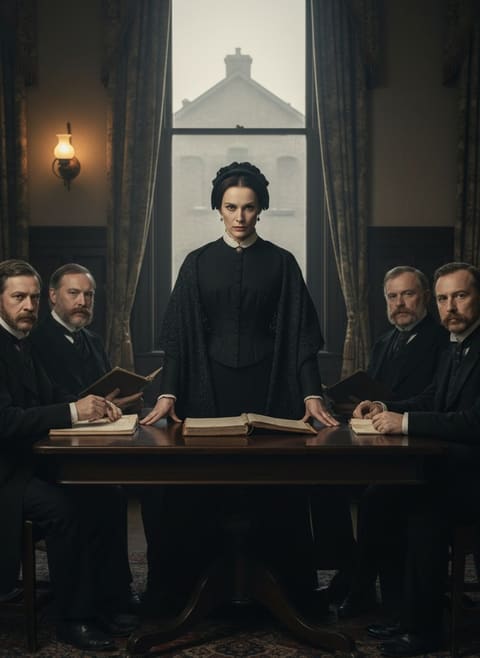
John Stuart Mill is not a household name. But his legacy shaped a movement that changed Britain forever.
The Unexpected Champion
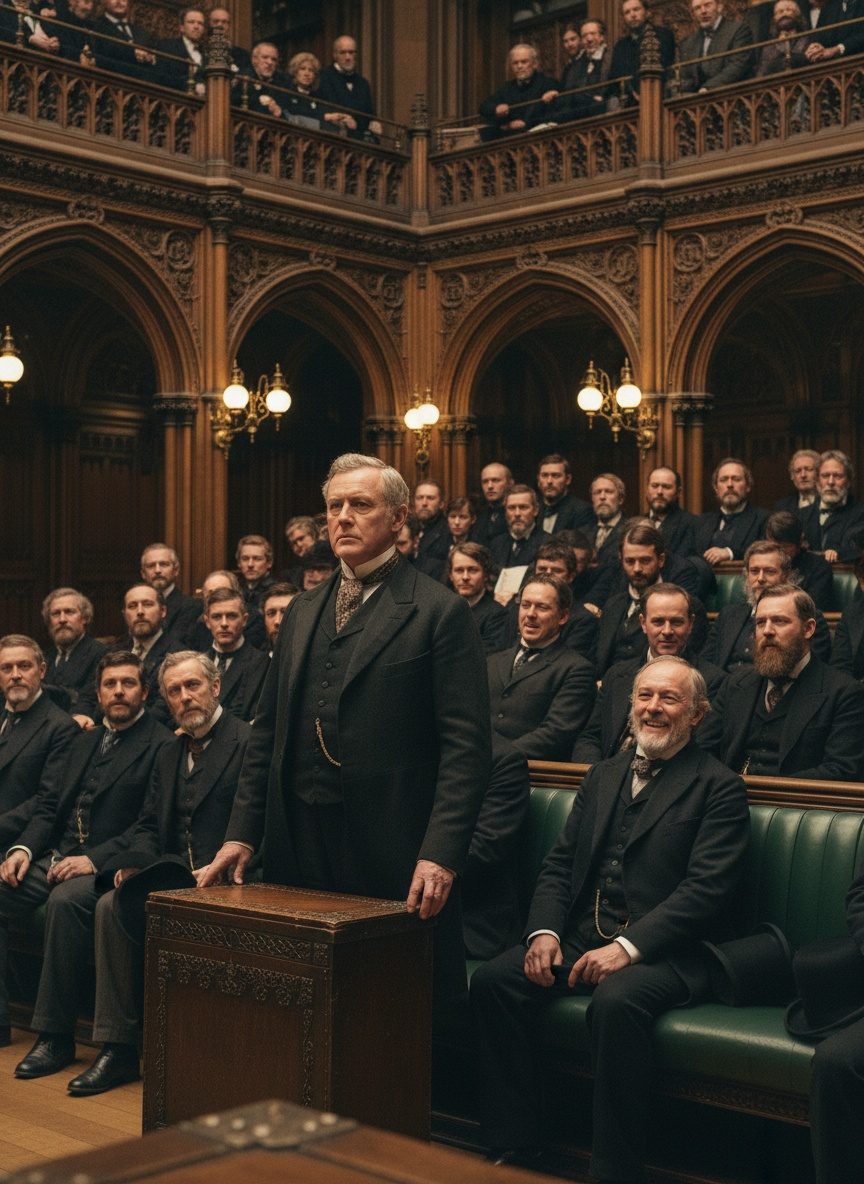
In the storied chambers of the House of Commons on a spring day in May 1867, the usual flurry of debates echoed off the gothic walls. Among the seasoned rhetoricians and the titans of parliamentary discourse, one Member of Parliament stood apart—not for his commanding presence, but for his quiet demeanor. John Stuart Mill, known for his philosophical treatises rather than his political bravado, rose from his seat with a purpose that belied his usual reserve. The air was filled with the rustle of papers and the murmur of conversations converging on the matter of the hour: the Reform Bill of 1867, which aimed to amend who within the British populace could cast a vote.
Few anticipated that Mill, an intellectual giant but a political novice, was about to cast the first stone in the turbulent waters of women’s suffrage. As his voice filled the chamber, a hushed curiosity followed. Would this cerebral philosopher translate his theoretical ideals into the pragmatic realm of politics?
A Proposal That Prompted Laughter
The session wore on, and as MPs jockeyed for prominence, Mill made a strategic move. With unwavering determination, he proposed an amendment that was as radical as it was unexpected: extending the vote to women. Surely, it was a jest? For a moment, the air was stiff with disbelief before the chamber erupted in laughter. The notion seemed an absurdity—an audacious diversion from the pressing issues of the day.
Read next: The Day a Surgeon's Son Chose Death Over Silence
Women’s suffrage was an embryonic cause, barely whispered in political corridors, let alone articulated on the floor of the House. For centuries, the political process was an exclusively male preserve; the very idea of enfranchising women seemed to many a social impossibility. Yet, Mill’s proposition, though not wholly unexpected for those familiar with his progressive philosophies, caught many of his fellow MPs off guard. The amused jeers and dismissive gestures could not drown the gravity of what was happening: for the first time, the entrenched belief in a male-only electorate was being formally challenged.
The Unexpected Allies
Even as mirthful chortles ricocheted off the rafters, something more profound than jest was spreading through the Commons. Inspired by Mill’s courage or perhaps driven by their own latent convictions, seventy-three MPs defied expectations and aligned themselves with Mill. This was more than a mere footnote in the annals of parliamentary debate—it was an unprecedented show of support that sent ripples through Victorian society.
Their vote did not pivot on immediate success—heaven knows the opposition was substantial—but it established an embryonic coalition, a band of forward-thinkers not afraid to endorse a future where women and men stood side by side as equals in the polling booth. Slowly but surely, the notion that women should have a say in the governance of their nation took hold, planting seeds that would eventually flourish into the groundswell of the suffrage movement.
Stoking the Flames of Reform
Despite Mill’s amendment ultimately failing, its introduction was a catalyst, igniting discussions that could no longer be ignored. The fact that Mill dared to encapsulate in a formal proposal what was already a simmering societal question was significant unto itself. The wider suffrage movement began to find its footing, emboldened by this very public challenge to the status quo.
Read next: The Day a Chimney Sweep's Son Shamed a Whole Parliament
Mill’s intervention did more than spotlight gender inequality; it brought to the fore the glaring absurdities of a system resistant to change. The amendment served as a declaration, resonating beyond the hallowed halls of Westminster into the drawing rooms and public squares of Britain. Women's suffrage organizations gained momentum, and the fires of reform were kindled in earnest across the nation.
A Legacy of Inquisitive Defiance
Stepping into the future, Mill's moment in the Commons was remembered less for the defeat of his amendment, and more for its daring initiation. That spring day in 1867 was not an isolated incident but a harbinger of the battles to come. Women's suffrage, while not realized during Mill's time, would eventually triumph thanks to the persistent efforts of suffragists who drew inspiration from pioneers like him.
For modern Britain, the story of Mill and his queery defiance stands as a reminder of the influence that an individual—armed with conviction—can wield. In a room of skeptics, he found allies and created a nucleus for change. John Stuart Mill reminds us that innovation often emerges from whispers, escalating to roars that can reshape societies. The butterflies he released that day flapped towards winds of change, illustrating that even the shyest voices can echo loudly across time.