August 4, 1347. The air hung heavy with desperation.
The Siege of Starvation
For eleven grueling months, the city of Calais, crouching on the edge of France, had been suffocated by the relentless siege ordered by Edward III of England. The Hundred Years' War, a brutal struggle over the rightful claim to the French throne, had escalated into a merciless dance of attrition. Calais, once a thriving port city, was now reduced to a skeletal shadow of its former self, the lifeblood of trade and sustenance cruelly cut off by the English army.
Inside the walls, the situation was dire. The townspeople had long since consumed their livestock; the horses and dogs had disappeared from the streets, followed by the rats that scuttled in the shadows. Hunger gnawed at their insides like a ravenous beast, leaving them hollow-eyed and desperate. Disease, an uninvited and awful companion to malnourishment, began to claim the weak and weary. The streets echoed with the cries of children, and the silence of despair resided in every shadowed corner.
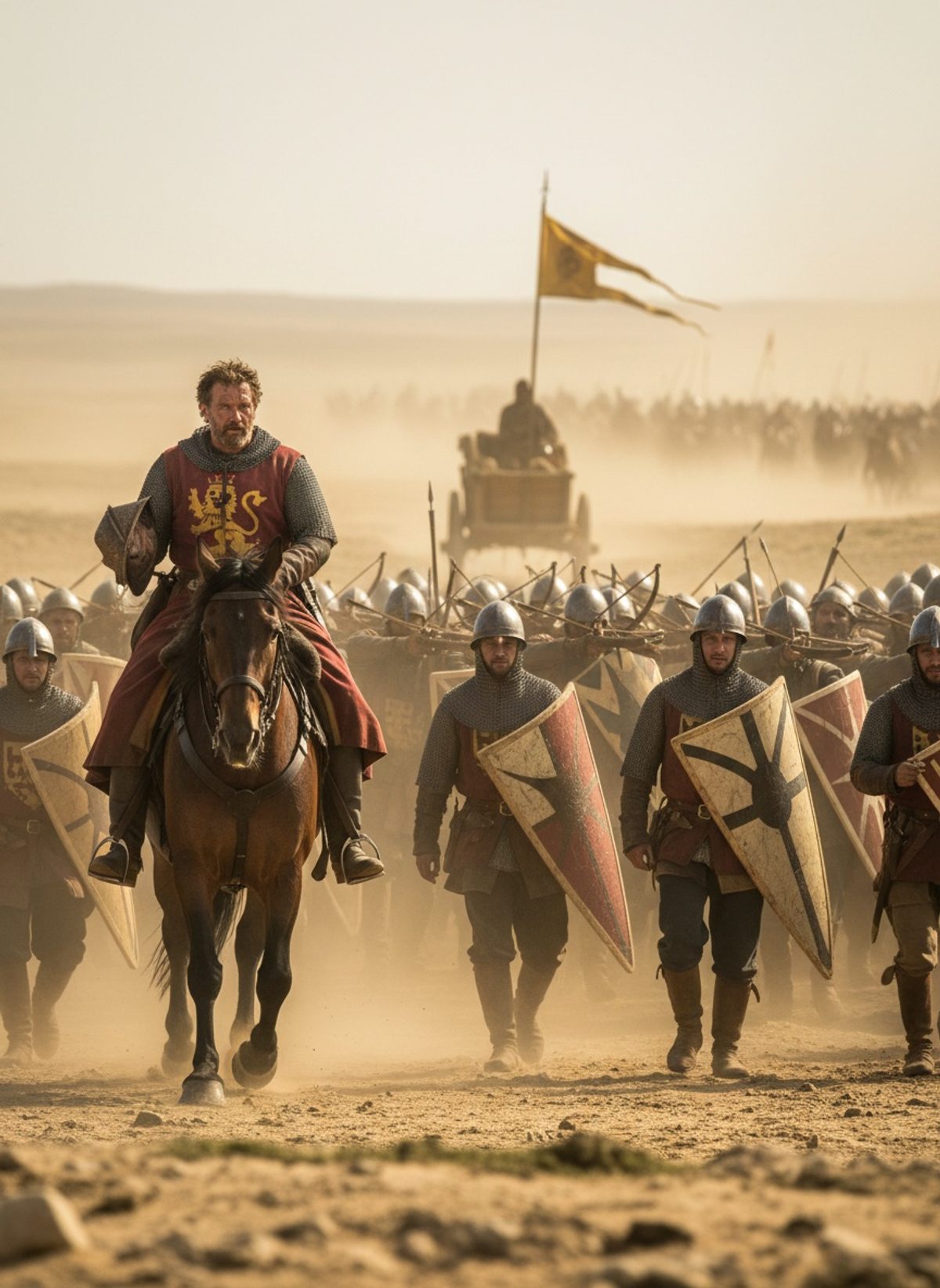
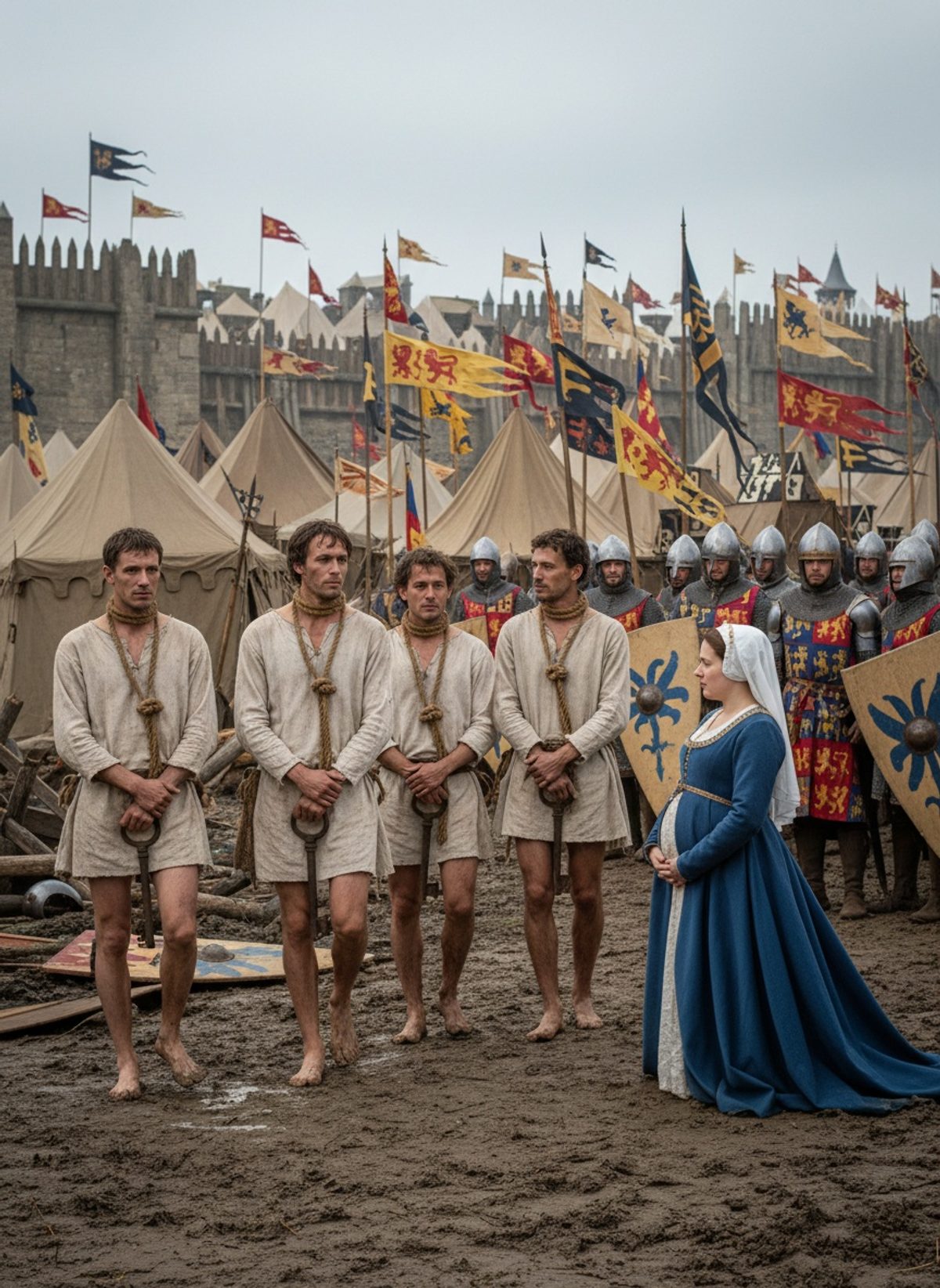
Edward III’s forces, undeterred by the passage of time, remained steadfast at the city gates, their camps sprawling as the siege engines loomed menacingly against the sky. The English king, known for his flair for imposing theatricality in warfare, now demanded a spectacle of submission, one that would send tremors of fear and awe throughout France. He offered the starving populace a grim choice: their survival in exchange for the execution of six of their leading citizens.
Read next: The Day a Bishop Knelt and Faced Down an English King
The Walk to Death
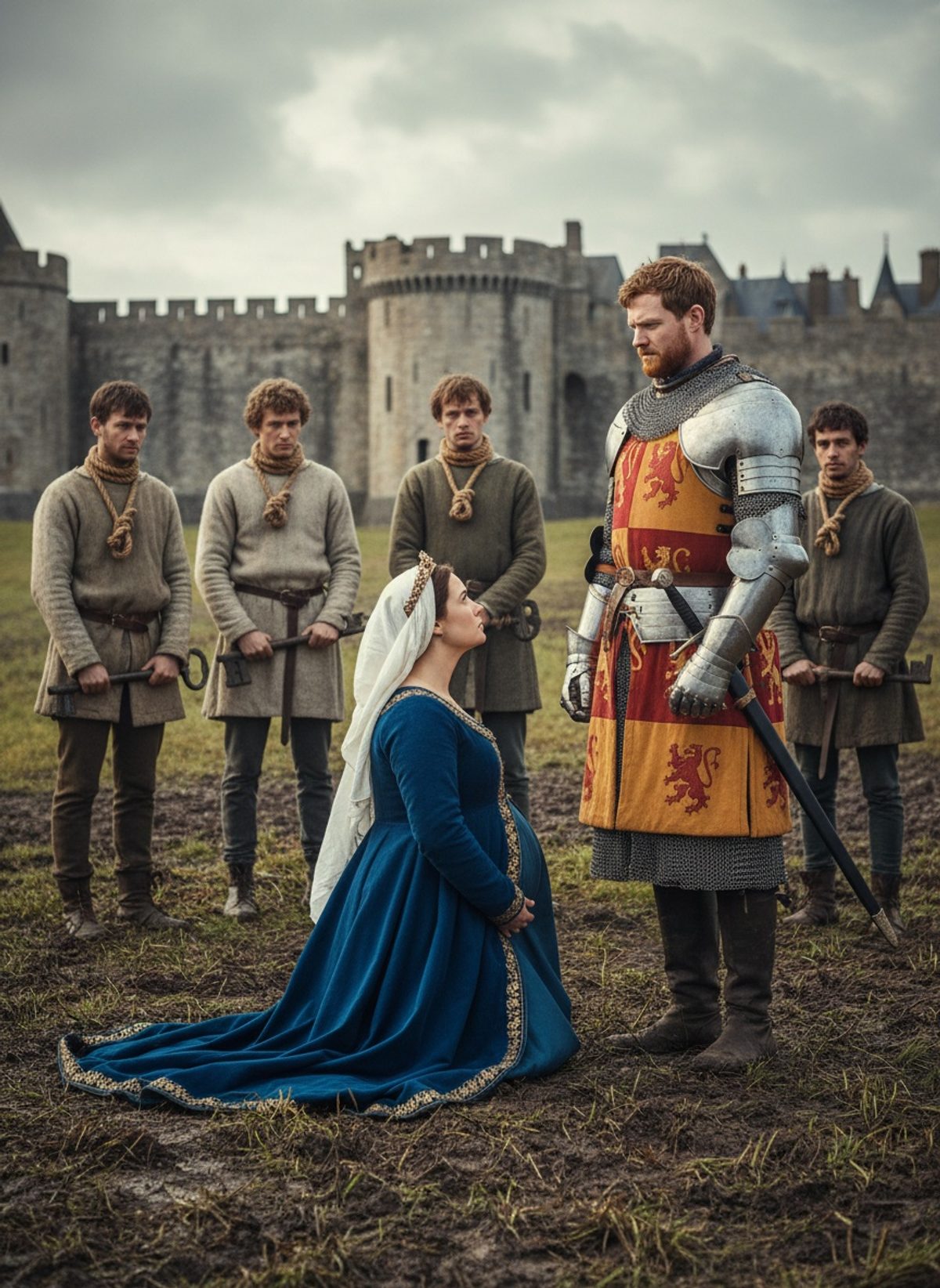
The proposition was met with heart-wrenching deliberation. How does a city choose sacrifice? In the end, six of Calais’s most esteemed burghers, driven by a profound sense of duty and love for their city, rose to surrender themselves to Edward's wrath. Prominent among them was Eustache de Saint Pierre, a wealthy merchant whose influence and wealth mattered little to the binding threads of rope he now tied about his neck as a signal of willing martyrdom.
Dressed in simple tunics, the six men made their somber journey from the city’s gates, walking the short distance to their execution with the knowledge that they carried the hopes and lives of hundreds upon their shoulders. The sun bore down mercilessly, the heat catching the dust beneath their feet. Observers described this procession with awe, capturing forever the quiet dignity and courage etched into their faces.
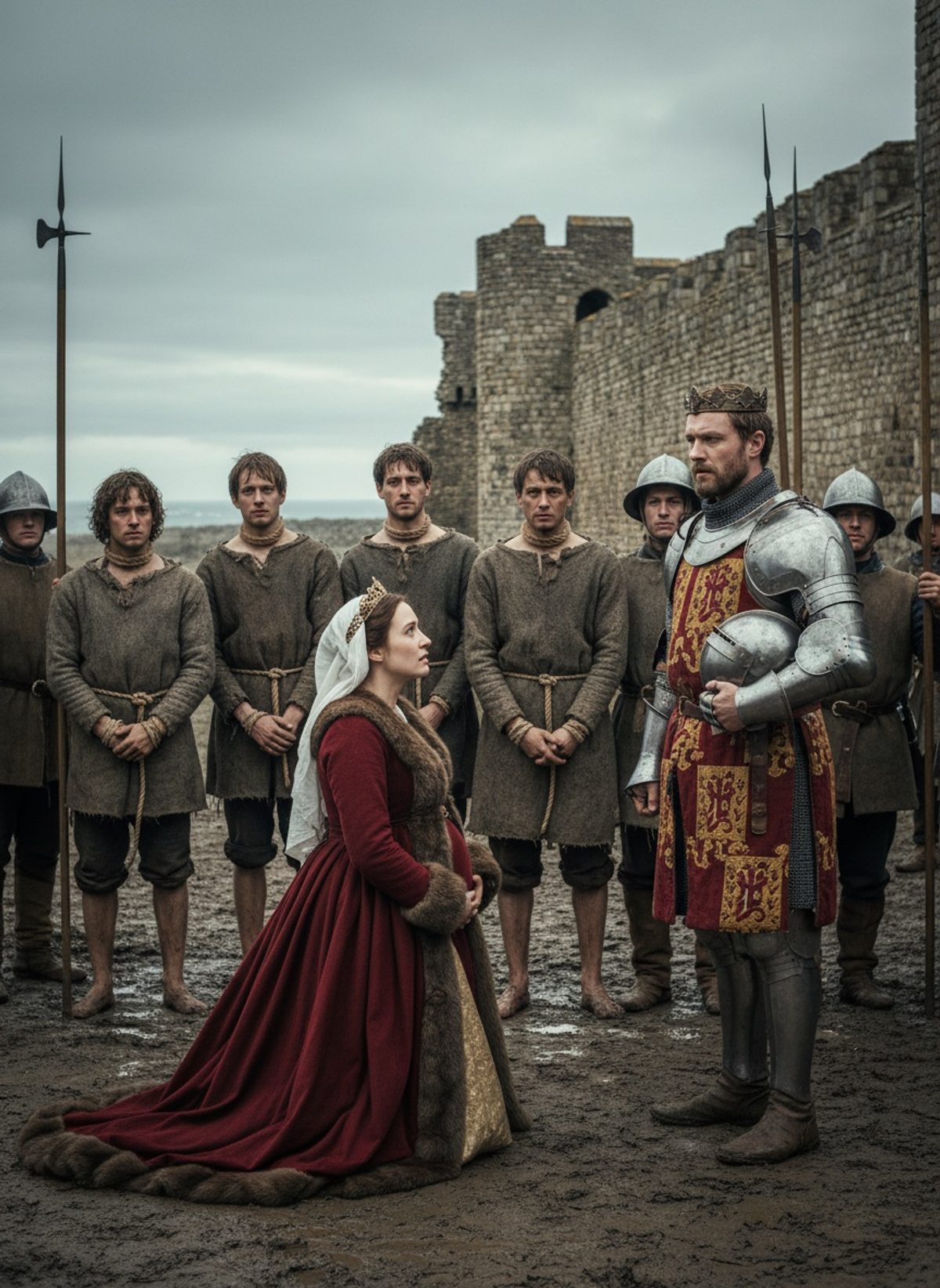
Before the English king, these noblemen knelt, exhausted but unbowed. Awaiting the drop of the executioner's blade, they presented not simply an act of surrender, but an embodiment of Calais’s enduring spirit. Yet, as fate would entwine history with an unexpected turn, this act that seemed to seal their doom was about to become the spark for a burgeoning redemption.
The Queen of Grace
Into this grim tableau entered Philippa of Hainault, Edward’s queen, visibly pregnant with their child. Known for her compassionate nature, Philippa was a stark contrast to her husband’s iron-fisted rule. She knelt in the dirt beside these condemned men, her plea seasoned with the gravity of a nation’s gaze.
Philippa asked for mercy—not in the boisterous demands of royalty, but with a heartfelt request to spare the lives of these brave souls. Whether moved by her emotional appeal, the fervor of maternal instincts, or a shrewd political calculation, Edward, despite initial reluctance, acceded to her plea. It was an act that blended chivalric grace with the raw politics of war, a decision that rippled far beyond that dusty execution ground.
The city of Calais was spared further immediate devastation, yet the specter of occupation loomed as English forces took control. For the citizens, however, the sparing of these six lives became a lasting testament to the power of compassion over brutality, a rare gem in the chronicles of medieval warfare’s tapestry of blood and conquest.
The story of the Burghers of Calais endures as more than just an historical anecdote. It reflects the complex interplay of power, sacrifice, and humanity. In a time where brutal strategies often overshadowed honor, where the weight of empires crushed individual acts of bravery, this tale defied the norm. It showed, even in dark times, the potential for grace to intervene—a lesson that history, when it engages with the depths of our shared humanity, whispers to us most eloquently. It's a narrative that reminds us not just of the sacrifices made, but of the continuing hope for mercy amidst despair, and perhaps that is why the legend of those six men—and their salvation—echoes still.