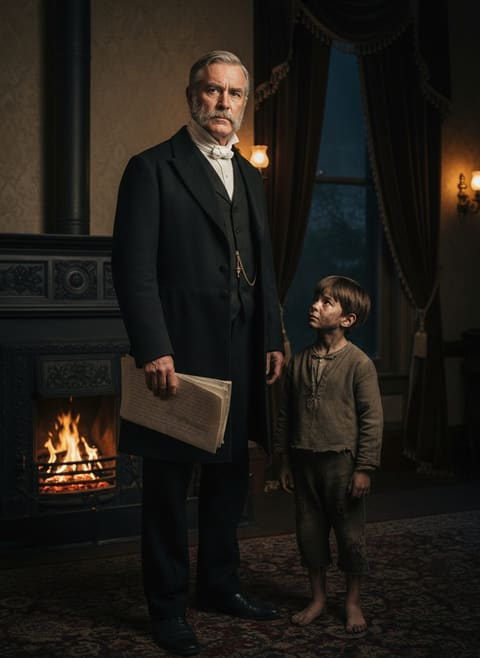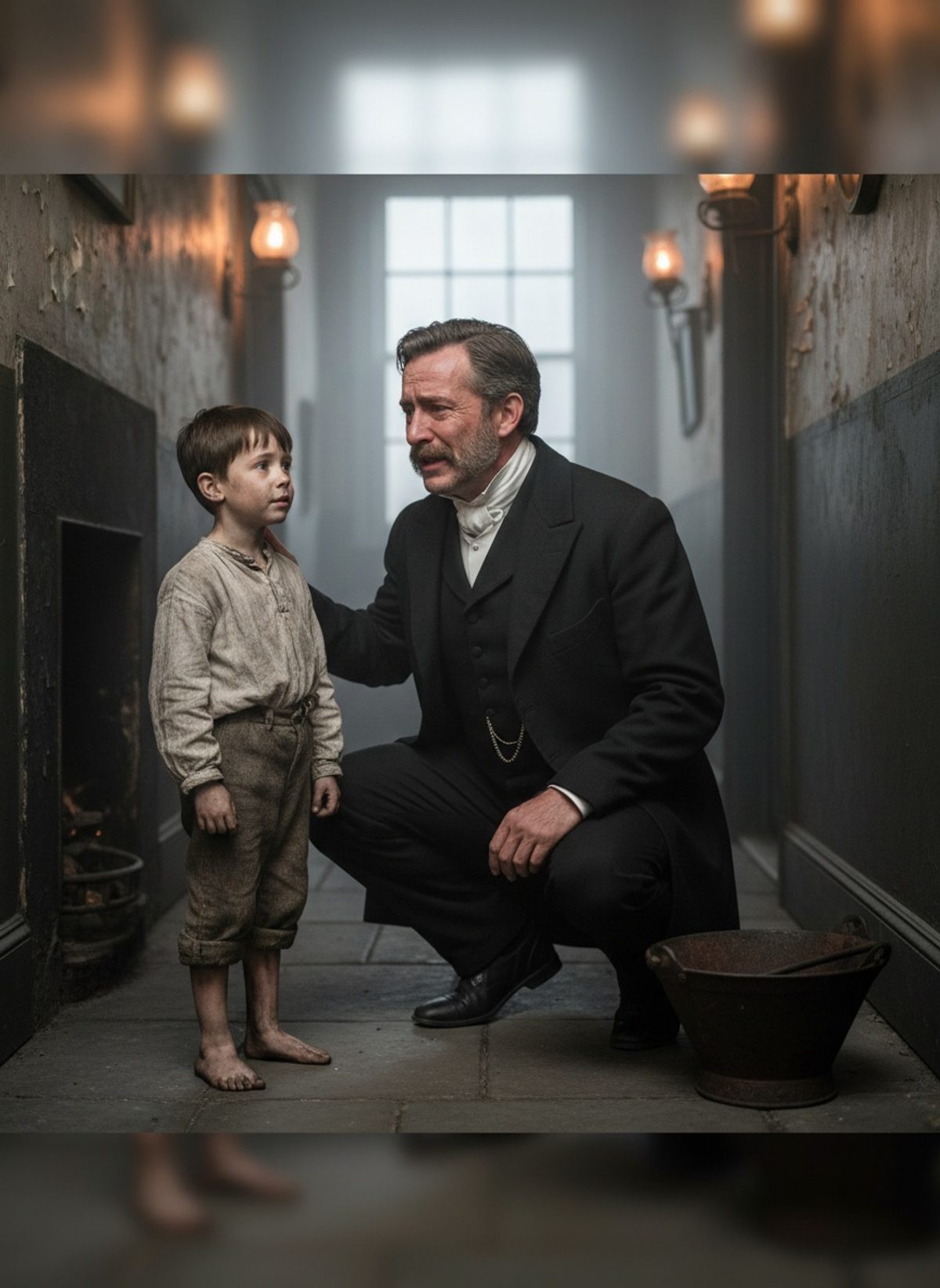
He was a clergyman by calling and a writer by passion. The surgeon's son who reshaped London's conscience was neither politician nor nobleman but wielded the most potent tool of all—words.
The Shadows Begin
In the early 19th century, London's silhouette was marked by its spindly chimneys puffing black clouds into an already dreary skyline. Beneath these towering structures lay a world draped in soot and shadow, where young boys, some as tender as four, began their daily rituals in darkness. They were the chimney sweeps, secured not by resilience but by necessity—only their juvenile dimensions fit the slender flues that snaked through the heart of Victorian homes.
The work was perilous and bleak. Each climb shredded at their clothes, scraped their skins, and clung to their lungs like an unshakable curse. Many would meet a tragic end, falling to unseen depths or succumbing to the very smoke they inhaled. Yet, for years, their courage was little more than a ghost story, whispered among the alleyways and ignored by those who sheltered beneath the splendor of lavish drawing rooms.
The Reckoning of a Writer
Born in 1819, Charles Kingsley was no stranger to the labyrinthine corridors of hardship, though his struggles were not of poverty. It was in the halls of Eversley, where he served as rector, that he encountered the grinding wheel of injustice in its many forms. A natural storyteller, Kingsley penned tales that clung to the soul, determined to illuminate lives awash with neglect.
Read next: The Day a Pit Boy Dragged a Law Through Parliament
Kingsley’s writings were more than mere chronicles. They were calls to action. With every turn of the page, he painted the vivid world of the chimney sweeps with the colors of reality too stark to ignore. His works became both mirror and magnifying glass, and with them, he sought to reveal the darkness lurking just beyond the gaslit avenues.
A Battle Within Parliament
Though he belonged to no political party, Kingsley recognized the chambers of Parliament as the crucible for change. Driven by an unyielding sense of justice, he walked its grand halls, a humble figure with a heart primed for battle. His mission was steeped not in policy, but in the purity of moral outrage—an insistence that the suffering of children was neither acceptable nor inevitable.
His presence was a beacon, a challenge to the inertia that had long ensconced the lawmakers. Kingsley stood, again and again, a solitary figure amid the dappled sunlight streaming through towering windows, his voice breaking the boundary between the privileged and the poor. “To weep at the foot of power,” he said, “is to cleanse the soul of it.” Each tear shed was a vote cast, each sob a signature for reform.
The Wind of Change
The path to changing the law was an uphill struggle, littered with indifference and resistance. Yet, Kingsley’s tireless campaigns began to resonate with both the burgeoning conscience of the public and the skeptical ears of the elite. His vision for a world where innocence was cherished unfurled like a flag over the seat of Empire.
Read next: The Day a Surgeon's Son Chose Death Over Silence
Determination became the chisel that chipped away at the stone heart of tradition. Inspired by Kingsley’s relentless advocacy, the Chimney Sweepers Act was finally ushered into existence, a beacon of tangible change amidst the fog of old England. Children were no longer shackled to the chains of necessity that thrust them into the clutches of the chimneys. Instead, a new dawn broke, where the skies above London cleared just a little, and the streets hummed with a symphony of hope.
A Legacy in Words
The story of Charles Kingsley and the liberation of London's child sweeps is a reminder of the power housed within the simplest of convictions. In a world where the voiceless often remain unheard, Kingsley’s odyssey from the pulpit to Parliament epitomizes the impact of steadfast resolve. His journey is lauded not just for its victories, but for daring to reach beyond the cacophony of silence.
Charles Kingsley reminds us that the pen, guided by a genuine heart, can ignite revolutions within both palatial walls and the hovels beyond. Today, the darkness that once consumed the young sweeps of London is tempered by the light of their courage and the steadfast dedication of one man who refused to let the shadows prevail. In telling their story, he set countless others free.