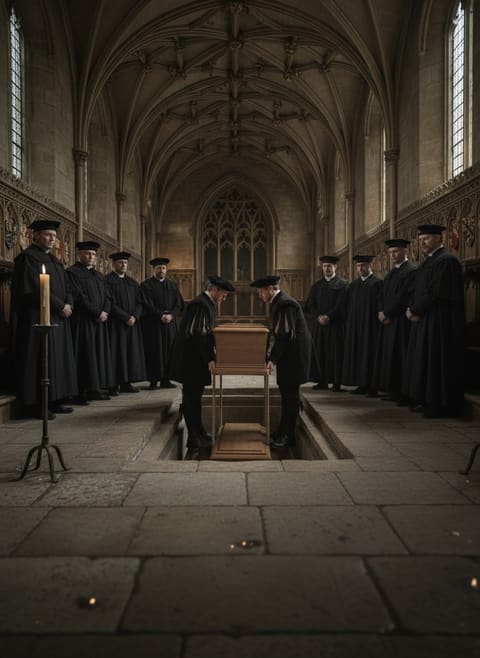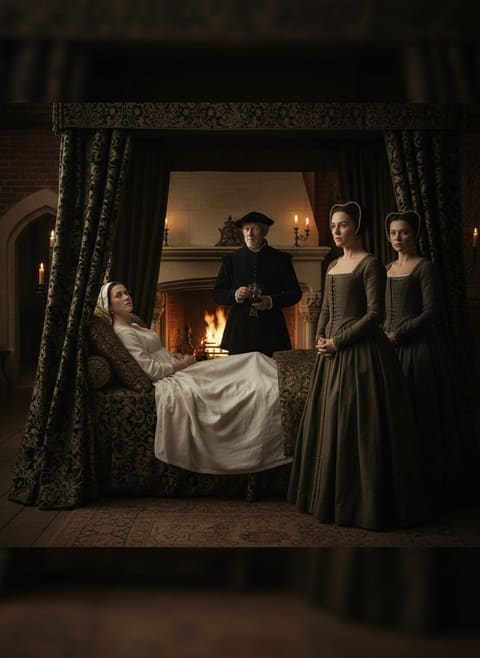
The cobbled streets of Oxford in March 1556 lay cold underfoot, shrouded in mist that clung to every corner and alleyway. The sky was a wash of muted gray, promising rain that would soon dampen the old stones and the spirits of those who walked upon them. It was here, amidst the reverberating toll of St. Mary's Church bells echoing through the city, that a grim event was about to unfold – one that would etch itself into the annals of history with daring defiance and the ultimate price of belief.
The Arch of Betrayal
In the grand tapestry of Tudor England, the reign of Mary I was vividly marked by her staunch commitment to restoring Catholicism. The queen, daughter of Henry VIII and Catherine of Aragon, bore a fervent zeal to undo her father's religious reforms. This turbulent era, marred by the burning of Protestant martyrs, saw Thomas Cranmer, the Archbishop of Canterbury and a pivotal figure in the English Reformation, caught in its unforgiving grip.
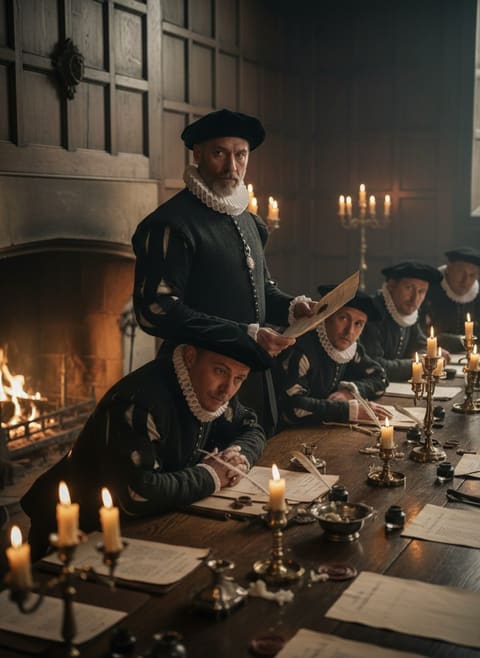
Cranmer had played a crucial role in the establishment of Anglicanism, penning the Book of Common Prayer and guiding England through the ecclesiastical maze of reform under Henry VIII and Edward VI. But Mary's accession to the throne heralded a perilous change for Protestants. Cranmer, captured and confined, was coerced into signing six recantations – formal renunciations of his Protestant beliefs. These documents, signed under duress, were a betrayal of everything he had once championed. The sound of quills scratching upon parchment sketched the epitome of a man torn between survival and his faith. But lurking beneath these concessions lay a heart seared with regret, ready for a final act of rebellion.
The Path of Redemption
March 21, 1556, dawned with a harsh chill, as crowds gathered to witness the supposed last humiliation of the once-powerful Thomas Cranmer. The throng was tense, a myriad of murmurs mingling with the flutter of banners in the breeze. It was at St. Mary's Church, where Cranmer, frail and wracked with the emotional toll, would publicly affirm his recantations. Yet, the morning brought an unexpected tide. After listening to the scripted recantation, Cranmer took the final moments to address the congregation with a personal confession.
Read next: The Secret Marriage That Shook the Stuart Throne
In a voice resonating with a conviction that surprised even the most stoic of onlookers, Cranmer repudiated his recantations, declaring them lies born from the fear of death. The statement struck the listeners like a lightning bolt through the forlorn fog, a profound silence settling in its wake. Here was a man who, in the shadow of certain doom, reclaimed his faith with resounding clarity. It became evident that Cranmer had chosen a path not of safety, but of redemption – a decision that would see him face the flames.
The Blaze of Honor
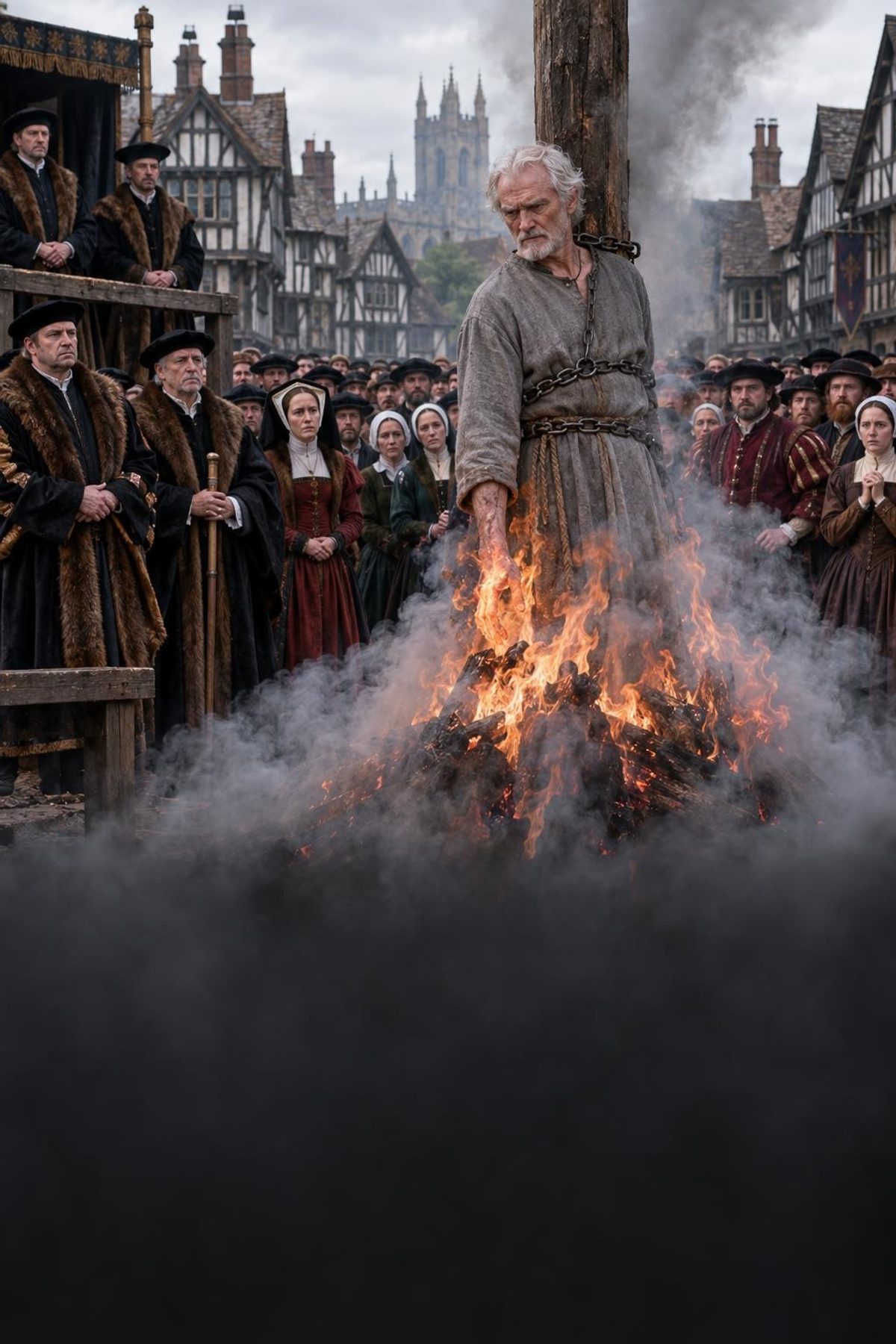
Led from the church, the former archbishop approached his final destination with a steely calm. The pyre awaited – its construction crude yet foreboding. Each step drew him nearer to martyrdom, and whispers among the crowd trailed his path. The air grew thicker, not just with smoke but with the weight of a narrative about to unfurl its gripping conclusion. As the wood caught flame, the scene was illuminated not just by firelight, but by the gravity of the moment.
Read next: The Woman Who Survived Three Tudor Executions and Lived
Cranmer, bound yet unbroken in spirit, made one final act of defiance. As the flames licked hungrily at the timbers, he thrust his right hand, the very hand that had signed his recantations, into the inferno. The act was deliberate, a symbolic self-rebuke, and the crowd watched, some in horror and others in awed respect, as his hand succumbed to the fiery trial. Cranmer's declaration echoed even among the crackling flames – his faith reaffirmed through vivid, unbearable sacrifice. The air was filled with both the acrid scent of burning flesh and the indelible mark of human conviction.
Lessons in Flames
The tale of Thomas Cranmer's final hours resonates through history, a narrative interwoven with themes of belief, integrity, and the human spirit's capacity for resilience. It's a story much more than a simple recounting of martyrdom; it's a piercing exploration of where conviction leads when all worldly safety is forsaken. To this day, Cranmer's end poses questions of conscience and the cost one is willing to pay for truth.
In a period when religion was often brandished as both sword and shield, Cranmer's life and his final moments on the pyre remind us of the complexity within human conviction. His story compels us to ponder on how far we would go in the defense of our own beliefs, and the sacrifices that punctuate the paths we tread in pursuit of what we hold sacred. As the flames of history continue to illuminate the past, Thomas Cranmer stands not merely as a figure of religious transformation but as a testament to the enduring power of faith under trial. This is why Cranmer's legacy, burned and yet immortalized in the flames, matters beyond the pages of history books – urging reflection on the values we cherish and the causes that define our lives.