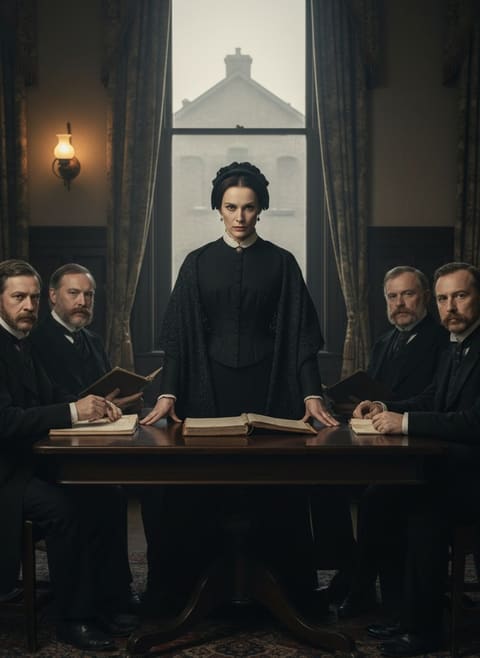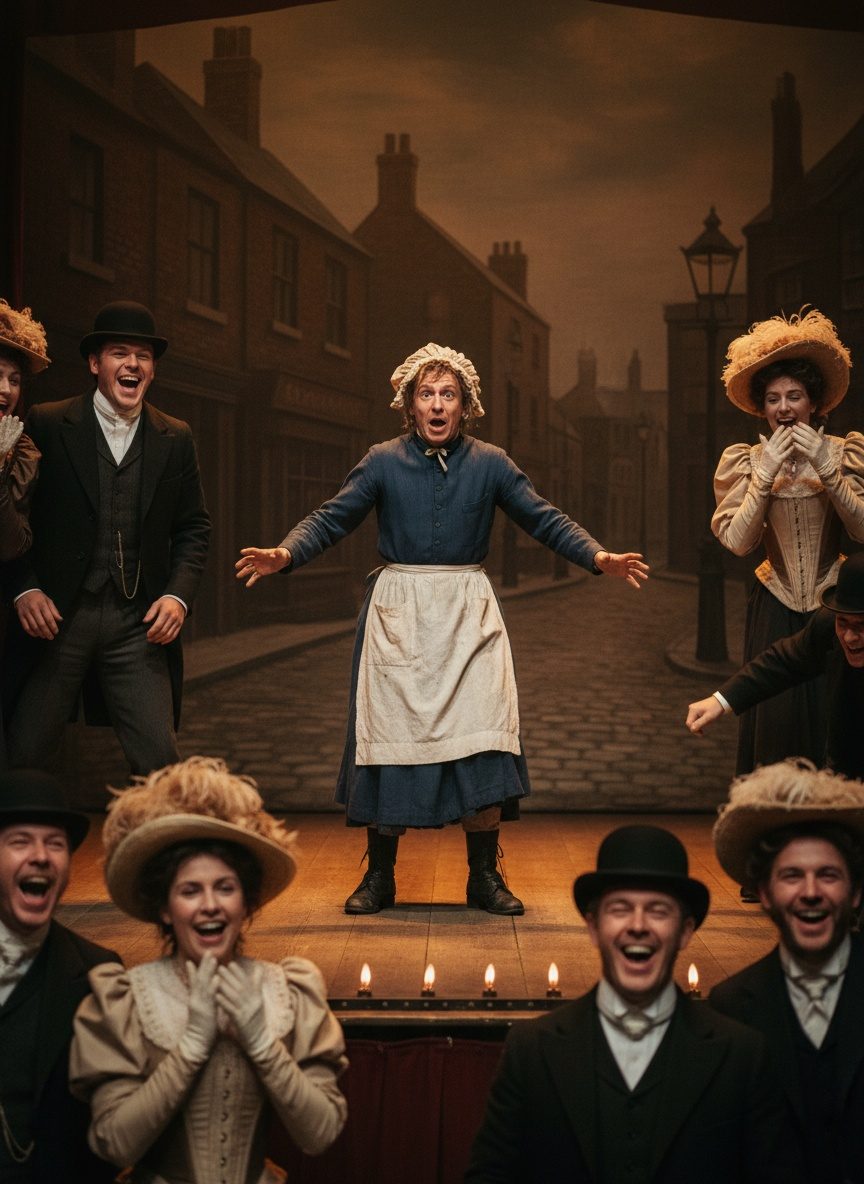
Dan Leno was not a king. Yet, in Victorian England, he might as well have been.
The Rise of an Unlikely Star
In a world defined by rigid social norms and a voracious appetite for novelty, Dan Leno's journey from obscurity to stardom is nothing short of remarkable. Born to a pair of itinerant street performers, Leno stood barely five foot three, often donning the guise of humdrum lane-dwellers—washerwomen and shop girls—characters that, on another stage, might fade into the humdrum of daily life. Yet, when Leno took the floor, these figures sprang to life with verve and vigor.
Audiences initially had no inkling of what lay in store. He shuffled onto the stage, as scruffy as a chimney sweep, only to unfurl comedic masterpieces with mere changes of voice and the arch of an eyebrow. Leno had a gift for transcending the limitations imposed by his stature or his disheveled costume. The theater reverberated with laughter as he peeled back the layers of society, drawing humor from its very core.
This scrappy, unassuming comedian quickly became the lifeblood of music hall entertainment. Amidst a teeming ensemble of can-can dancers, sentimental ballads, and acrobatic wonders, it was Leno’s portrayals that shimmered brightest. His ascent was rapid, a phoenix-like rise within an industry reputed for its capriciousness. Intriguingly, Leno achieved this illustrious ascent without forsaking the everyday folk he so brilliantly parodied.
Read next: The Day a Surgeon's Son Chose Death Over Silence
A Kingdom's Jester
As the curtain of the 1880s drew to a close, Leno’s fame infiltrated the echelons of British society. He became a household name, a fixture on the theater staples in London. The capital's buzz was palpable, with the crowd thronging outside his shows, turning otherwise mundane avenues into bustling, excited corridors. Traffic snarl-ups stretched for a mile, as the anticipation of a Leno appearance swelled to fever pitch.
What was it about this diminutive figure that enchanted the masses with such fervor? It was his extraordinary capacity to reflect Victorian society back upon itself. Leno held a mirror that was both compassionate and comically grotesque. His washerwomen were not just caricatures—they were everyday gossipists, community keystones, archetypes that daily life often relegated to the margins. Audiences reveled in seeing themselves, their secrets and sentiments, brought to life with wit and empathy.
His comedic prowess did not go unnoticed in the highest circles. So compelling was his impact that he was summoned by the King to Sandringham—an honor that conferred upon him the singular status of celebrity among royalty. In those moments, the barriers between the ordinary and the extraordinary melted; the King laughed alongside the common man, united by the subtle genius of Dan Leno.
The Comedian with Censor-Free Courage
Beyond the merriment lies a story of subversion and imagination. In an era dominated by decorum, where Victorian propriety dictated public demeanor, Leno wielded humor as a form of social microscope. With a mischievous twinkle and an uncanny knack for irony, he probed the absurdities and hypocrisies of his age.
Leno's genius lay not just in the delivery of jokes, but deeply embedded in his content. His skits reflected on the inconsistencies between the classes, the solemnity of Victorian values, and even critiqued the newly-formed societal shifts happening due to industrialization. Each performance encouraged viewers not only to laugh but also to question the frameworks of their daily existence.
Read next: The Day a Chimney Sweep's Son Shamed a Whole Parliament
To his admirers, Leno offered an escape from the drudgery of increasingly concrete lives. Yet, perhaps more importantly, he equipped them with tools of introspection, flavored with humor. This very trait, however, likely sowed discontent for some in power. While the masses adored him, and even royalty deferred to his brilliance, the establishment held ambivalence—admiring the man yet weary of the sharpness of his humor.
The Silence that Echoed
There's a curious weight to silence; a void where laughter once boomed can magnify its absence. The day Dan Leno walked away from the stage, a palpable hush fell over the theaters of London. It was as if the nation collectively held its breath, yearning for the echoes of his whimsical tales.
Leno had transformed the way Britain saw itself. His departure meant more than the loss of a comedian—it represented the end of an era where society could openly laugh at its peculiarities. The silence became a poignant reminder of the dual nature of comedy—it brings joy and introspection in equal measure.
The impact of Dan Leno’s career extends into today, offering lessons on the enduring power of laughter and introspection. Through his artistry, Leno championed the notion that humor can break barriers, engage with the truths of our situations, and unite disparate societies in shared experience. His legacy lies not in the annals of textbook history but in every chuckle and guffaw that continues to ripple through time, leaving echoes in our ongoing quest for understanding ourselves.