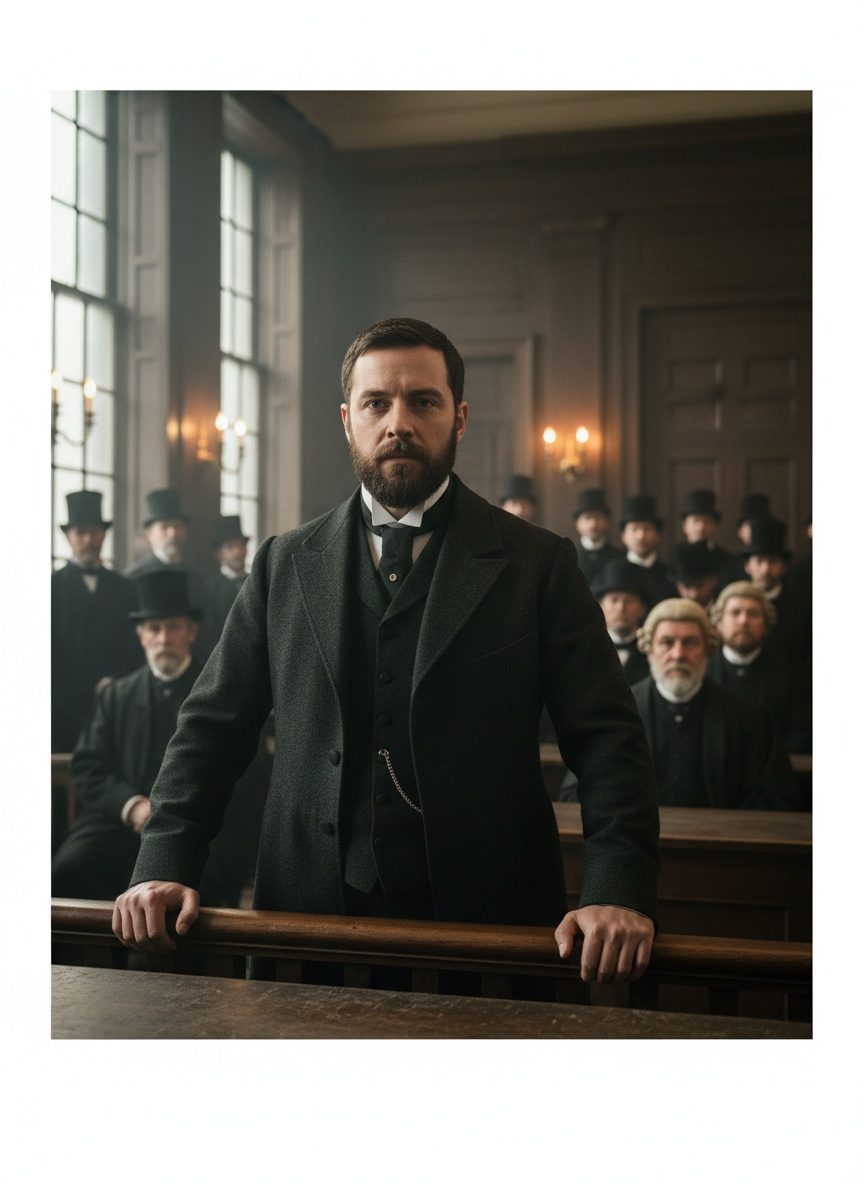
The gavel slammed into the judge's hand as a murmur spread across the courtroom. The air inside the Old Bailey was thick with anticipation, a collective breath held by reporters, families, and curious citizens. In the dock stood Dr. Thomas Barnardo, a man whose unassuming figure belied the storm of moral outrage swirling around him. Accused of being a kidnapper, Barnardo was here to defend not just his actions but the very idea of what it meant to care for society's most vulnerable: its children.
The Streets of London: Shadows and Salvation
In the labyrinthine alleys of Victorian London, where fog and filth clung to the cobblestones, a hidden world teemed beneath the veneer of the Empire's grandeur. It was here that a twelve-year-old girl, eyes filled with the hard-earned wisdom of the streets, found herself sold, her childhood commodified by poverty. Such transactions, though shrouded in secrecy, were not uncommon. But fate took a twist when she crossed the path of Dr. Thomas Barnardo, a man whose life's work was driven by a simple principle: no child should be left to the miseries of destitution.
Barnardo's establishment in the East End, famously known as "Dr. Barnardo's Homes", had become a beacon for orphaned and abandoned children, providing them with shelter and education. Yet, the environment from which they came was unforgiving. Many questioned whether Barnardo's methods—often bypassing official channels—could withstand the legal scrutiny of a society still finding its moral footing.
A Courtroom Drama: Justice versus Judgement
The allegations were serious. Barnardo stood accused of illegally detaining the girl, an act labeled as outright "kidnapping" by those who disagreed with his methods. The courtroom was divided, with Barnardo's supporters juxtaposed against those who called for his censure. In the prosecution's eyes, the issue was clear: even with good intentions, the law had been breached.
Read next: The Day a Victorian Nurse Walked Into a Fever Ward Alone
The defense, however, painted a different picture—one of benevolence and desperate necessity. As details unfurled, the judge was presented with the stark reality of London's street children, most of whom drifted aimlessly, invisible to the law that claimed to protect them. The real question posed before the court was provocative: could the act of rescuing a child from life-threatening neglect be deemed a crime?
The Power of Persuasion: Barnardo's Resolute Stand
Barnardo's voice, calm but resolute, carried through the wood-paneled room as he described his mission. Witnesses came forward—those who had been touched by his work, parents who had been reunited with children once lost to the city's underbelly. Testimonies portrayed Barnardo not as a malefactor, but as a guardian refusing to adhere to a flawed system that allowed countless children to slip through its grasp.
Meanwhile, the atmosphere inside the court became like a boiling cauldron, the proceedings gripping the public imagination. Newspapers ran daily accounts, each article adding fuel to the societal debate on the responsibilities of individuals versus the state. The question loomed large: should law—and morality—bend in the face of undeniable good?
The Judge's Verdict: A Precedent Set
As the trial drew to a close, the judge—a man tasked with balancing the letter of the law against the moral heartbeat of society—delivered his verdict. In a decision that would echo far beyond the walls of the courtroom, he ruled in favor of Barnardo. His reasoning was profound, acknowledging that the rigid boundaries of legal frameworks were not always equipped to address the complexities of human compassion.
The judge's ruling not only acquitted Barnardo but also set a precedent for the legal consideration of child welfare in Victorian Britain. It allowed a ripple of change through the nation, prompting reforms and discussions on how to best safeguard those unable to protect themselves. Dr. Barnardo's exoneration became symbolic of a shifting tide, where society gradually began to place human decency above bureaucratic constraints.
Beyond the Verdict: A Legacy of Care
The outcome of the trial marked a turning point in the way child welfare was viewed in Britain. Barnardo continued his work, his efforts eventually evolving into a movement that transformed public consciousness and policy. His struggle and subsequent victory underscored an essential truth: that empathy and action must sometimes transcend established systems to spark meaningful change.
Through the fog of Victorian London emerged not just a changed man, but a changed society. The courtroom drama of 1885 served as a stark reminder of the power individuals have to challenge norms and redefine justice. Barnardo's defense of the helpless child became a seminal example of how one person's dedication could alter the landscape of an entire nation.