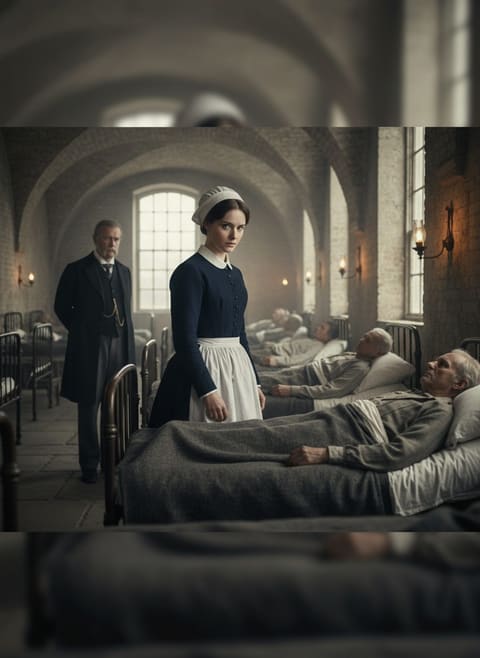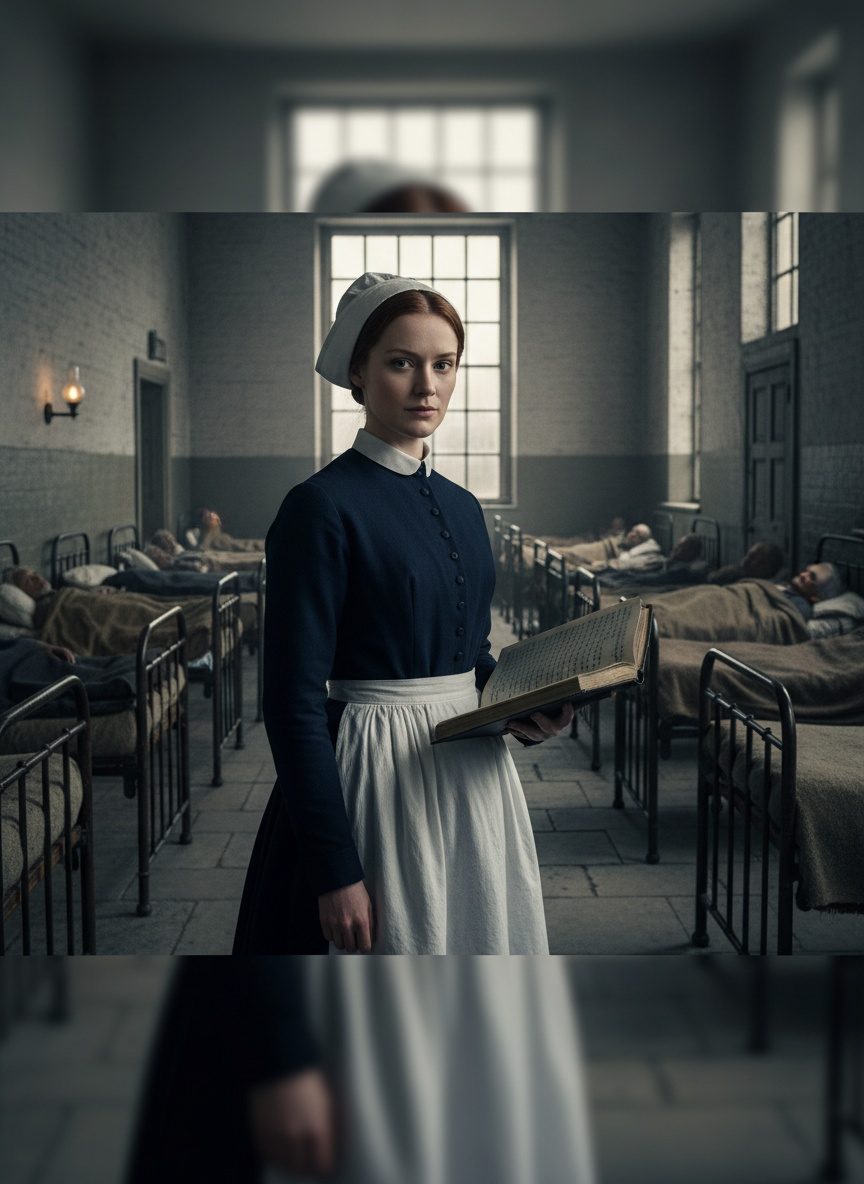
The sky above Liverpool was a battleship grey, threatening rain that promised to wash the cobbled streets clean of the clamor of day. The cold, bracing air of 1865 bit into anyone brave enough to venture out, carrying with it the omnipresent echo of clanging metal and distant ships. In stark contrast to the bustling docks, Brownlow Hill Workhouse loomed, an imposing fortress of deprivation and despair. It was here that Agnes Jones, an Irish-born nurse, crossed the threshold with a determined stride. She entered not to visit, but to stay among the twelve hundred souls nearly forgotten by society, each one lost in the chaos of illness, filth, and apathy. Her mission would transform this bleak institution into a beacon of humanity. Little did anyone know, including Jones herself, that her tenure would also seal her fate.
Healing Amidst Despair
Brownlow Hill Workhouse was a city unto itself. Within its brick walls were crowded countless men, women, and children. The air inside was thick and fetid, filled with the groans of the ill and the dying. For Agnes Jones, the scenes of suffering she encountered upon her arrival were a grim contrast to her training under Florence Nightingale, the renowned pioneer of modern nursing. Nightingale's influence guided Jones, but nothing could fully prepare her for the task before her.
Jones wasted no time immersing herself in the overwhelming needs of the workhouse. Her days were an endless cycle of tending to wounds, administering medicine, and comforting those who had known only hardship. Her presence began to shift the very atmosphere of the place. Order started to replace chaos, cleanliness usurped grime, and most importantly, care was given freely to those who had never known it. Her work was a revelation to fellow nurses and volunteers, many of whom were inspired by her tireless dedication.
Transforming Brownlow Hill Workhouse was not without its obstacles. The sheer magnitude of the workhouse was as daunting as the Victorian era itself, with its rigid class divisions and often indifferent bureaucracy. Supplies were limited, and skepticism from the authorities was abundant. Yet, the tireless Jones pushed forward, her resolve as unyielding as the winter fog that clung to Liverpool's streets. Under her leadership, the workhouse became a clinic of compassion, a structure revised from within by an unwavering vision.
Read next: The Day a Surgeon's Son Chose Death Over Silence
The Unseen Battle
While the figures of disease and neglect were familiar foes to Jones, another, more insidious enemy lay within those walls. Typhus, cholera, and other diseases thrived in the squalid spaces, striking down inmate and staff alike. Despite these dangerous conditions, Jones forged ahead, her spirit ceaselessly buoyed by the chance to make a difference.
Agnes Jones' tireless endeavor was recognized beyond the confines of Brownlow Hill. Nightingale herself was aware of Jones' accomplishments and hailed her as the finest nurse she had ever encountered. Yet, the ceaseless compassion that characterized Jones' work did little to shield her from the brutal realities of the conditions she fought so hard to improve.
In those years, the maladies that haunted Victorian streets paid no heed to rank or resolve, and the workhouse became a stage for an unseen battle. Jones, undeterred by the personal risk her vocation demanded, paid the ultimate price. Her end came not with a whimper, but as a crescendo of what it meant to serve humanity amid adversity. Her death was a poignant reminder that change comes at a cost, often paid by those who dare to challenge the norm.
Read next: The Day a Chimney Sweep's Son Shamed a Whole Parliament
A Legacy in Shambles and Spirit
The corridors of Brownlow Hill echoed hollowly after the passing of Agnes Jones. Yet, in the wake of her pivotal three years, the workhouse became a testament to the power of unwavering resolve and compassion. Her influence reverberated well beyond the oppressive walls of the institution. The model of care that she established not only improved the lives of the poorest in Liverpool but eventually stirred reforms nationwide.
Agnes Jones' work shone a light on the grim conditions of Britain's poorest, stoking a broader conversation that eventually led to essential welfare reforms. The bedraggled figures that shuffled into the workhouse as forgotten lives left touched by an enduring kindness brought by one woman’s determination. While the Victorian era was marked by rigid social hierarchies, here was an example of empathy bridging such divides.
Jones' legacy lies in the compassion she imparted and the framework she established under formidable circumstances—changing the perception of workhouses as mere warehouses for the destitute to places of potential healing and hope. Her story remains a beacon across time, underscoring the notion that sincere, selfless action can thrive even in the grimmest of backdrops. It is a stark reminder that the humanitarian spirit, reminiscent of Agnes Jones' very own, is a force that can transfigure not just institutions, but the very fabric of society.