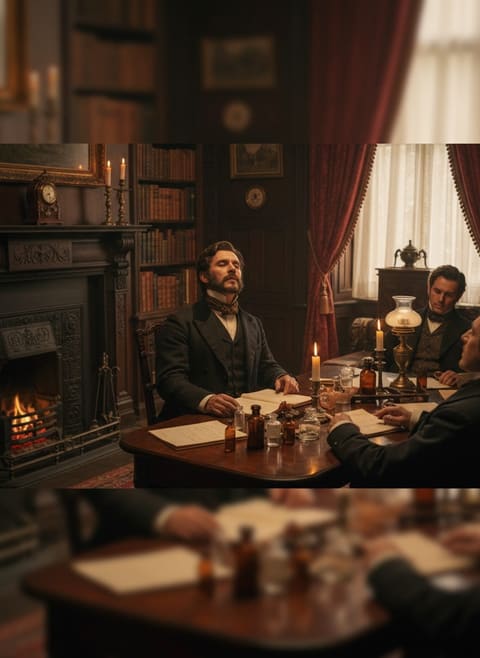
The February chill hung over London with an air of permanence, the sky shrouded in a thick layer of grey clouds that threatened drizzle at any moment. Amid the bustling streets beneath gas lamps and the clip-clop of horse-drawn carriages, an unlikely revolution was quietly taking shape. Its battlefield was the dimly lit offices of the Royal Mail, the combatants a determined visionary and a skeptical Parliament. The stakes? The very fabric of communication in Britain, poised at the precipice of change.
One Man's Vision
In the midst of the clamor of Victorian London, where cobblestones echoed with the hustle of everyday life, Rowland Hill, a former schoolteacher with a penchant for innovation, was about to redefine how the nation communicated. Until the dawn of 1840, the simple act of sending a letter in Britain was an indulgence reserved for the wealthier classes. The process was arcane: the recipient bore the cost upon delivery, and fees calculated by an intricate formula could often devour a day's wages for many.
Rowland Hill was not a man to be daunted by tradition. With the spirit of a reformer, he saw the barrier that such a cumbersome postal system posed to the communication of ideas, business, and familial ties. Hill's proposition was radical—a uniform penny postage. For one penny, a letter could traverse the length of the kingdom, unburdened from the chains of class or distance.
Years of meticulous studies and presentations unfolded as Hill pursued his vision. The hurdles loomed high: bureaucratic resistance, the inertia of established procedure, and the skepticism of policymakers who saw a shrinking revenue stream in his proposal. Yet, Hill was relentless. In 1837, he placed his groundbreaking pamphlet, "Post Office Reform: Its Importance and Practicability," into the hands of Parliament, advocating for a system that would democratize correspondence and, ultimately, knit the country closer together. Indeed, Hill’s concept was not merely a matter of cost but a voice for equality, a bedrock for the exchange of knowledge and ideas.
Read next: The Day a Surgeon's Son Chose Death Over Silence
The Dawn of the Penny Black
The creatures of habit who poured over government decisions finally relented to Hill's compelling arguments and public pressure. The 10th of January, 1840, dawned not unlike any other London winter day. Yet, this day was destined to etch itself into history. A small, black piece of paper—the world's first adhesive postage stamp—emerged to revolutionize not only the postal service but the very dynamics of British society.
Known as the Penny Black, this modest one-penny stamp bore the profile of Queen Victoria on a backdrop of pitch black. It symbolized more than just a pre-paid postal system; it was a declaration of civic pride, accessibility, and efficiency. The release of this stamp signified that from the crowded alleys of urban sprawl to the remote villagers of the countryside, anyone could afford the luxury of sending their thoughts across the nation.
The atmosphere that accompanied the launch of the Penny Black was one of curiosity and gradual acceptance. Postal clerks who once tallied costs with a complex calculus of miles and weight now relished the new simplicity. What had been an impediment to personal connection became a common utility now accessible to all. Behind each stamp lay a thousand possibilities: familial news, business proposals, declarations of love—all sealed with the promise of delivery.
A Nation Transformed
Just as the industrial machines roared into life, weaving cloth and crafting iron, the Penny Black propelled communication into a similarly transformative era. The impact on British society was swift and profound; literacy surged as the accessibility of writing bloomed. Education began to reach broader audiences, bolstered by the spread of newspapers, pamphlets, and societies exchanging printed materials via the affordable post.
Read next: The Day a Chimney Sweep's Son Shamed a Whole Parliament
Commerce, too, found itself rejuvenated in this new postal landscape. Entrepreneurs could extend their reach beyond local markets, building networks previously constrained by exorbitant postal costs. Innovations bred innovations, with the postal system becoming a model of efficiency adaptable to other realms—setting the groundwork for modern communications.
As the sound of horse-drawn wagons delivering mail became an everyday rhythm on cobbled streets, a greater narrative was unfolding—one that chronicled a society no longer stilted by its own infrastructure. This was no mere postal reformer’s triumph; Rowland Hill had unlocked a nation’s potential to connect, inform, and transform the lives of its people.
This unassuming innovation—a penny-sized stamp—did not just streamline processes but redefined human connectivity. It whispered promises of opportunities, democratized knowledge, and highlighted the power of perseverance against systemic rigidity. Today, in a world brimming with instant communication, Rowland Hill's quiet revolution serves as a poignant reminder of the transformational power of an idea, deftly charted and unwaveringly pursued.