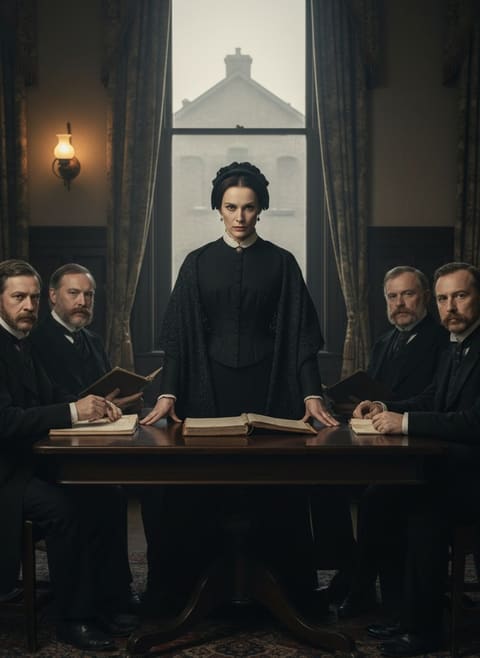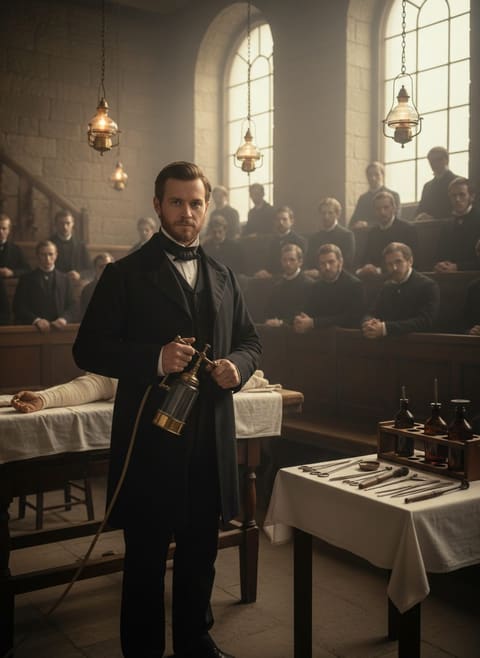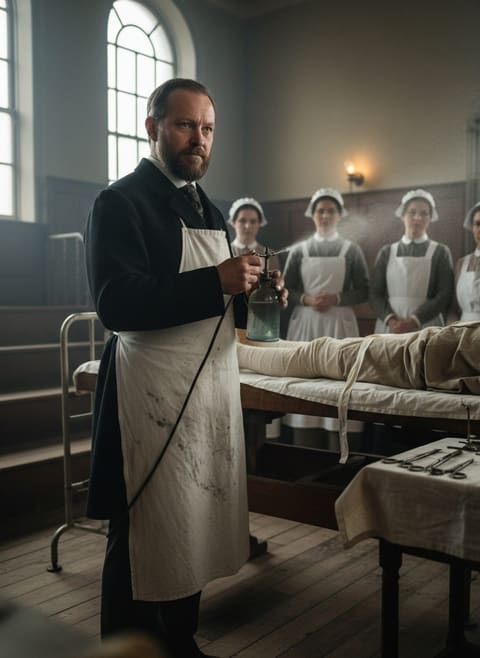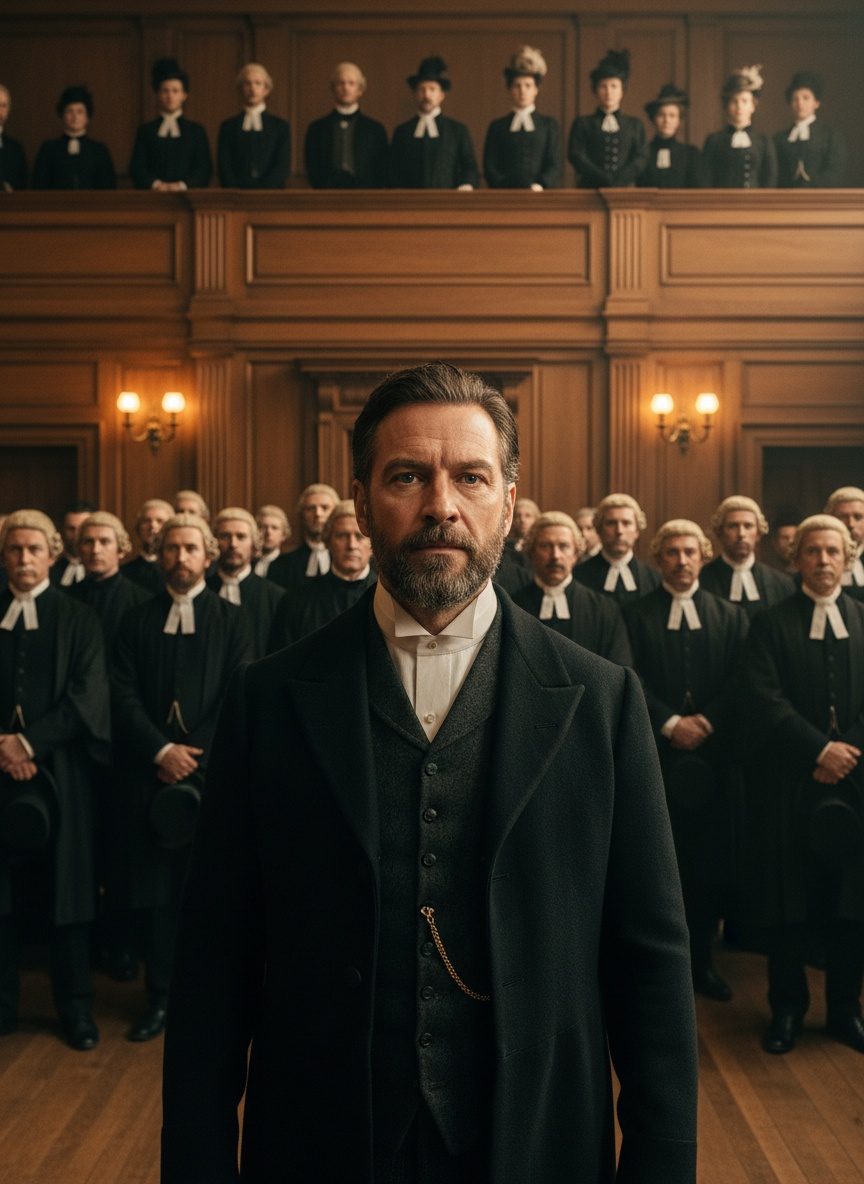
He was a medical doctor with no legal training. But that didn't stop him from marching into court, driven by a moral conviction stronger than any law.
The Child Who Had No Defender
In the bustling city of London in 1889, a child lay battered and bruised in a hospital ward, her tiny body racked with fear and pain. Her story might have ended there, like so many nameless children of the Victorian era, suffering in silence while society turned a blind eye. But fate had something different in store for her. She crossed paths with Thomas Barnardo, a man whose very name was synonymous with the struggle to protect children from the harsh realities of poverty and abuse. Yet, in those days, not even Dr. Barnardo could easily reclaim an endangered child from her legal guardian.
Despite his fame, Dr. Barnardo was operating in a society where the law had yet to fully recognize the rights of children. He found himself confronting a legal system that was woefully unprepared to save them from their suffering. The child had been placed in the care of an abusive guardian, and in the eyes of the law, this guardian held full legal claim to her return, regardless of her condition.
A Bold Decision
Dr. Barnardo faced a dilemma that would test his resolve. The child's guardian demanded her return, and legally, he had every right to take the child back home. Barnardo had set himself a mission to protect children, but in this case, the law offered him no shield against the guardian's claim. However, driven by a profound sense of justice, he made an astonishing decision: he refused to hand the child back.
Read next: The Day a Surgeon's Son Chose Death Over Silence
This was no act of reckless defiance. Barnardo knew that every moment this child spent away from her abuser might be a step toward recovery and a chance at life. He understood the risks involved; he was breaking the law, and the consequences could potentially ruin everything he had worked for. Yet, he also knew a truth that soared beyond legalities: that the life and safety of a child could never be regulated by the letter of the law.
Facing the Full Force of the Law
The case quickly escalated to court. It was a landmark moment, as Barnardo stood not just against the guardian but against the prevailing norms of an entire legal structure. The courtroom scene was a clash of wills, unlikely to be forgotten by those who witnessed it. The atmosphere was heavy with tension and expectation, as the drab legal chamber turned into an arena where principles were tested to their breaking point.
Here was a doctor, mild-mannered yet resolute, standing alone against a formidable array of legal opposition. Barnardo's stance wasn't fueled by arrogance but rather an unwavering ethical compass that pointed towards the child's welfare above all. His arguments were simple yet powerful: that the duty of society was to protect its most vulnerable members, not sacrifice them on the altars of bureaucracy and procedure.
The Ripple Effect
Though the specifics of the court's ruling remain obscure and can't be found in the records, Barnardo's actions brought profound implications. This courageous stand became a catalyst, sparking debates and eventually contributing to a shift in social perceptions around children's rights and welfare. His defiance sent ripples through a legal system that had for too long ignored voices like hers, contributing to the momentum that would lead, later in that very year, to the passing of the landmark "Children's Charter" — the first UK law to protect children from abuse and neglect.
Read next: The Day a Chimney Sweep's Son Shamed a Whole Parliament
What's more, Barnardo's moral courage highlighted the inadequacies of the existing legal system, revealing something unbearably unjust about the status quo. While reforms had been slowly gathering momentum, this event underscored a crucial understanding: that society needed to prioritize moral obligation over rigid legal entanglements when it came to protecting its children.
A Story Not Just of the Past, But the Present
Reflecting on this story from the vantage point of modern times, it serves as a reminder of the ethical stands that shape society. In the quiet determination of a Yorkshire doctor, we find evidence that laws, while foundational, should evolve to reflect the values of compassion and care. Dr. Barnardo didn't just save a child; he helped lay a cornerstone for the future of child welfare legislation.
In today’s world, where debates about social justice and the role of legal reforms continue to rage, the courage to stand for what’s right — even when the laws lag behind — remains as relevant as it was in 1889. The legacy of the day Thomas Barnardo defied the laws and stood for a child who needed protection should embolden us all to see beyond the immediate, and act on the moral principles that endure throughout time.