January 22, 1879. The distant hills of Isandlwana wore a blood-red cloak in the waning light of day.
The Annihilation at Isandlwana
The Battle of Isandlwana is often recalled as one of the most devastating defeats suffered by the British Army. It was a conflict where a proud army, armed with advanced weaponry and a sense of invincibility, met its match against the fierce warriors of the Zulu Kingdom. Equipped with little more than spears and raw courage, the Zulus achieved their first overwhelming victory, leaving over a thousand British soldiers dead by nightfall. The mountain of Isandlwana, an eerie monolith, bore silent witness to a day soaked in valor—and hubris.
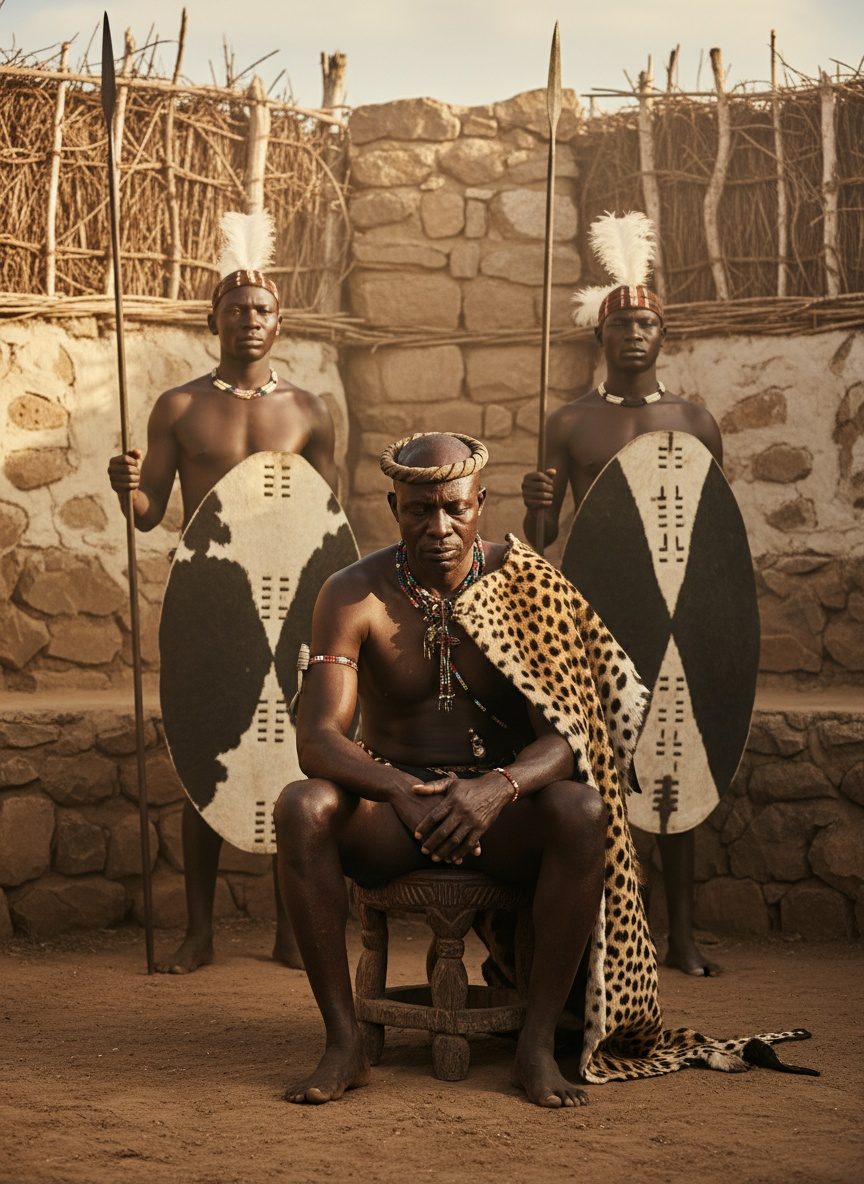
King Cetshwayo kaMpande, the Zulu monarch, had orchestrated a masterful military maneuver. He had long understood the ways of the British, perceived not only as foes but as a storm that threatened his people's autonomy. He had not waged war lightly. With each fallen Zulu warrior, the cost of victory reverberated through the spirits of his ancestors. Yet, there it was: an indisputable success. Like a bolt of lightning, it had struck swift and severe. With the British column annihilated, the path to further destruction lay open—Mutiny and chaos loomed on the horizon had he chosen to press on.
Cetshwayo's Momentous Decision
Just as the currents of the Buffalo River could swiftly change their course, so too did the fate of the Zulu campaign hinge on the whim of King Cetshwayo. He was no stranger to cunning strategy nor to the heavy burden of command. With victory in hand, he halted the advance of his impis at the river's edge—a decision both unexpected and historical. Bereft of context, such actions might seem puzzling. Why would a king at the height of triumph choose to stay his hand?
Read next: The Day a Surgeon's Son Chose Death Over Silence
In his heart, Cetshwayo carried the deep cultural ethos of the Zulus. War, for him and his people, was a matter of defense, not destruction. He saw conquest not as its own reward but as a means to secure peace—a chance to protect his people from the rolling tide of colonial encroachment. By halting his forces, Cetshwayo opted for mercy over massacre, signaling to the British his desire to discuss terms rather than engage in relentless bloodshed.
It is said that Cetshwayo sent a message across the Buffalo to Lord Chelmsford, the British commander. Despite the odds stacked against him, Cetshwayo had never wished for conflict. His ambition lay in the preservation of his kingdom—not the relentless spiral of war that lay before them. His message, poignant and sincere, quietly besought a dialogue to resolve matters without further loss of life.
The Tears of a King
As the Zulu warriors—a formidable wall of humanity clad in feathers and furs—stood poised along the river, Cetshwayo’s decision sent ripples through the ranks. He was a leader of vision—to some, almost divinely guided. Yet, even for a king with such strength, the sheer magnitude of the day’s events could not exist without a reckoning of spirit.
Historical accounts suggest that Cetshwayo, standing apart from his warriors, wept at the slaughter that had unfolded. In that solitary moment, the triumph of battle gave way to the lamentation of loss—on both sides. His tears were for the Zulu impis who had fought valiantly and for the British soldiers who lay dead on the plains, enemies turned into instruments of two nations’ tragic intersection.
Read next: The Day a Chimney Sweep's Son Shamed a Whole Parliament
Cetshwayo’s tears were more than an emblem of regret; they embodied the recognition of a shared humanity across enemy lines. His grief reverberated across the ages and asked questions of leadership, power, and the cost of empire—a narrative woven into the larger tapestry of human history.
The Unheeded Message
Despite Cetshwayo’s remarkable act of restraint and his earnest appeal for peace, the British response was anything but conciliatory. Traditional narratives seldom dwell on this overture of peace, for it was ultimately unreciprocated. In the cold calculations of empire, Cetshwayo’s gesture was dismissed, overlooked in favor of retaliations that followed.
Lord Chelmsford, with fresh troops and a fortified resolve, sought retribution for Isandlwana. The Battle of Rorke's Drift and subsequent engagements painted the British resolve in sacrifice and tenacity, overshadowing Cetshwayo's plea for peace and mutual respect. Yet, within this unfolding of Empire, Cetshwayo’s choice emerges as a critical footnote—a poignant reminder of the paths untaken.
In the annals of history, the choice to preserve over destroying created a rare moment of pause and reflection. This often-overlooked event reminds us that mercy can be wielded with as much power as might, and that the cries of a single leader can echo louder than the clash of armies. Cetshwayo’s actions invite reflection on leadership not as endless conquest, but as a nuanced interweaving of compassion and strategy in the relentless march of empire.