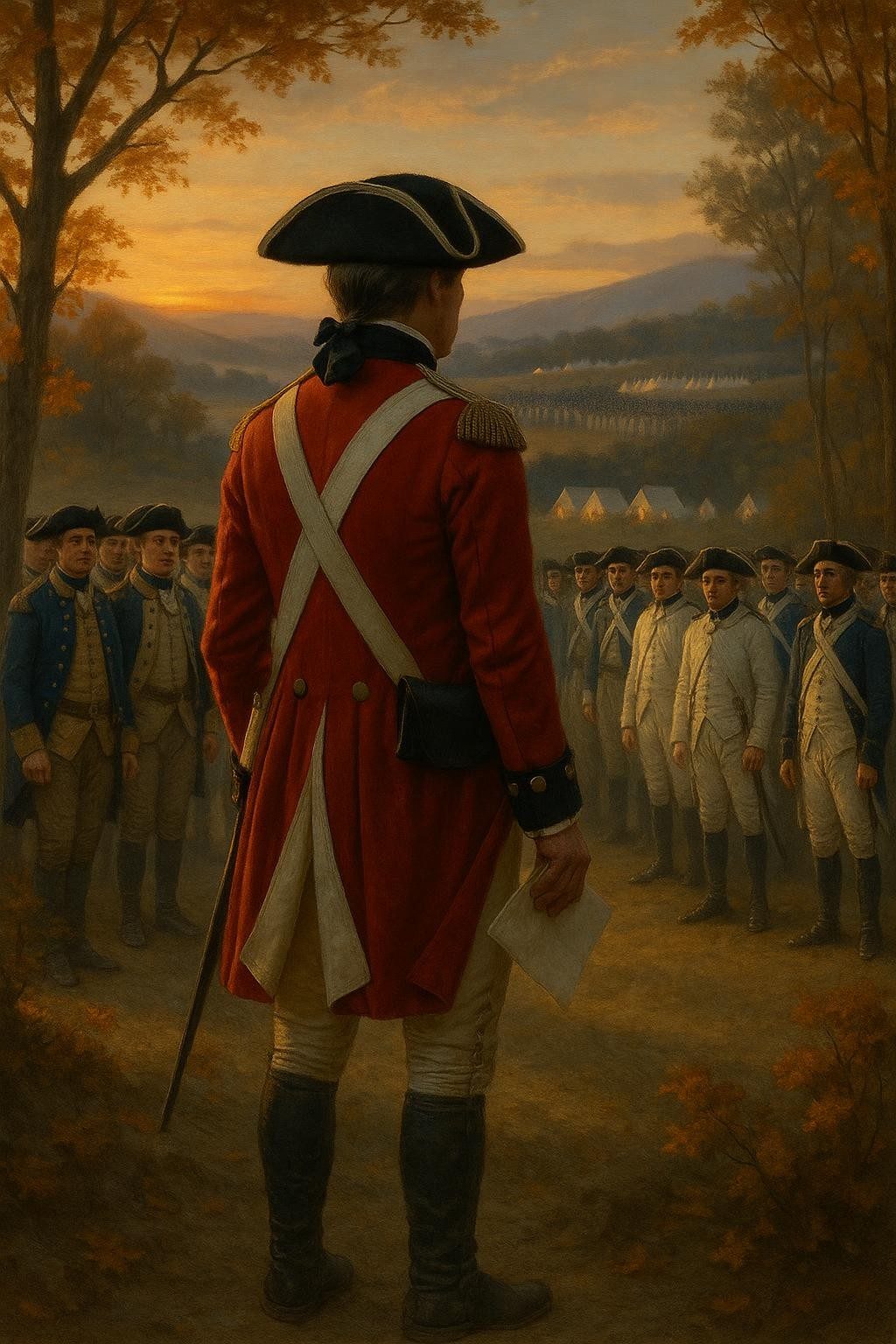
He was raised on tales of liberty and the rights of Englishmen. Yet it was those very ideals that would cast him and thousands like him as adversaries to the Crown that had long nurtured them. This curious case of historical irony unfolded during one of the most tumultuous periods of the Georgian Era, between 1776 and 1783, when Britain found itself at an unfamiliar disadvantage. Despite commanding the largest fleet and army of the eighteenth century, Britain suffered a profound defeat at the hands of what many considered her own children — colonists across the vast Atlantic who wielded both military ingenuity and philosophical fervour.
The scope of Britain’s 1776 expedition was unmatched. A mighty flotilla over four hundred ships strong transported a contingent of thirty-two thousand trained soldiers. This formidable force laid anchor near the eastern shore of a New World teeming with both opportunity and unrest. These soldiers, sworn to uphold the interests of their homeland, found themselves in a theatre quite unlike any they’d experienced. Across this sprawling land, echoes of discontent had transformed into a cacophony of rebellion, even as these rebels themselves held Britain’s laws and liberties close to heart.
Many within these colonies were British subjects by birth, ardent lovers of Shakespeare and Locke, dreaming not of separation but of fair representation. It was this desire for self-determination, grounded in their understanding of English rights, that drove colonists to rise against what they perceived as overreach. The layered motivations of these seemingly contradictory themes—rebellion in the name of the very philosophies that British civilization cherished—are the key to understanding why Britain, with all its might, ultimately watched as its grip on these thriving colonies slipped away.
As British troops embarked on their mission to quell the uprising, they contended with fierce and unorthodox resistance. The lush, rugged landscapes of America became a dynamic battleground where conventional tactics often faltered. Rivers wide and forests dense provided natural fortifications and advantageous terrain to those who knew these lands intimately. The King's soldiers found themselves outmaneuvered by militiamen who wielded knowledge of every hidden trail and treacherous passage, a testament to the often-overlooked strategic acumen of the American forces.
Read next: The Day a Black Sailor Walked Into Court and Freed Himself
Here, the idea of warfare transformed. Rather than regimented battles fought in open fields as tradition dictated, the Americans embraced a style of combat that leveraged guerrilla tactics, adaptability, and resilience. This evolution in military strategy not only baffled the British but also eroded morale amongst troops unaccustomed to fighting a foe that appeared like smoke, striking swiftly before vanishing into the wilderness. The psychological toll was heavy, and as the war dragged on, stories of the Empire’s folly grew louder.
Yet, the challenge was more than martial. The very ethos with which British officers attempted to corral insurgent spirits proved its own undoing. In instilling the tenets of liberty and justice, Britain inadvertently equipped her adversaries with a powerful ideological weapon. Each assertion of authority met with a spirited rebuttal, underscored by the very doctrines they had instilled in their offspring across the sea. The irony was palpable, a strenuously debated parliament back in Britain, caught in the crossfire of enforcing power whilst espousing freedom.
The conflict became an intricate tapestry of familial ties and philosophical entanglements. As tales of British officers consulting the philosophical texts of England resurfaced, it underscored the surreal juxtaposition of this historical moment. Soldiers squared off against kin—made not by blood alone but through shared cultural DNA. In this complex intersection of loyalty, identity, and ideology, the British troops were facing reflections instead of foreigners.
Read next: The Day a London Clerk Walked Into Court for a Dying Slave
Despite splendid tides of red coats and gold epaulets setting forth on plots of well-tread native landscapes, the very sentiment those regiments carried within sealed their fate. As each clash echoed through ephemeral arenas shrouded in the smoke of volley and musket, these landscapes bore witness not simply to battle, but to a climactic intellectual revolution pitting principle against might. With every skirmish lost or won, every strategic withdrawal or miscalculated advance, the seed of transformation silently took root.
The might at Britain’s disposal was formidable, indeed intimidating, yet the yearning for autonomy proved the more potent force. What unfolded became an enduring testament to the idea that war is not always won on the battlefield. Victory, as the Georgian era came to realize, involves the might of conviction and the unyielding pursuit of self-governed fate. Even as the material symbols of colonial rebellion lay strewn, a durable flame of independence invigorated hearts not prone to surrender.
The legacy of these events surrounds us still, and the lessons are as vital today as then. As we ponder this episode in British history, we see the profound impact of ideals on human action. The world Britain contended with during the late eighteenth century was born not out of simple desire for territory, but out of deeply-seeded principles, the very principles born and nurtured within halls and households across their once-great Empire. This battle, lost to British generals yet won through the thoughts and deliberation of their progeny, challenges us to reflect on the eternal conflict between power and principle, urging us to choose — and choose wisely — the values to which we hold fast.