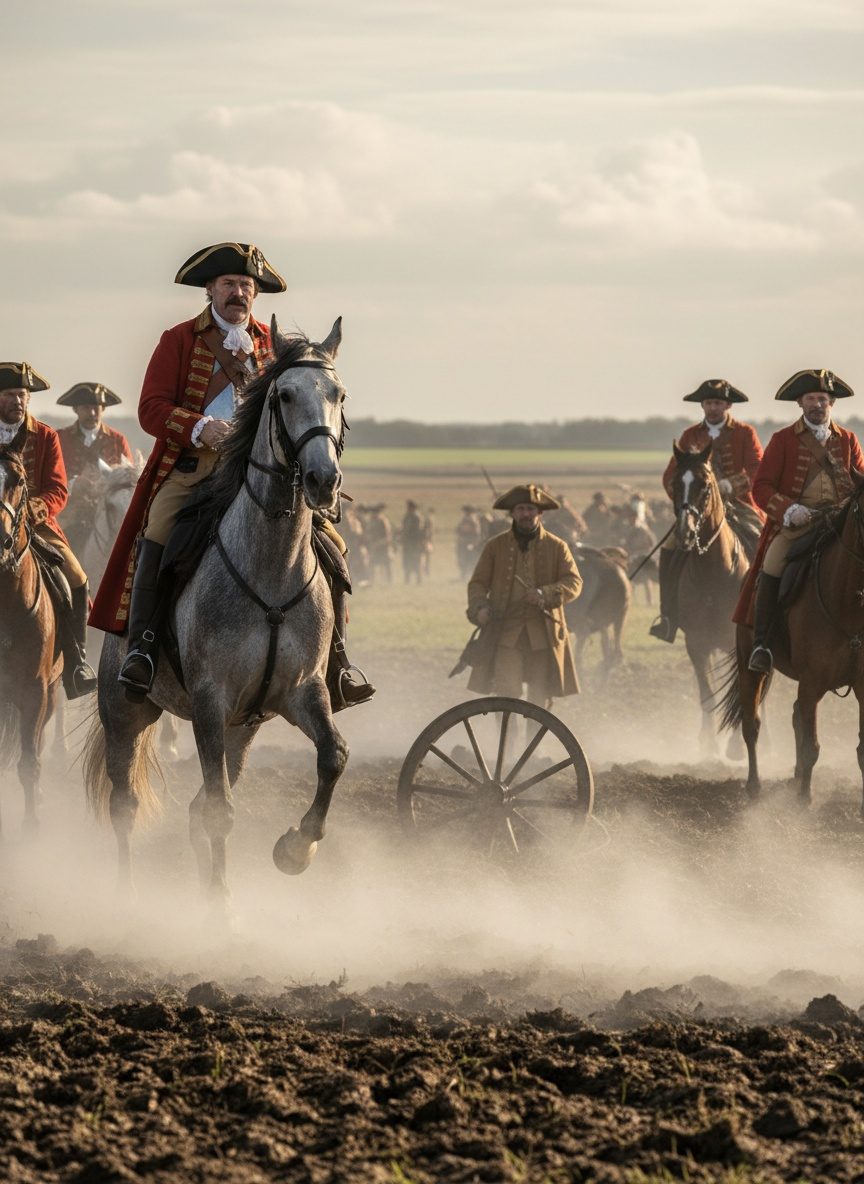
The acrid scent of gunpowder hung thick in the air as the ground trembled beneath the horses' hooves. The Duke of Marlborough's voice was barely audible over the thunderous din of cannons and the cries of men engaged in desperate conflict. Nearby, a great black horse reared, its eyes wild with fear, while a man in scruffy red regalia reached up to steady his commander. But in a heartbeat, the world shifted — a French cannonball whistled through the air, and the aide-de-camp crumpled lifelessly. Marlborough, unflinching, looked upon the fallen body before swinging onto the saddle, resolute, and steeled himself for the chaos ahead.
The Heart of the Storm
It was May 1706, and the forces of the Grand Alliance had converged at the fields near the small Belgian town of Ramillies. There, under a sky streaked by lethal trajectories, the allied troops led by the indomitable John Churchill, the Duke of Marlborough, faced off against the formidable French army. France, under Louis XIV, was an overwhelming presence in Europe, yet the Duke had built his reputation on transforming seemingly impossible odds into victories.
The landscape around Ramillies created a crucible of conflict, where the river Mehaigne and the marshy grounds surrounding it added treacherous dimensions to the battlefield. As the thunderhead army massed, Marlborough orchestrated his forces like a maestro. His plan was ingenious — feinting at one flank while pressing hard at another.
Amidst the pandemonium of shifting allegiances and the screeching hell of artillery fire, Marlborough not only commanded his army but inspired them. His presence in the midst of battle was the stuff of legend. Even after losing his aide-de-camp in a bloody instant, Marlborough was more than a general that day; he was the spirit binding his men together.
Read next: The Day a Black Sailor Walked Into Court and Freed Himself
The Tides of Fortune
The ebb and flow of that day's battle were mercurial. The French, seasoned and prideful in their prowess, put forth vigorous defenses. Yet, Marlborough's strategy began to unfold with tactical brilliance. His decision to send a sizable force astride the road to Ramillies to engage the French right flank confounded the enemy. As the French hurriedly shifted their troops, a gap opened, exposing their flank to the full brunt of Marlborough's awaiting force.
The reality of war, with all its smoke and fury, gave way to an undeniable truth: leadership was power. In the heart of conflict, the Duke's composure and tenacity overwhelmed his opponents. Those present recalled how Marlborough moved through ranks, the essence of calm amid chaos, his presence a balm sewing courage among his men. Each decision seemed a thread intertwined firmly with the frantic tapestry of battle.
When Marlborough's cavalry charged, breaking through with ferocious speed, they shattered the French lines. This moment of coordinated might was too reminiscent of a symphony reaching its staggering crescendo, an overwhelming force that smote enemy resolve.
The Dent of Destiny
By dusk, the once-mighty French forces lay in disarray. Many lives were spent in the furnace of combat, and as twilight descended, so did the realization—Marlborough had achieved a victory that would change the course of the war. The French army, renowned across Europe for its might, had been unseated as a dominant force. It was a transformation as stark as the transition from day to night, reshaping the contours of power.
Read next: The Day a London Clerk Walked Into Court for a Dying Slave
The vineyards and gentle hills surrounding Ramillies became silent witnesses not only to a pivotal clash but to a dismantling of the fearsome reputation the French had so carefully cultivated. The lesson drawn was sharp and clear: even the most formidable powers could crumble under the weight of deft strategy and indomitable will.
As the broken cries of the wounded mingled with the final toll of victory, the ramifications for Europe became evident. The triumph at Ramillies not only bolstered the morale of the Grand Alliance but marked a significant shift in the War of the Spanish Succession.
A Turning Point Remembered
In the aftermath of bloodshed and victory, the tale of Marlborough at Ramillies whispered through the ranks of European armies. Outside the chalets and chateaux, the little-known intrigues of one man's resolve became the echoes narrating a change in tide. Here was a battlefield leader whose story remained barely etched into the wider fabric of history textbooks.
Yet, understanding events like these reveals a deeper truth about the nature of conflict and resolution. The Duke of Marlborough exemplified the strategic acumen that turned tides, not through sheer numbers or brute force, but through guile and timing. His victory at Ramillies demonstrated that in the orchestrated chaos of battle, a singular will and an astute mind might bend the path of history. In reflecting upon this story, one is reminded of the potency that lies within those overlooked individuals whose choices reverberate far beyond their time.