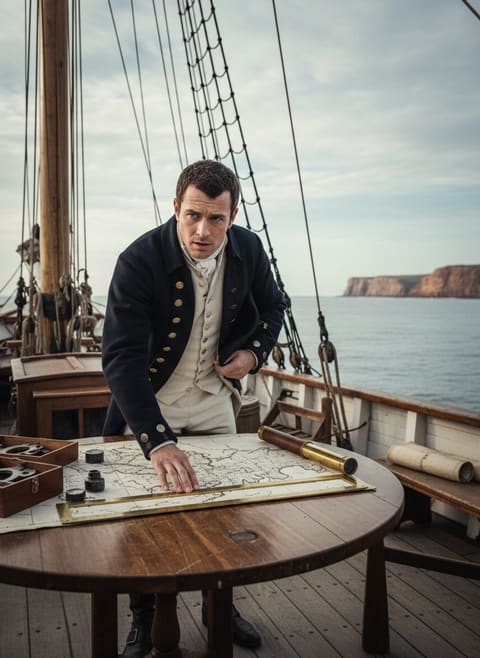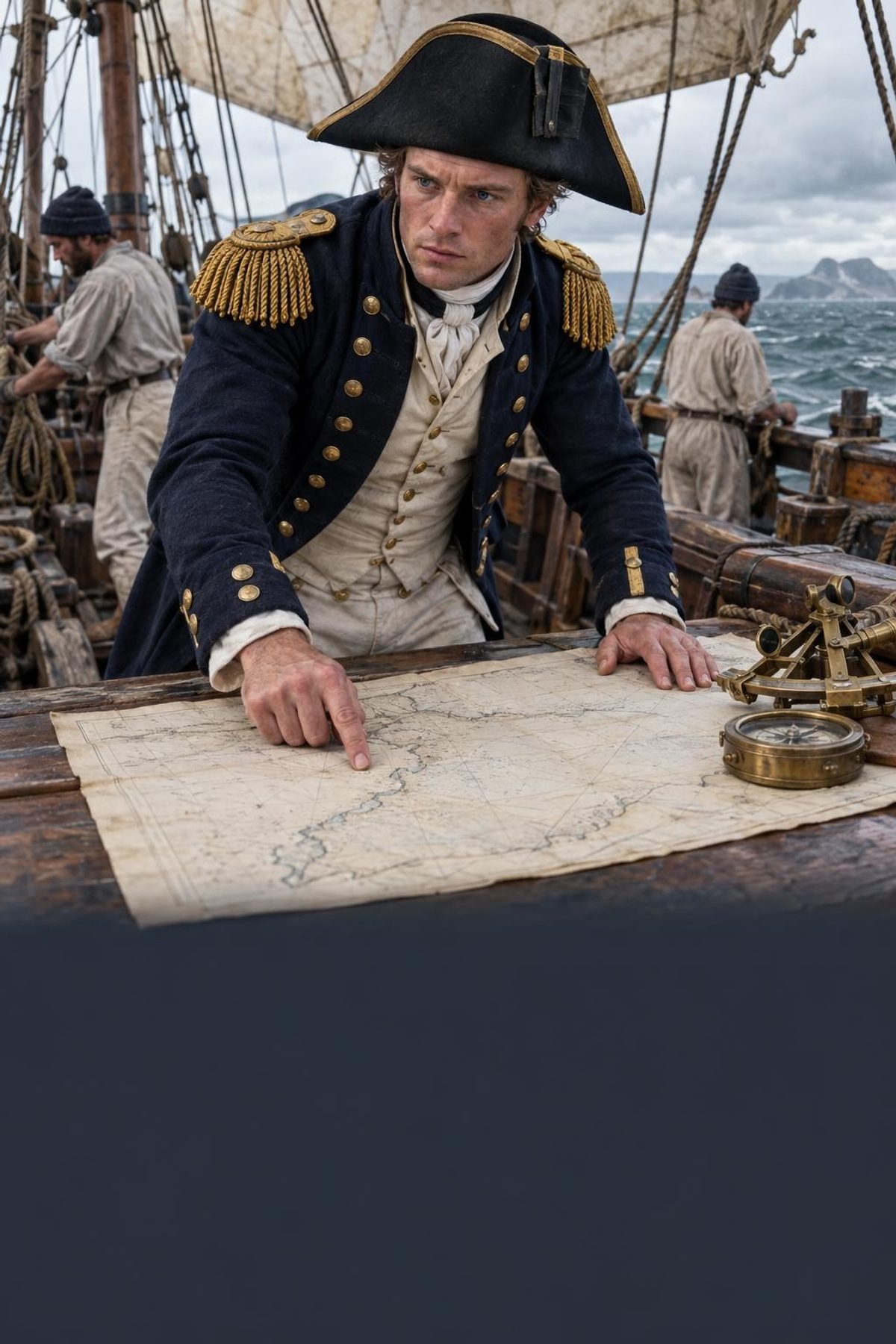
He was twenty-seven years old and had never set foot on Australian soil. Yet Matthew Flinders would come to know its coastlines better than anyone before him.
A Leaking Vessel and a Daunting Mission
The year was 1801, and the map of the world was far from complete. While much of Europe was embroiled in the Napoleonic Wars, an ambitious young lieutenant from Lincolnshire prepared to embark on an expedition that would redefine geographical understanding. Matthew Flinders, a naval officer passionate about exploration, was tasked to chart the entire coastline of Terra Australis—or as it would soon be known, Australia.
Flinders was given command of HMS Investigator, a vessel that was far from the best the Royal Navy had to offer. The ship was old and frail, unfit for such an arduous journey. Unknown to Flinders and his crew as they set sail from England was that the vessel's timbers were already rotting, their journey barely begun. As the voyage progressed, the Investigator began leaking ominously, a foreboding precursor to the challenges that lay ahead.
Despite these drawbacks, Flinders was determined. The allure of the unexplored fueled his resolve. Australia remained a mystery after centuries of European exploration, its vast coastlines still largely uncharted. To map this great land in its entirety was a task of colossal scale, but one that Flinders accepted with zeal. Little did he know that the challenges he faced would extend far beyond the confines of his ship.
Read next: The Day a British Captain Sailed Into the Dark and Named a Continent
The Tyranny of Distance and Disease
As the Investigator sailed into unknown waters, Flinders leaned on both skill and luck. The oceans were merciless, and the maps incomplete. Untamed, coral reefs lurked beneath the waves, threatening to impale the ship’s decaying hull, while erratic weather conjured sudden squalls, testing every seam of the fragile vessel.
The further Flinders and his crew traveled, the more remote and solitary their expedition became. They operated at the fringe of the known world, navigating a land that was as beautiful as it was inhospitable. Provisions dwindled, and fresh water sources became more challenging to locate. Yet, the most insidious threat was disease. Scurvy, the relentless companion of seafarers, emerged as a deadly foe. One by one, crew members succumbed to the illness.
Flinders himself took on the duties of both captain and caretaker, balancing the demands of navigation with a desperate need to maintain the morale and health of his men. His navigational skills were tested daily as he meticulously charted every inlet and headland. All the while, he had to keep a constant vigil on the well-being of a crew fighting for survival against an unseen enemy.
Drawing the Continent
The task of charting the entirety of Australia required both precision and sensibility. Flinders approached his mission with a scientific rigor that was ahead of his time, relying not just on charts and compasses, but on detailed observations and mathematical calculations. He was keenly aware of both the symbolic and practical significance of his work. As a result, Flinders produced maps with a level of detail and accuracy that was unprecedented.
Despite the ship’s physical deterioration and the hardships faced by his crew, Flinders persevered. His zealous commitment to the mission led him to explore vast swathes of the Australian coast. From the lush rainforests of the northeast to the stark desert edges of the west, the landscapes seemed as varied as the sea was vast. Each day brought new revelations and respect for the land he so diligently documented.
Read next: The Day Matthew Flinders Sailed Into a French Trap
Perhaps what shaped Flinders’ achievements the most was his unwavering focus. The strained circumstances, instead of being debilitating distractions, seemed to sharpen his attention to detail. When the Investigator finally limped back to port, war-weary and on the brink of collapse, it carried not just a weary crew, but the first complete draft of Australia’s coastline.
Legacy of Determination
Matthew Flinders' journey was remarkable not just for the geographical achievement, but for the deep resilience it revealed. Faced with insurmountable odds, a leaking ship, and a dwindling crew, Flinders exemplified the spirit of early explorers—undaunted by uncertainty, resolute despite adversity. His charts laid the foundation for future explorations and colonization efforts, transforming the blank spaces on the maps into tangible, navigable spaces.
Though Flinders returned to England with his vital maps, he faced further challenges, including imprisonment by the French for a period of time during his journey home. Nevertheless, his work left an indelible mark. His meticulous charts would guide explorers for generations. For Australia, an island continent poised to emerge on the global stage, Flinders’ maps were instrumental. They uncovered a land of potential, rich in landscapes and resources.
Today, Flinders’ legacy is embodied not just in maps or maritime chronicles, but in the spirit of exploration he bequeathed to future generations. His tenacious pursuit of discovery, under perilous conditions, offers a timeless reminder of humanity’s endless curiosity and resilience. In charting the coastlines of an unyielding land from a sinking ship, Matthew Flinders offers a perspective of determination and ingenuity amid the boundless sea of the unknown.