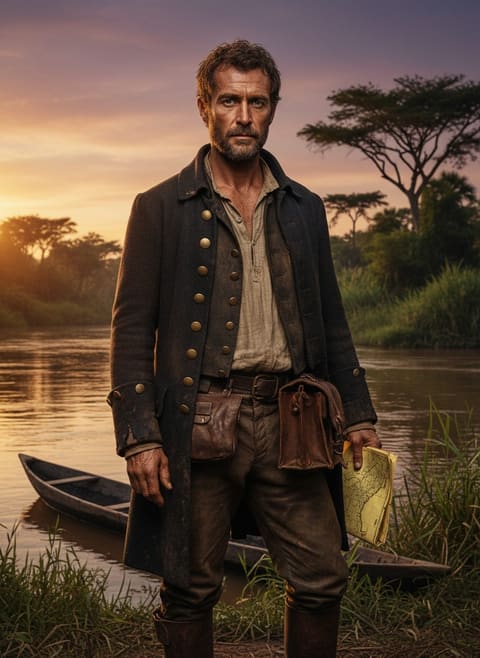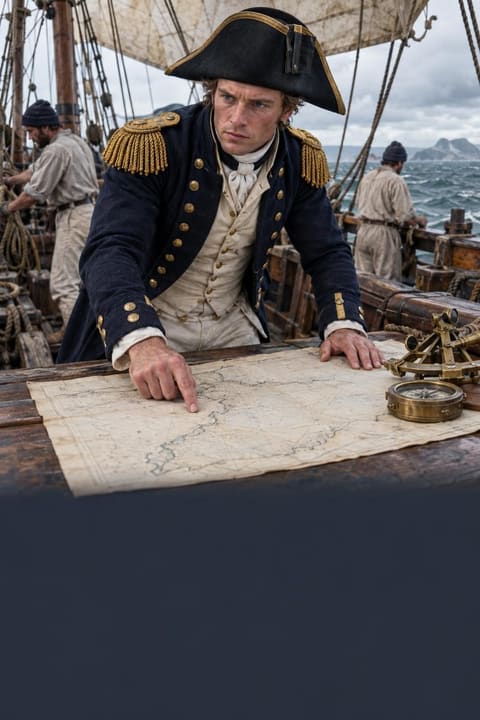
The West African sun hung heavily in the sky, casting an intense golden hue over the wide expanse of the Niger River. Its waters murmured softly, a winding ribbon of possibility and peril stretching into the heart of the continent. On its banks, the air was thick with the scent of wet earth and the persistent hum of insects.
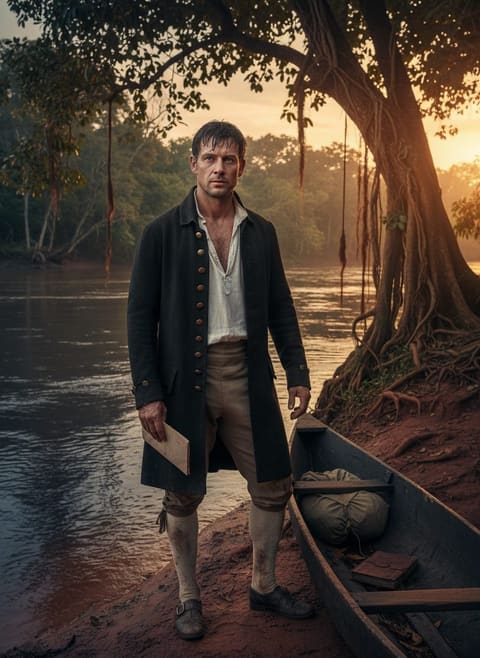
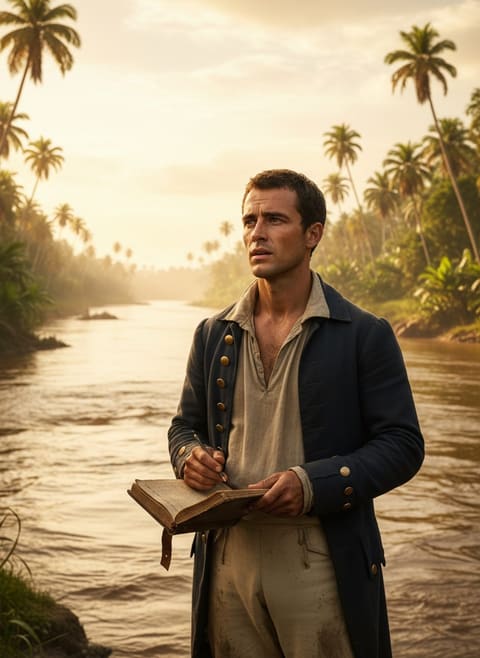
Here, in this remote world far from the cooler climes of Scotland, a man stood alone on the brink of history. Mungo Park looked out over the shimmering water, his thoughts a turbulent current of determination and desperation. Before him lay the mystery of the Niger, a geographic riddle that had tantalized Europeans for centuries. This was a journey into the unknown, and he was resolved to see it through, come what may.
With blistering heat reflecting off the water, Park could feel the ghosts of explorers past whispering through the rustling leaves. Fever had claimed much of his expedition; forty had dwindled to a mere twelve, reduced to shadows by the relentless African sun and the insidious grip of disease.
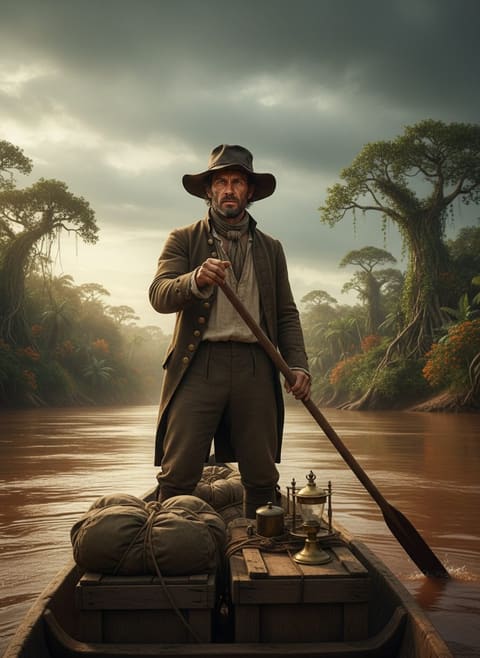
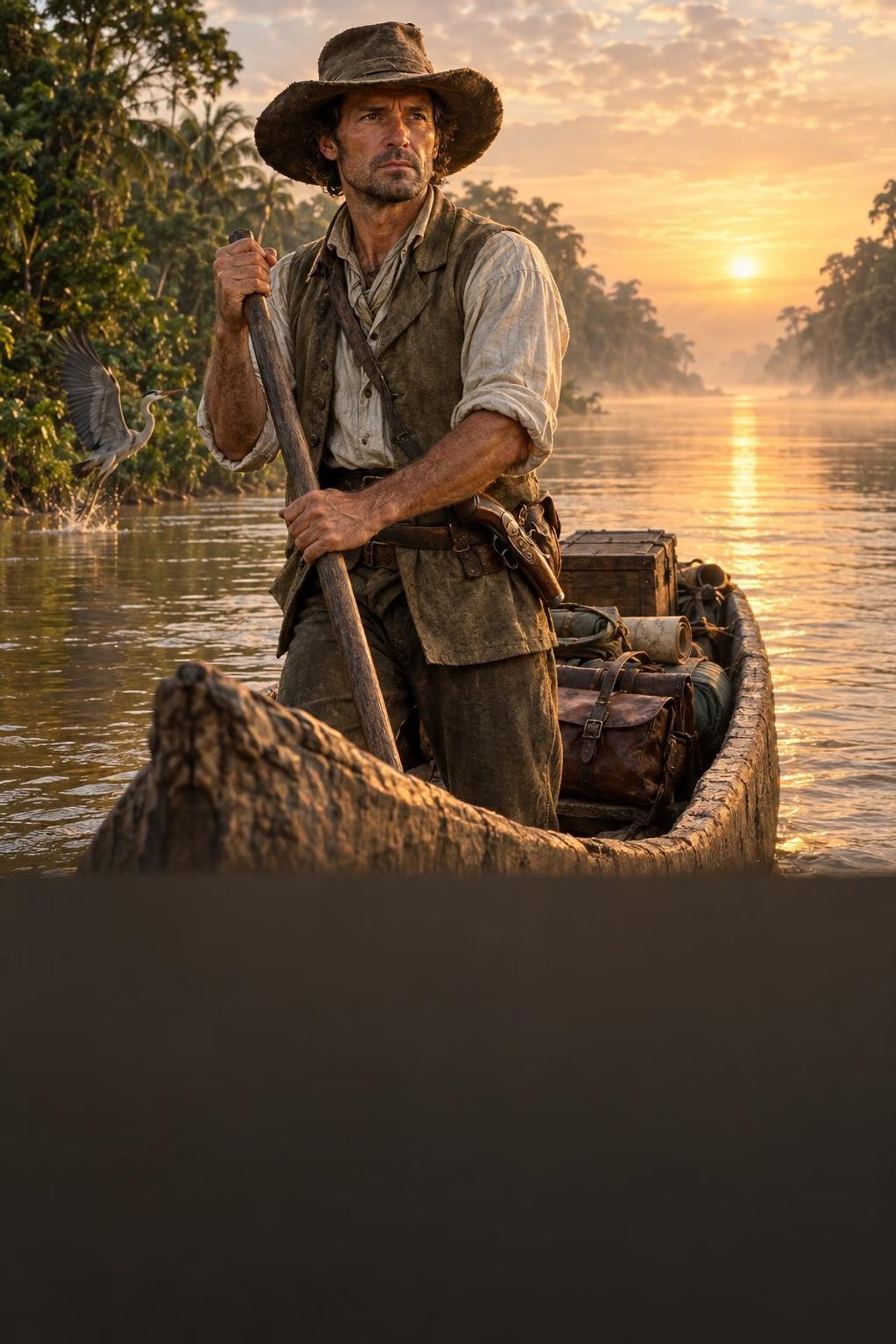
Now, clutching the oars of his canoe, he lamented the loss but embraced the challenge. Alone he would push forward, seeking the river's secret, that ultimate point where its waters kissed the distant sea.
Read next: The Day a Scots Doctor Walked Into the Niger and Vanished
A Solitary Voyage Into the Unknown
As Park's paddle dipped rhythmically into the water, it marked the beginning of a solitary voyage that defied caution and reason. The tranquillity of the river’s surface belied the dangers lurking beneath. Hippos and crocodiles lurked, alongside unfathomable human threats from tribal territories that had never seen a European.
Yet, what drove Park forward was more than ambition; it was an unyielding curiosity and a deep sense of purpose. He sought to lift the veil from Africa’s cartographic mysteries, contributing to the Enlightenment's hunger for knowledge.
Born in Selkirkshire, Scotland, Mungo Park was no stranger to adventure. His initial journey to Africa had ended in both triumph and tribulation, providing Europe with the first reliable reports of the Niger’s course. But this new chapter was different.
Those who had set out with him from the coast, adventurers and soldiers alike, had fallen to the region’s merciless maladies. Fever was a cruel companion on this trek, claiming lives with an efficiency that no wilderness beast could match. Yet here Park stood, forging onward, buoyed by an indomitable spirit.
To the uninitiated eye, his canoe seemed insignificant against the vastness of the river. Yet within it, he carried the hopes of a continent striving to map the unknown, to understand the hidden. As Park glided through the water, every sweep of the oar was a declaration of defiance against the elements that conspired to hush his endeavors. He had become a ghost himself, a solitary figure navigating a liquid highway to discovery.
Beyond the Edge of the Map
Venturing further, Park was met by scenes of breathtaking beauty interwoven with stark reminders of hardship. Verdant banks fell away to reveal towering cliffs, under which the river’s voice deepened to a dull roar. The Niger carried him onward, a bond between man and nature forged in necessity and existential gamble.
Each bend could hide the unknown, a new challenge to be surmounted or evaded. Yet, what lay beyond the known was a story of its own—a log of human perseverance etched upon the wild land.
Read next: The Day a Scots Surgeon Walked Into the Heart of Africa
Park's days were punctuated by encounters with the riverine tribes, whose lives were woven into its fabric. These were people who had untold stories of their own, deeply connected to the river for sustenance and survival. To them, Park was an enigma, a solitary figure tasked by ambition rather than necessity. He navigated this intricate dance with a mixture of humility and resolve, understanding that while the river flowed on through time, his presence was fleeting.
As dusk fell upon the Niger, its water turned to liquid gold under the dying sun, painting Park’s journey in hues of quiet majesty. Much remains to speculate about his fate on this uncharted quest through Africa’s heart. Whether through the river’s turbulent embrace or human handiwork, Park would not return from this voyage. His disappearance would echo through the annals of exploration as a mystery entwined with the relentless current he dared to follow.
Mungo Park's gamble with the Niger stands beyond mere exploration. It is not simply a story of geographical discovery but a testament to the human spirit’s insatiable thirst for knowledge in the face of overwhelming odds.
His solitary journey reminds us of the boundaries broken not just on maps but within minds, urging generations to peer beyond the horizon and dare to dream. As for Park, he remains forever charted on history's map, a solitary figure adrift on a river of dreams, compelled by an unyielding pursuit of the unknown.