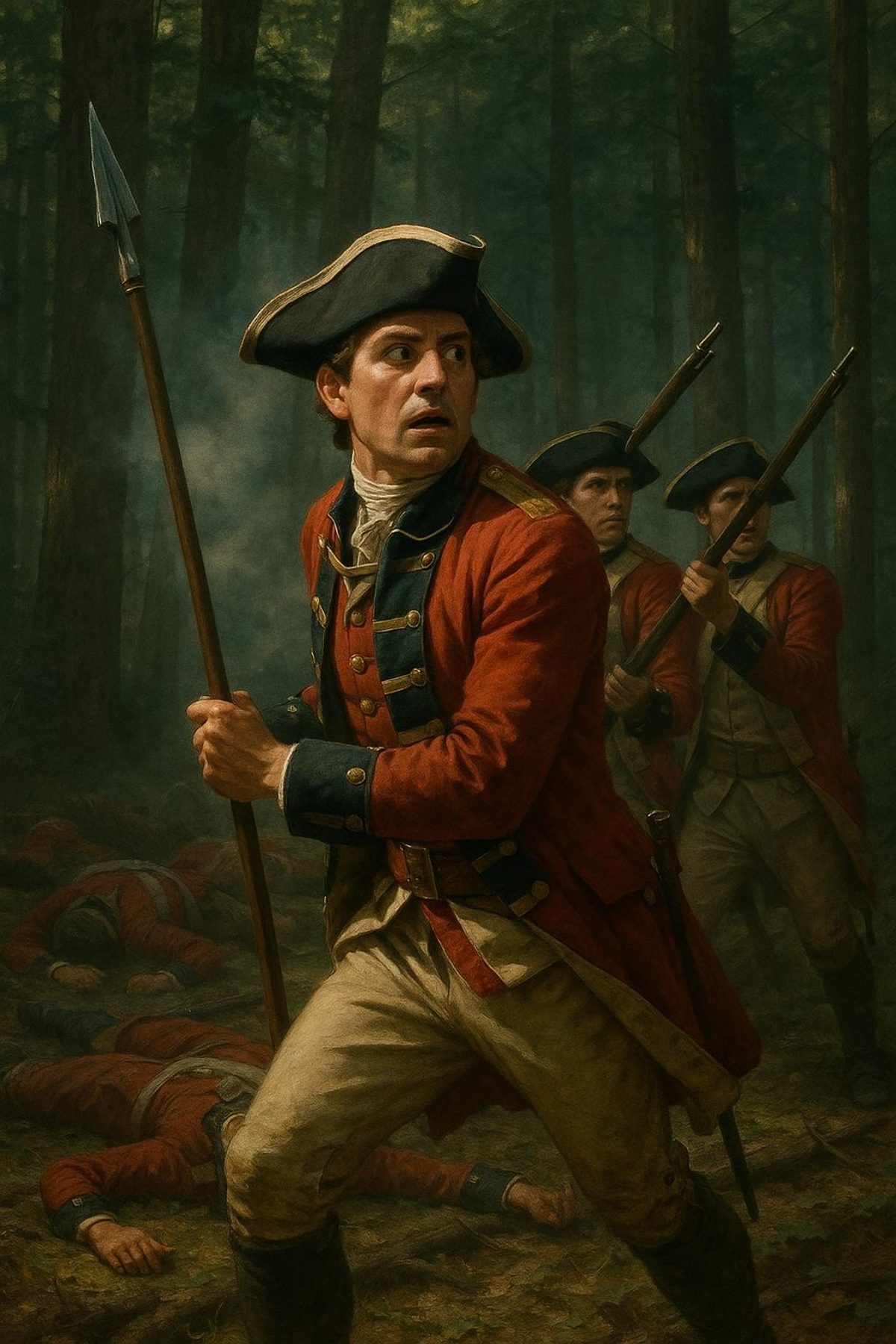
In the pale dawn of a July morning in 1755, the Pennsylvania wilderness exhaled a heavy mist, clinging to the trees and muffling the sounds of the forest. The light was low, and the air carried a damp chill that seeped through wool uniforms. Underneath the dense canopy, an entire British column, sculpted in the finest traditions of European military discipline, wound its way in orderly ranks. Their mission was straightforward — to assert British control over the strategic outpost of Fort Duquesne, deep in the heart of French territory. In the shadows of these towering trees, however, lay the unseen peril of an enemy that hid in the mist, destined to alter the future of the British military forever.
The Unseen Enemy: A Lesson in Humility
The British, led by General Edward Braddock, possessed over a century of experience maneuvering in the disciplined formations that had served them well on the battlefields of Europe. Their scarlet ranks moved with ceremonial precision, the clink of gear and snap of officer commands breaking the morning silence. Yet, the thick forests of Pennsylvania were no place for neat lines. As they advanced, the line of red coats stretched impossibly thin among the trees, exposing vulnerabilities the French and their Native American allies would soon exploit with ruthless efficiency.
By mid-morning, the tranquility of the forest was shattered. French forces and their Native allies, utilizing the cover of the forest and the element of surprise, engaged Braddock’s forces. With musket and tomahawk, they moved invisibly through the trees, weaving through their own labyrinthine dark green cloaks. Unfamiliar with this form of warfare, where enemy faces were hidden and their exact numbers guessed in terror, the British were caught in a deadly dance of confusion and chaos. Within three hours, nearly 900 of Braddock’s magnificent column lay dead or wounded on the forest floor. The battle along the Monongahela River was a devastating blow — but it was also a pivotal lesson.
Reinventing Redcoats: Adaptation in Adversity
After the carnage, the survivors regrouped, not in the spirit of defeat, but reinvention. The British military, faced with the sting of an unexpected defeat in unfamiliar terrain, turned introspective. It was a time to learn, adapt, and transform. The static, linear approaches of European battlefields would no longer suffice in the sprawling wilderness of America.
Read next: The Day a Freed Slave Lectured Britain's Finest Minds
Resourceful officers, among them a young George Washington, who had been with Braddock, recognized the urgent need for change. The adaptability that the French and Native forces exhibited became a blueprint for the British to follow. They began to craft an army that could fight effectively in the forests, adopting looser formations, practicing quicker mobility, and emphasizing the use of the land for cover. It was not modernization for modernization’s sake, but a necessity sculpted from the lessons written in blood on the Pennsylvania soil.
The Soldier Shaped by Shadows
The British army's transformation in the aftermath of Braddock's defeat was not merely tactical but psychological. No longer could valor be measured solely by the sharpness of one's formation under fire, but by an ability to blend cunning with courage. Individual soldiers learned to become self-reliant, to use terrain to their advantage, and to anticipate movements of an unseen enemy.
Read next: The Winter That Broke Napoleon's Army of Portugal
This paradigm shift birthed the archetype of a different kind of British soldier — still disciplined and brave, but now more adaptive and aware. The rigid tradition of parade-ground precision gave way to the flexibility of guerrilla tactics, laying the groundwork for advances that would appear later in wars fought on varied landscapes throughout the globe.
A Legacy of Adaptation
The skirmish near the Monongahela was just one day, but its echoes changed the British army forever. It was a powerful lesson in the art of soldiering when technical superiority is no guarantee of victory. The defeat underscored the notion that survival and success lie in one's ability to evolve with the challenges and wisdom to accept nature's hard lessons.
In the years that followed, the British military's renewed focus on flexibility and adaptation spread throughout its ranks, refining their approach in conflicts that spanned continents. This shift did not just define a war; it turned setbacks into growth and defeat into reinvention. The green shadows of Pennsylvania, once the stage of dire misfortune, became the dark muse of an army reborn — one whose legacy of adaptation continues to influence military strategies to this day.