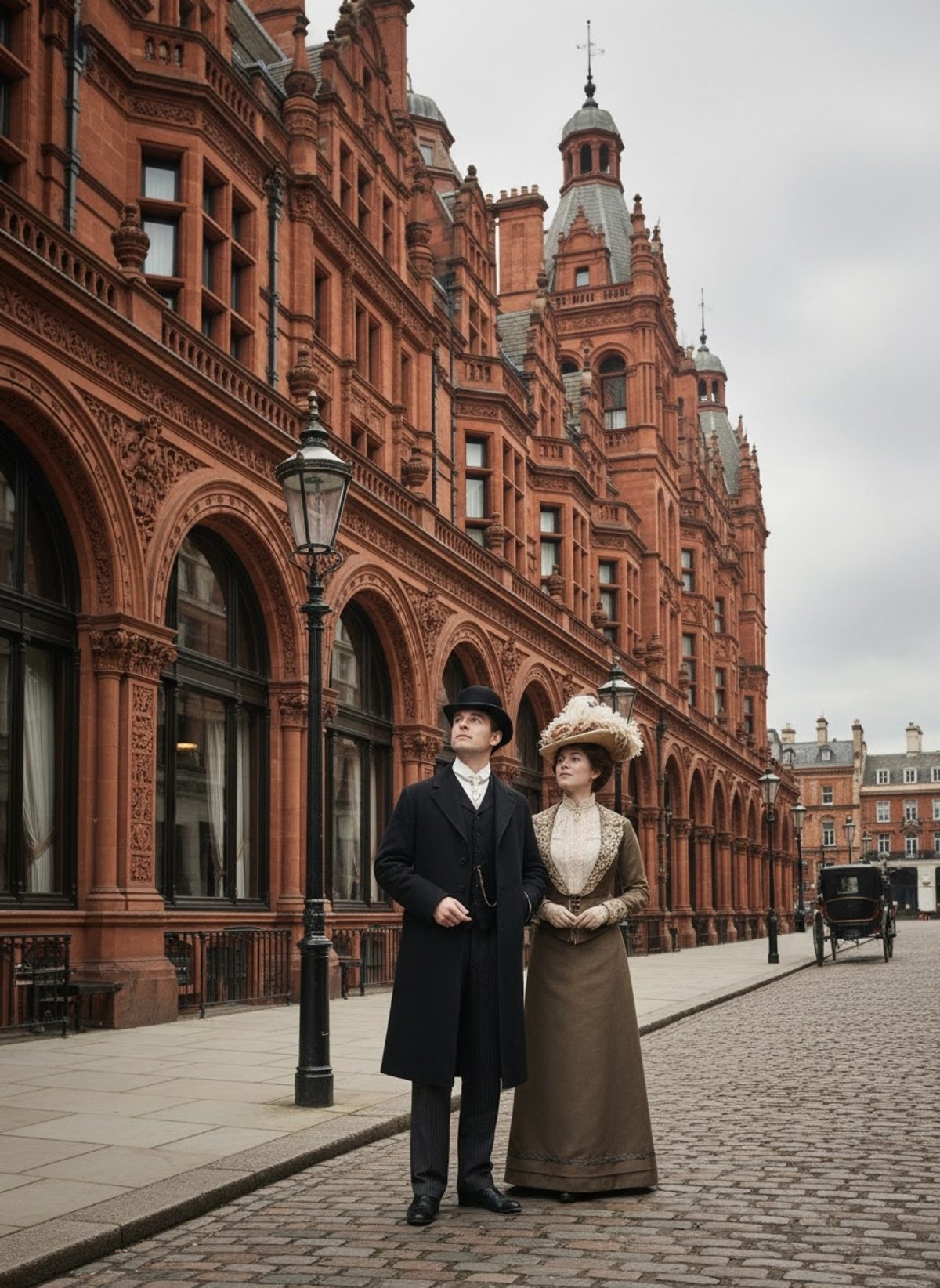
March 10, 1911. A crisp sunbeam broke through London's habitual cloud, illuminating the tussle of brick and terracotta towering over Russell Square.
The Birth of a Monument
In the early 20th century, as London swung into the full bloom of the Edwardian era, architect Charles Fitzroy Doll eyed a patch of Bloomsbury with a vision that reverberated beyond ordinary ambition. The Imperial Hotel was to be his masterpiece, a sumptuous homage to elegance and innovation built right beside the verdant oasis of Russell Square.
The Imperial did more than fill a space; it consumed an entire corner of the city. Beneath its terracotta tower, there lay a long-buried river, a subterranean whisper of London's past. The Fleet River, unseen but persistent, ran through the history of this plot of land. Yet, Doll convinced the masses that his grand hotel would rise undeterred by such secrets of the soil.
Construction began in 1905 using an eye-popping blend of decorative styles. By 1911, Doll had crafted not just a hotel but a microcosm of Edwardian opulence. With its roots humming with ancient waters, the Imperial Hotel stood majestic and unyielding.
Read next: The Night George Williams Lit a Lamp in a London Warehouse
Inside the Terracotta Walls
Doll's design sensibilities defied mere functionality. Walking through the Imperial Hotel's doors was like stepping into another realm. Guests were met with a lavish palm court crowned by a glittering glass dome, where natural light danced and played upon intricate tiling, guiding the well-heeled and the curious alike into its embrace.
The hotel offered more than just rooms for lodging; it was an ethereal comfort zone designed for pleasure and relaxation. Its Turkish baths were a steamy escape, reminiscent of warmer climes. The Winter Garden, lush and paradisiacal, gave sanctuary from the chill of the outside world. Here, patrons could idle amid flora that defied the London fog, while the distant hum of the city slipped beneath the flourish of birdcalls.
With 500 rooms, the Imperial stood as a beacon of luxury and innovation. The hotel embodied the height of Edwardian style through its plush furnishings and one-of-a-kind decor, serving as a retreat for the world's elite and a point of absolute pride for Doll.
The Hotel's Twilight
Traveling forward through time, the half-century standing tall began to take a toll upon the once-grand Imperial. By the mid-1960s, the architectural fashions had shifted. Concrete was crowned the new monarch of construction. As practicalities and modernists took center stage, the intricacies of terracotta and whimsical winter gardens seemed as faded as the gilded era they represented.
Onlookers watched with a heavy heart as plans were made to demolish Doll's creation in 1967, replacing it with the blunt uniformity of modern design. The wrecking ball arrived; within twelve months, a new building stood — stark concrete replacing the artfulness of the past.
The hotel that swallowed Russell Square's edges had itself been swallowed, its spaces rewritten in flat lines and civic concerns, loyalty to history set aside in the name of progress.
Read next: The Day Josephine Butler Walked Into Parliament and Won
The Silent Witnesses of Change
Through its brief life, the Imperial Hotel bore witness to an array of lives and stories. The hotel's rooms hosted everything from whispered secrets in leaded-window parlors to laughter around polished mahogany tables. Bloomsbury buzzed with creativity, and the hotel was steeped in the intellectual and artistic fervor of the era.
While its physical presence vanished under the swing of the wrecking ball, echoes of the Imperial resounded in the whispered nostalgia of those who had seen its light. In each reconstruction of Russell Square, traces of the hotel lingered — an indefatigable memory of its intricate rooms and secluded courtyards.
Reckoning with Yesterday
The tale of the Imperial Hotel is more than a narrative of consolation and change. It stands as a dialogue between past and present, where not just buildings, but the philosophies they housed, speak from history's swollen heart.
In a city layered with the lives of eras gone by, London's identity is continually remade, told through its architecture and the spaces its people occupy. The story of the Imperial Hotel is a touchstone, inviting reflection on what is saved and what is lost as we trod the thin lines between memory and modernity. Russell Square goes about its day, echoing secrets yielded from its past, while the buried river murmurs beneath a very different surface.