Victorian London wasn’t ready for Jules Léotard. Yet, his daring flight across the rafters of the Alhambra Theatre changed more than entertainment history—it changed fashion itself.
The Birth of a Phenomenon
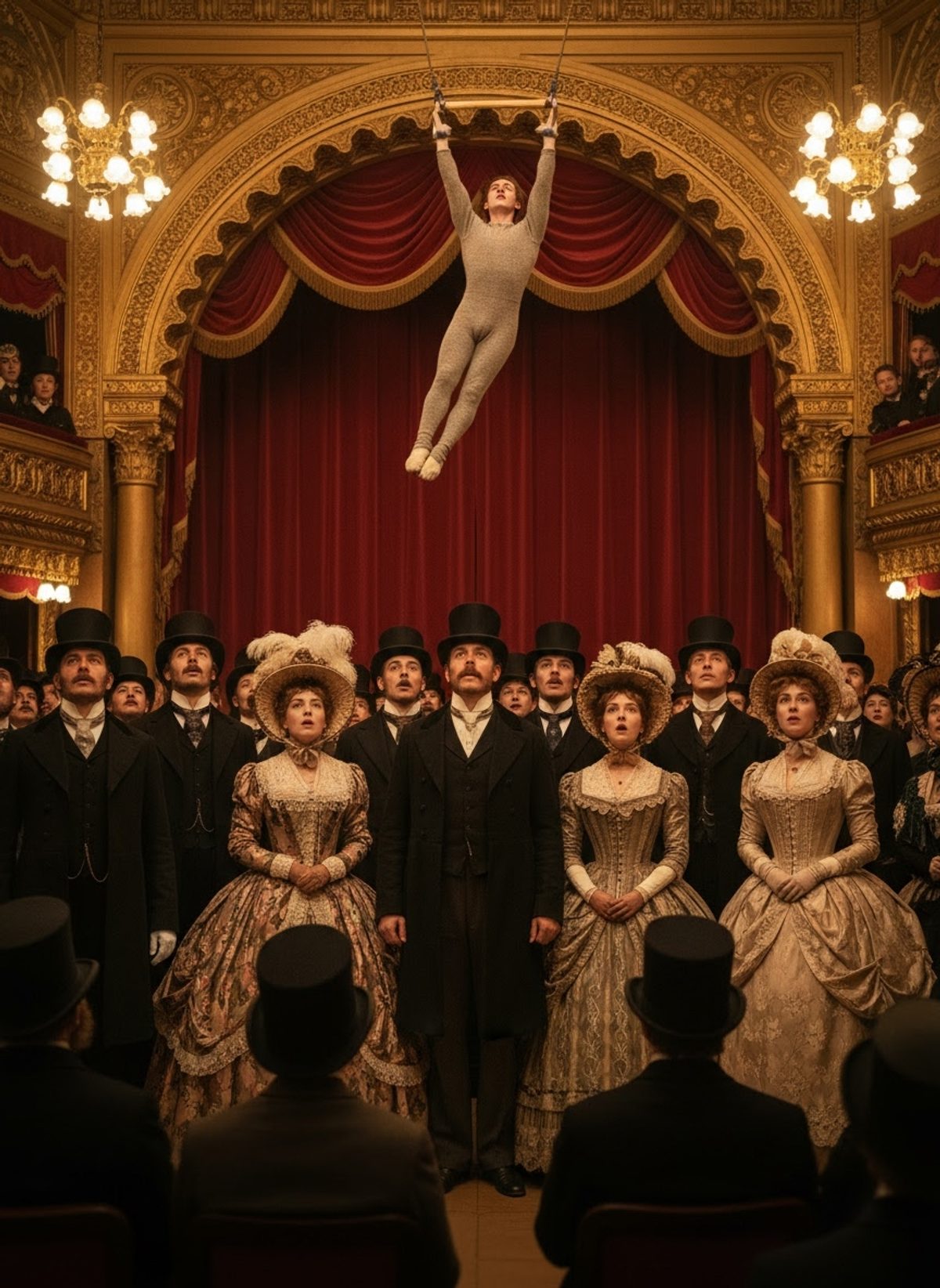
The year was 1861, and London was a city buzzing with innovation and spectacle. Within this backdrop, the Alhambra Theatre emerged as a temple dedicated to the mesh of artistry and athleticism. Victorian Britons who gathered under its opulent ceiling were conversant in theatre etiquette, but nothing prepared them for the breathtaking audacity of an acrobat leaping through thin air.
When the flying trapeze was introduced to London, it drew audiences like a magnetic force. This new form of entertainment defied earthly limitations, pushing the boundaries of both physical and psychological comfort. At the heart of this sensation was Jules Léotard, a French aerialist whose gravity-defying feats challenged the audience's understanding of human capability. He was not just performing; he was rewriting the capacities of the human body and spirit.
A Leap into Fashion
Despite the pervasive cultural modesty of the era, the outfit Léotard made standard for his act—a form-fitting, knitted one-piece suit—spurred a revolution in women’s fashion. Named the "leotard" in his honor, this garment was initially met with Victorian reservations. After all, it clung scandalously and revealed the muscle and sinew of the acrobat's form.
Read next: The Day Josephine Butler Walked Into Parliament and Won
Yet, the practicality of such a design could not be ignored. In a time when women’s fashion demanded layers upon layers of restrictive material, the leotard represented something radical: freedom of movement.
It wasn’t long before this garment escaped the trapeze and found its way into the gymnasiums, even edging onto dance floors and fashion runways. It suggested a dynamic form of femininity not previously acknowledged. Ironically, the Victorian concern for modesty seeded a shift towards garments that emphasized natural shape over opulence.
Alhambra, the Heartbeat of Innovation
The Alhambra Theatre, seated comfortably in bustling Leicester Square, was no stranger to the flamboyant. Yet the arrival of the flying trapeze elevated its status to that of legend. The building's Moorish-inspired architecture, with its sweeping arches and intricate latticework, echoed the daring arcs traced above by the acrobats. This melding of art forms—architectural elegance and physical prowess—brought an exotic allure to the heart of London.
Beneath the theatre lights, audiences found themselves entranced by the graceful dances of the aerialists. Each gasp and cheer from the crowd seemed to bounce off the opulent walls, fueling the performers' adrenaline. The thrill of a split-second catch, which could mean triumph or calamity, was the event of the season—a bold testament to human ingenuity and trust between partners.
Read next: The Day Octavia Hill Refused to Let London's Poor Live in Filth
Beyond the Spotlight
The spectacle of the trapeze reverberated beyond the physical confines of the theatre. It moved people to reconsider the limits they had known, not just in entertainment but in life itself. Public interest in physical fitness and personal health soared. The elasticity and strength required of trapeze artists underscored the value of a more active, toned body, shifting ideals from passive beauty towards something more vigorous.
This influence seeped into the domestic sphere, sparking discourse on health and exercise among Victorian Britons often resigned to sedentary routines. Parlor exercises became fashionable, and the culture began to embrace activities that encouraged movement and physical engagement. The aerial dance was thus a catalyst in redefining not only how people moved but how they lived.
The night Jules Léotard defied gravity at the Alhambra Theatre did more than captivate an audience; it catalyzed a cultural shift. As the fashion industry adapted, and gyms filled with newfound enthusiasts, the silhouette of this era bent towards modernity. It was not just an act of gymnastics—it was a literal and metaphorical leap into the possibilities of what life could be, daring us all to reach beyond the mere limits of tradition.