June 18, 1815. The ground was wet and treacherous underfoot.
In the midst of the Napoleonic Wars, the destiny of Europe teetered in the balance outside a small Belgian village. Here, at Waterloo, scattered with mud and the echoes of barking muskets, the fate of an empire was to be decided. Yet, amidst the grand sweep of battle, a story unfolded that textbooks have often overlooked: the story of The Gate That Would Not Fall at Hougoumont.
The Storming of Hougoumont
On the day of the fateful Battle of Waterloo, Napoleon Bonaparte, with his unyielding ambition, directed a powerful force of fourteen thousand soldiers towards a seemingly inconsequential target — a walled farmhouse known as Hougoumont. This enclave on the battlefield might have appeared merely strategic, yet it quickly became a fulcrum upon which the day's events would pivot. Napoleon did not foresee the fierce resistance it would incite, nor did he expect this simple farmhouse to become a fortress of defiance.
The French assault on Hougoumont began as the clock crept towards midday, with an aggressive barrage intended to break the Allied lines. By sheer volume of numbers and ferocity of attack, Napoleon's forces aimed to crush the defense swiftly. Amid the tumult, the French forces surged against the farmhouse, with soldiers wielding sabres and bayonets as they poured forward eagerly. But the Allied soldiers, particularly the seasoned Coldstream Guards, held their ground with reckless courage, knowing their position was pivotal to the Duke of Wellington's defensive stand.
Read next: The Day a Surgeon Walked Into a Prison and Freed a Madman
Macdonell: The Giant of Hougoumont
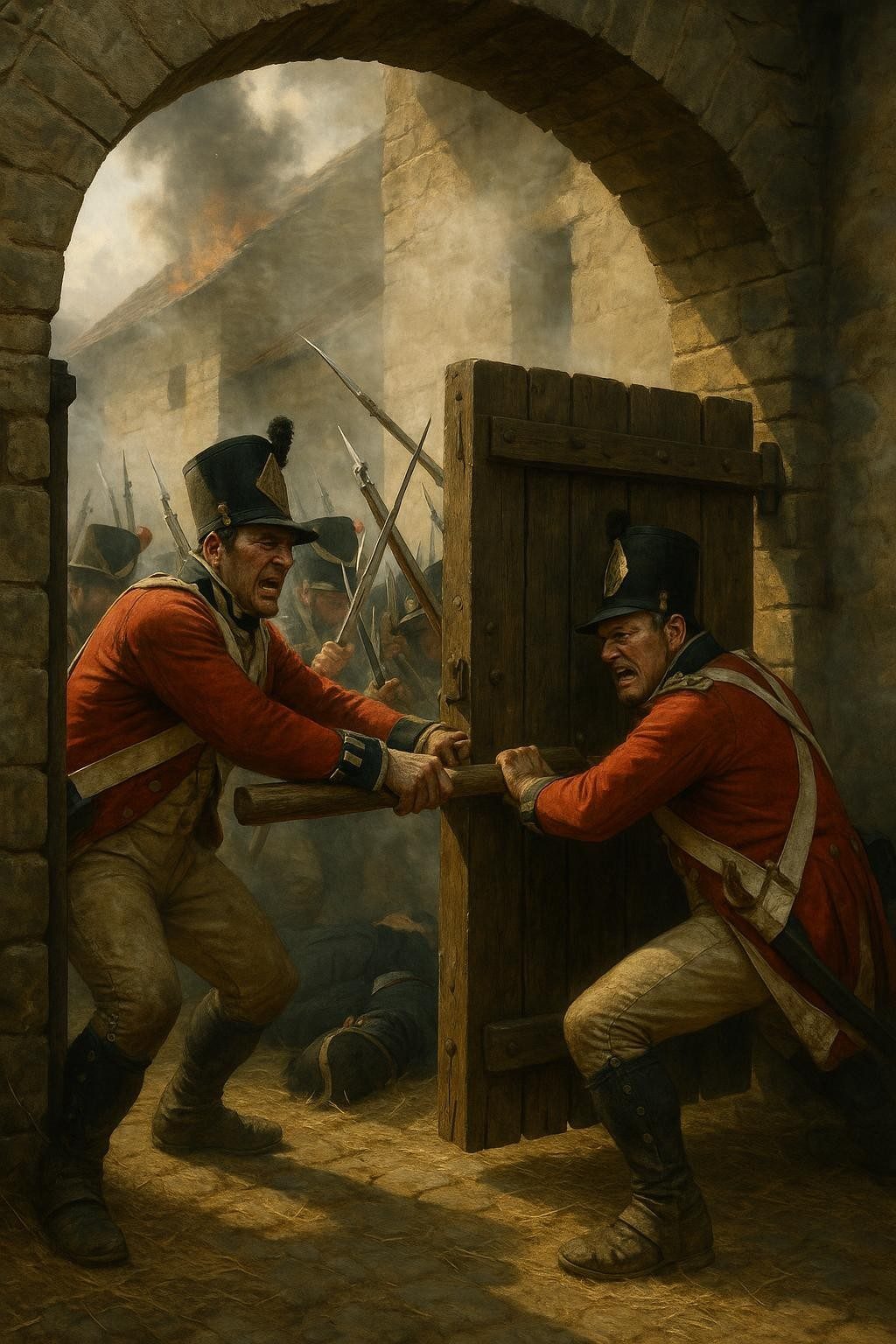
Within the smoking chaos of battle, one figure on the British side stood out — the imposing presence of James Macdonell. An officer of the Coldstream Guards, Macdonell was made for moments that required brute courage intertwined with quick judgment. At one crucial juncture, a breach appeared imminent when a French officer, courageous and desperate, smashed open the heavy wooden gate with an axe. The gap allowed thirty fierce French soldiers to flood through, poised to open the gates wide and overwhelm the defenders.
Macdonell's response was almost instinctive. With the roar of battle around him, and the pressing knowledge that much hung on this very breach, he hurled himself against the gate. His wasn't an act of desperation, but one of fierce resolve. As doors of survival were beginning to creak and splinter, this giant officer, assisted by a determined corporal and a few other men at arms, mustered all his might to force the gate shut. Pulled shut by sheer muscular fortitude, the gate confined the French invaders within, converting the courtyard into a trap.
What ensued was brutally efficient. The British defenders, reinvigorated by Macdonell's defiant act, dispatched every French soldier unfortunate enough to breach the walls. None survived. As the last of the interlopers fell, the gate was barricaded anew, sealing the farmhouse once more from Napoleon's grasping reach.
The Hours That Reshaped History
In the grand scheme of the Battle of Waterloo, the frenzied struggle of Hougoumont was but a microcosm, yet it proved pivotal in a decisive moment of history. Napoleon had expected swift victory; the gates of Hougoumont were to have opened within hours, letting his forces finesse the Allied flank. But instead, the farmhouse stood resilient for nine agonizing hours, absorbing a massive portion of the French offensive that might have otherwise been aimed at the heart of Wellington's lines.
Time and again, the French assailed the bulwark at Hougoumont, each attempt as ferocious but as futile as the last. The defenders, driven by a mix of duty, desperation, and dogged tenacity, held steadfast. The Duke of Wellington himself acknowledged the significance of this stand when he later remarked that the ceaseless defense of Hougoumont had been instrumental in securing the ultimate outcome. As the line held, it allowed Wellington to concentrate his forces and pivotal reserves where they could check the main French assaults.
The Untold Legacy of Courage
In the aftermath of Waterloo, tales of valor were spun in bivouacs and ballrooms alike, yet the heroic deeds at Hougoumont ripple less palpably through conventional retellings. The confrontation underlines how the courage and determination of individuals can influence the broad strokes of history. In the sheets of rain, amidst smoke and blood, the battle-scarred walls of Hougoumont bore testament to the sacrifice and ingenuity of its defenders, led with impromptu valor by Macdonell and his men.
This smaller saga within the grander narrative of Waterloo reminds us of the human capacity to alter tides in the most frenetic of circumstances. It’s a potent reminder that history bends not only to the grand strategies of emperors and generals but also to the courage found in single acts of defiance and solidarity. As much as empires are woven by politics and power, they are equally shaped by those who, facing dire odds, refuse to let the gates fall.