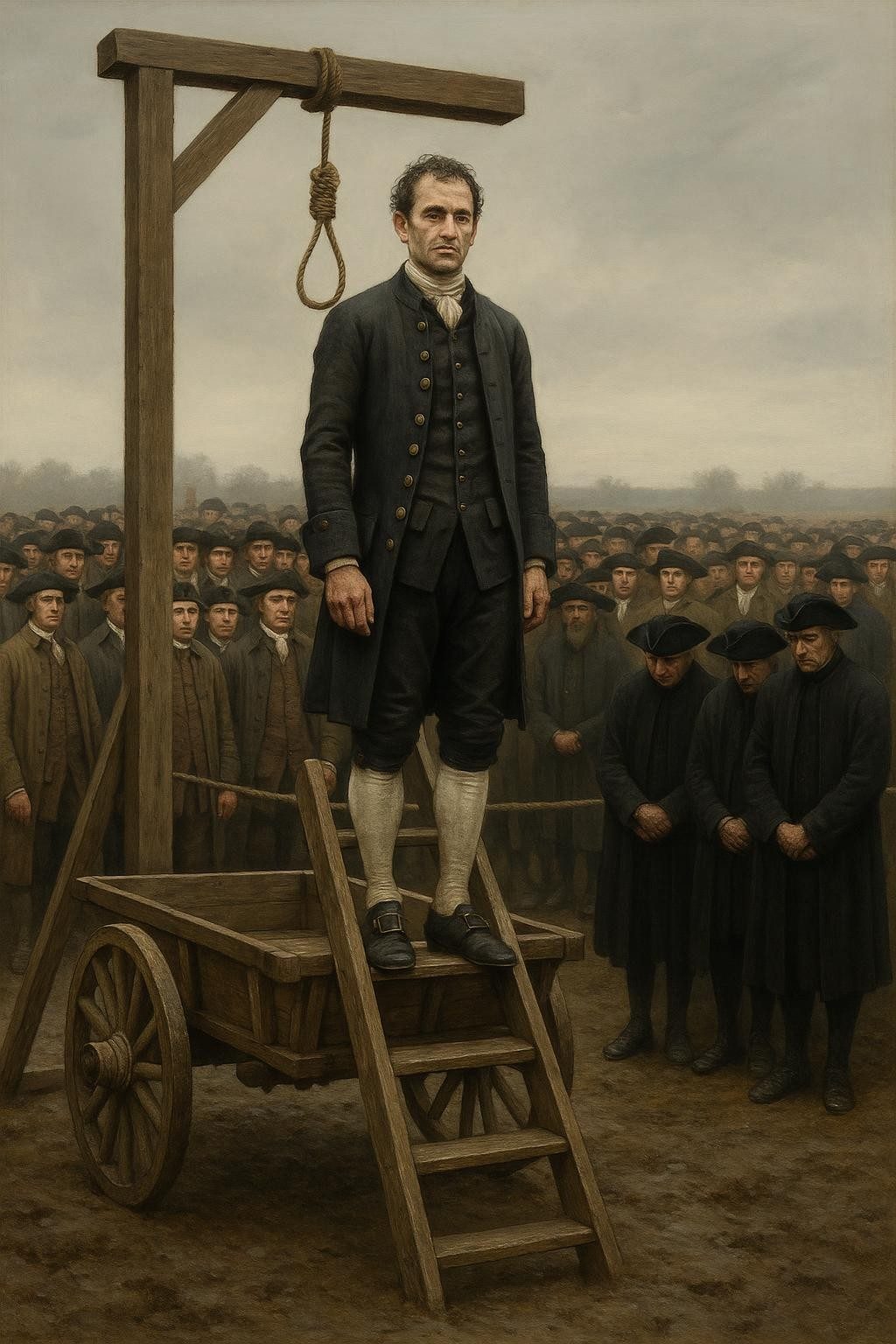
The most notorious highwayman of the Georgian era is remembered as a suave figure, executed with a flourish before a captivated audience in York. In reality, this legend of gallantry was a far cry from the savage and pockmarked cattle thief the crowds saw hanged in 1739.
A Portrait in Contrast: Legend vs. Reality
The highwayman, whose mask of romanticized chivalry has slipped to reveal a face far less glamorous, lived in a time when the roads of England were as perilous as they were adventurous. Images of moonlit escapades on a perfect black steed, gallant rescues, and charming repartee clutter the public imagination, yet the truth was much bleaker. This was not a man whose deeds inspired swooning maidens and literary ballads; he was a brute known for his ruthlessness, a man whose appearance was marred by pockmarks instead of heroism.
What catalyzed the divergence from truth to legend was a peculiar series of events engrained in the grit of his final days. Though the late 18th and 19th centuries romanticized such figures, making them the darlings of novels and stage plays, the original highwayman’s story was grounded not in nobility but desperation. His final public act was not a defiant stance against oppressive power but a spectacle born of a practical mindset — purchasing a new coat for his own execution and hiring mourners to shed tears on cue.
The Ominous Road to York
In the early months of 1739, the city of York bore witness to a scene both macabre and magnetic. Crowds thronged to the grim ceremony, eager to catch a glimpse of the man who had both terrorized and charmed them. The journey to the scaffold was peppered with the choices that brought him there, pivoting around incidents that were anything but glamorous. He was no hero of the oppressed but a cattle thief, dealing in stolen livestock rather than liberated hearts.
Read next: The Day a Black Sailor Walked Into Court and Freed Himself
His criminal career, marked by violence and ignoble acts, unraveled in spectacular fashion due to a moment of familial frugality. Caught because his family was too tight-fisted to pay sixpence in postage meant the end of the roving scoundrel. Such a prosaic detail undercuts the legend with undeniable finality, highlighting the sometimes absurd interplay between fate and fortune. His tragic mortality was sealed not in a blaze of glory but through a mere postal charge unpaid, a fittingly mundane downfall for a figure enveloped in myth.
The Execution: A Spectacle of Its Own Making
As the appointed day dawned, the atmosphere in York was electrifying. Public executions were grand theater, and this one was no exception. Arrested crowds gathered, drawn less by any sense of justice served than by a morbid curiosity. Unwilling to bow out without leaving a mark, the highwayman orchestrated his demise with a theatrical flair. Donning a bright new coat — a purchase made explicitly for this occasion — he walked to the gallows with a leg as steady as his resolve.
Spectacle was his final refuge, and he seized it with dramatic aplomb. He even arranged for mourners to lament his passing loudly, ensuring the scene played out with the necessary emotional crescendo. When the time came, he did not wait passively but launched himself from the ladder in a grim ballet. The audience, despite themselves, was enthralled, not merely by the act of hanging but by the character he had chosen to play. In death, as in life, he exemplified the consummate performer, casting a spell that would later transform into enduring legendry.
Read next: The Day a London Clerk Walked Into Court for a Dying Slave
A Reexamination of Legend and Identity
The aura surrounding this infamous Georgian highwayman remains potent precisely because it challenges our perception of history itself. The allure of the highwayman romance lies not in the sullied facts but in the idealized images it spawned throughout the years. Why has this figure become not just a part of folklore but a celebrated character, despite his violent deeds and the ignominy of his end?
The appeal may lie within our longing for stories of rogue nobility, the antihero who defies social norms yet adheres to his own. His story reminds us how readily history concedes to myth, reshaping untamed rogues into protagonists of adventure tales. The discrepancy between real brutality and legendary charm invites a reflection on narrative power: the stories we tell, why we tell them, and which elements we choose to immortalize.
In the end, understanding the history behind the mask offers not just insights into one ill-famed life but a broader contemplation of the comforting myths we construct to shield ourselves from discomforting truths. The tale of England’s most famed highwayman underscores the undying tension between history's cold whisper and legend's compelling allure, showing how readily a shadowy past can be recast with the gloss of imagination.