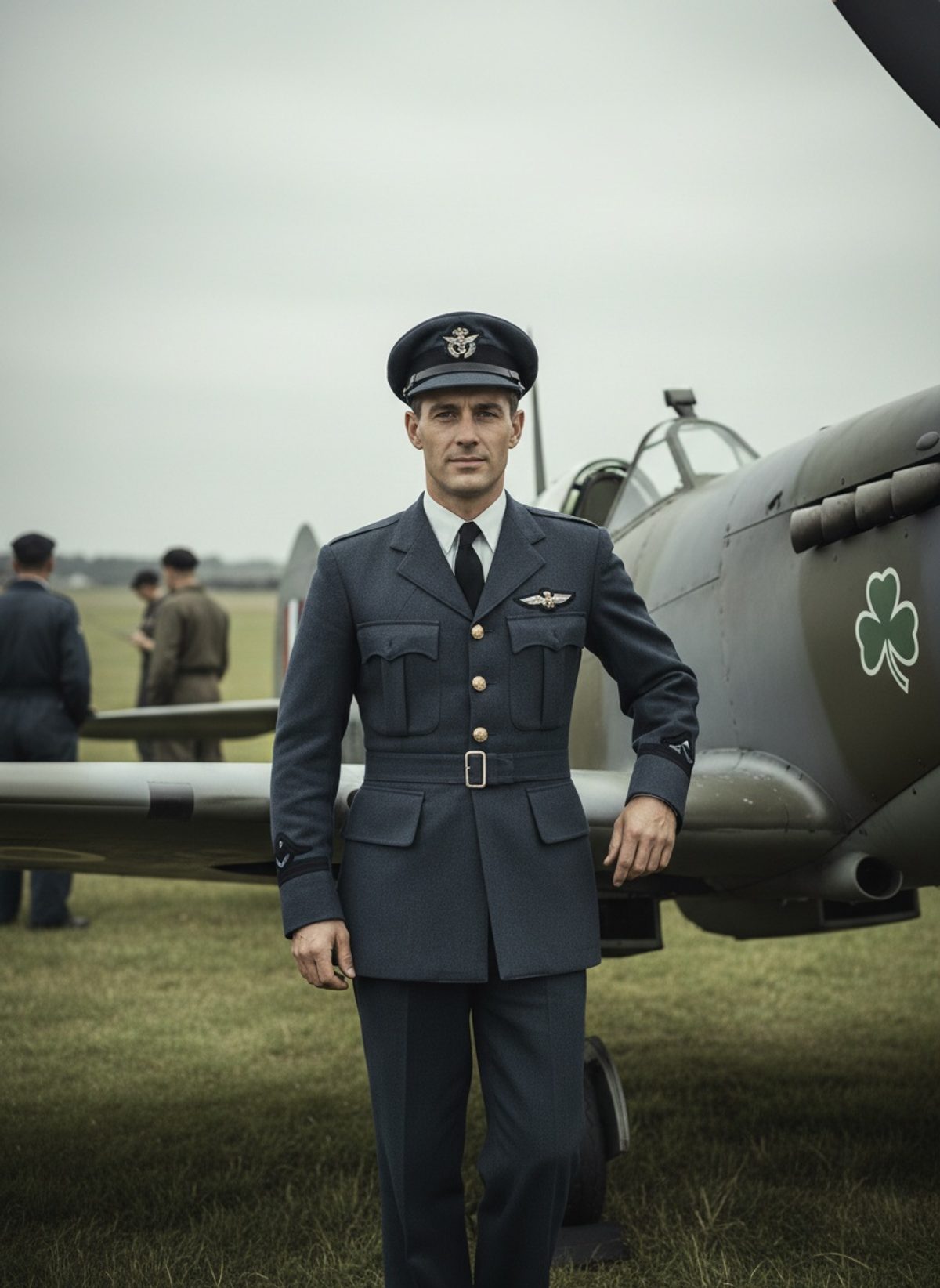
He was Irish by birth but forged in the skies over southern England. By the age of 21, Brendan 'Paddy' Finucane was rewriting the rulebook for what could be achieved by a young pilot in wartime.
The Birth of a Legend: Dublin to the RAF
Brendan Finucane, affectionately nicknamed "Paddy," was born in Dublin and raised amidst the historic backdrop of Richmond, an area famed for its imposing architecture and unyielding British resolve. He was an anomaly even before he took to the skies. In an era when Ireland was largely neutral, Finucane stood apart, a young man with a fierce allegiance to the Royal Air Force. His ascent was nothing short of meteoric, and it began as a teenage recruit who seemed to defy gravity and expectation alike.
Finucane's natural flair was unmistakable from the moment he first gripped the controls of a Harrow, the aircraft with which cadets cut their teeth in RAF training. By 1942, the clench of war had gripped Europe, and young aviators were thrust into the conflict with unprecedented urgency. However, not every pilot managed to carve out a legend as Finucane did. His rapid progression through the ranks wasn't merely a result of the urgency of war, but a testament to his raw skill and intrepid spirit.
In those early days, the skies over Britain were a theatre of desperation and heroism. Finucane quickly earned a reputation as a Spitfire pilot par excellence. The graceful arcs and magnetic agility of his favored aircraft seemed an extension of his own steely nerves and intuitive strategy. He was credited with 32 confirmed enemy kills, marking him as one of the most formidable aces of the air battles that defined the war's early stages.
Read next: He Was 58, Dying, and He Still Led the Charge
This remarkable record wasn't just about tactical prowess; it was about aura and attitude. Finucane's fearlessness was infectious, seeping into the marrow of his unit. Many young pilots posted alongside him were green and trembling, but "Paddy" Finucane transformed these fledglings into a cohesive force, mirroring his drive and determination. Men twice his age looked to him as a seasoned mentor.
The Youngest Wing Commander
Promotion to Wing Commander was a distinction earned by few—and even fewer could boast of achieving it at just 21 years of age. In June 1942, Finucane claimed this honor, solidifying his place in RAF history. This was not merely an ascension of rank but a recognition of his exceptional leadership skills and tactical brilliance under fire. He seemed immune to the ordinary rigors that ground down less hardy men.
Commanding a wing of Spitfires, Finucane maintained a balance of daring tactics with the exacting discipline of an experienced officer. He encouraged innovative methods in dogfights, favoring the offensive rather than the defensive postures many had been trained to adopt. His efforts resulted in not only repelling the Luftwaffe's advances but demoralizing an enemy that had begun to view him as a scourgelike figure.
Yet, it wasn't just his exploits in the air that garnered attention; it was also his personal charisma. On the ground, Finucane was known for his buoyant personality and ability to uplift those around him. His Irish charm and easy laughter belied the ferocity and determination he exhibited when he donned his pilot's gear and took to the air. This duality made him an irresistibly compelling figure, both feared and adored.
However, like many who climb swiftly to such heights in the theatre of war, Finucane's journey would be tragically curtailed. His promise and potential were cut short not in a dramatic dogfight over enemy territory, as one might expect, but on a routine sweep—ambushed not by an ace with matching skills, but a solitary rifle bullet from the French coastline below.
Read next: He Stepped Forward in Lucknow and Offered His Life
Vanished into The Channel – An End Too Soon
On a routine mission in 1942, the young Wing Commander's life took an unexpected turn. What transpired that day remains a subject of somber speculation. Even those not privy to the intimate details of aerial tactics found themselves gripped by Finucane's fate. One moment, the familiar whir of his Spitfire cut through the air. The next, it spiraled downwards, trailing smoke before vanishing into the vast, unforgiving expanse of the English Channel.
The precise nature of his end reads more like myth than military history—a rifle shot, fired by German forces stationed on the French coast, struck his aircraft fatally. It was a humble but deadly shot that ended the dream so many had pinned on Finucane's shoulders. Yet, this ultimate act of unpredictability is what underscores the brutal reality of war where the valorous and the mundane collide in unexpected ways.
To his comrades and the public, Finucane's disappearance represented the sheer capriciousness of fate. As swaths of the nation mourned him, tales of his exploits were cemented into the annals of history—a fitting tribute to a leader and fighter who had, within such a short span, become legendary. He remains an emblem of youthful prowess and lost potential, perpetually young and victorious in the collective memory of those tumultuous years.
The story of Brendan 'Paddy' Finucane is poignant not just for his aerial achievements, nor for the enthralling narrative that the records keep alive. It is a powerful reminder of the inexorable march of time and the unpredictability that accompanies it. Finucane's journey serves as a reminder of what might be achieved with daring vision, leaving readers glimpsing through the annals of history, cradling the bittersweet echo of what could have been had he been just a little more fortunate.