The sun hung low and unrelenting over the rolling hills of Ulundi, casting long shadows that danced across the tall grasses, the heat shimmering like a mirage against the dusty backdrop. A piercing cry of an African eagle cut through the heavy afternoon, echoing the tension that lay thick over the veld. Just beyond the horizon, history stirred, marking the final breaths of an embattled kingdom. Within this charged landscape, Private William Griffiths, a young soldier of the British Empire, trod the line between life and death, blissfully unaware that the coming moments would etch his name into the tragic annals of the Zulu War. His unimaginable journey from the chaos of Isandlwana to this fateful patrol near Ulundi reflected the empire’s ambitions and the fall of a storied sovereign nation.
The Shadows of Isandlwana and Rorke's Drift
Private Griffiths' tale does not begin in the dry ochre plains near Ulundi but rather in the horrific mayhem of Isandlwana, where, on January 22, 1879, the pride of Victorian Britain was met with disastrous defeat. As Griffiths stood among the regiments caught off guard by the swift and cunning tactics of the Zulu warriors, the enormity of the chaos surrounding him was overwhelming. The air was thick with the acrid stench of gunpowder and fear, screams mingling with the relentless Zulu war cries, orchestrating a symphony of devastation. It is here that Griffiths, by fate or fortune, managed to survive where over a thousand of his comrades met their doom.
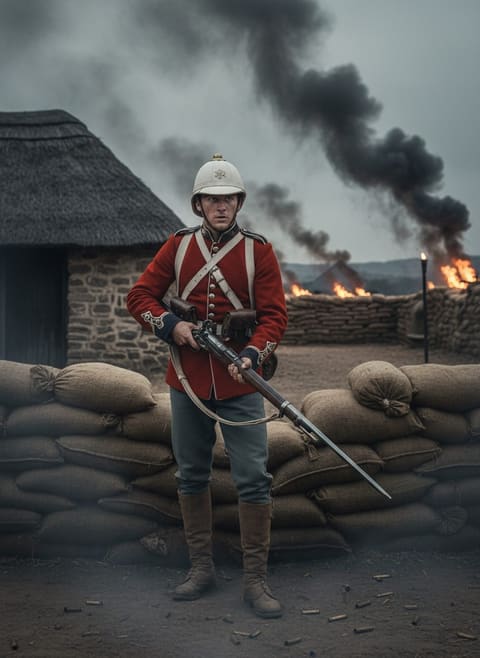
Rorke’s Drift followed, a site of defiance in the face of overwhelming numbers. Just hours after the slaughter at Isandlwana, Griffiths found himself among the 150 or so British soldiers who held fast against an army of thousands. The makeshift fortifications, fashioned from mealy bags and biscuit boxes, became both sanctuary and tomb as volleys of gunfire lit the night. The valor displayed there turned the tide of sentiment back home, and Griffiths was among those lauded as heroes. Yet, the close-pressed battle smoke of Rorke's Drift was an eternal reminder that his escape from death's grip was narrow. Little did he know the war's end would demand one final price.
The Veldt of Reckoning
By the time the British army regrouped and pressed deeper into Zululand, Griffiths had seen his regiment risen anew from shambles. The landscapes they traversed were marked with the indelible scars of recent battles; burnt kraals stood silent, hollow echoes of their vibrant past. As Griffiths marched, his boots marred the ash-laden earth, the very dust resonant with the ancient stories of the Zulu people. Each step was a reminder of the rugged resilience of his foes, and yet he moved forward — a foot soldier caught in the vast machinery of empire.
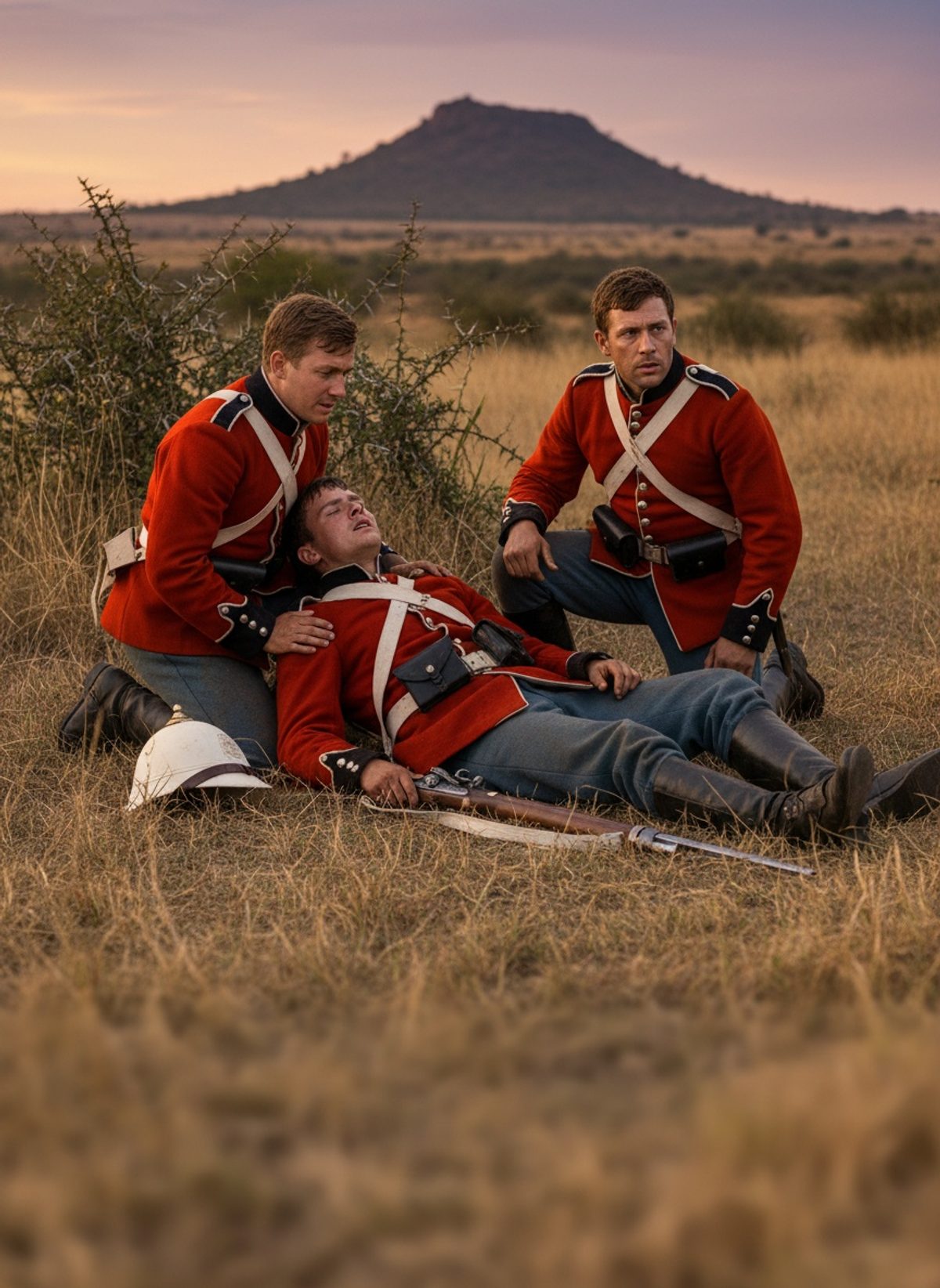
In the final days of the conflict, victory at the Battle of Ulundi had all but sealed the fate of Cetshwayo's realm. However, the war's uncertain whispers persisted, and it was within this uneasy quiet that Griffiths found himself dispatched on patrol. At just 22 years old, the sinew of hope propelled him into yet another day’s unknown. The patrol was routine but rife with trepidation — a group of British soldiers navigating the treacherous terrain, skirting the fringes of lingering danger. The sun withdrew its warmth behind the darkening hills, and shadows gathered as new foes lay in ambush.
Read next: When Juan Pujol García Fooled Hitler With a Library Card
The Final Act
In those fleeting moments before death, what did Griffiths behold? Did visions of Isandlwana's dusty plains haunt his recollections or did the triumphant defenses at Rorke's Drift bolster his courage as spears struck forth from the thickening dusk? The youthful fears and victories of a soldier far from home swirled within him. There, amid the relentless call of evening crickets and the measureless African sky, Private William Griffiths met his end, a grim punctuation to the passage of war. The same week saw Cetshwayo’s kingdom fall into British hands, the hopes of an indigenous empire dissolved under imperial might.
Thousands of miles away from the calculating strategies of British officials, Griffiths’ death marked not just the closing chapter of the Zulu War, but also served as a stark testament to the human cost laid bare by imperial ambition. His story, often omitted from tales of conquest and glory, is emblematic of the countless unnamed who fought and perished on foreign soils. It is the story of survival amidst destruction and fading empires but most poignantly, the final beat of a war drum echoing in sun-kissed lands. In remembering Private William Griffiths, we uncover not just the factual residue of history but the complex and often personal intricacies of human conflict. In history's ceaseless churn, it is such stories that frame the very dialogue between power and consequence. The unsung chorus of the ordinary tells us the most about the spirit enduring beneath an empire’s imposing shadow.