He was expected to ride out victory on the plains of Omdurman. The consequences of his command instead left him defending a military debacle for the rest of his life.
The Charge That Never Should Have Happened
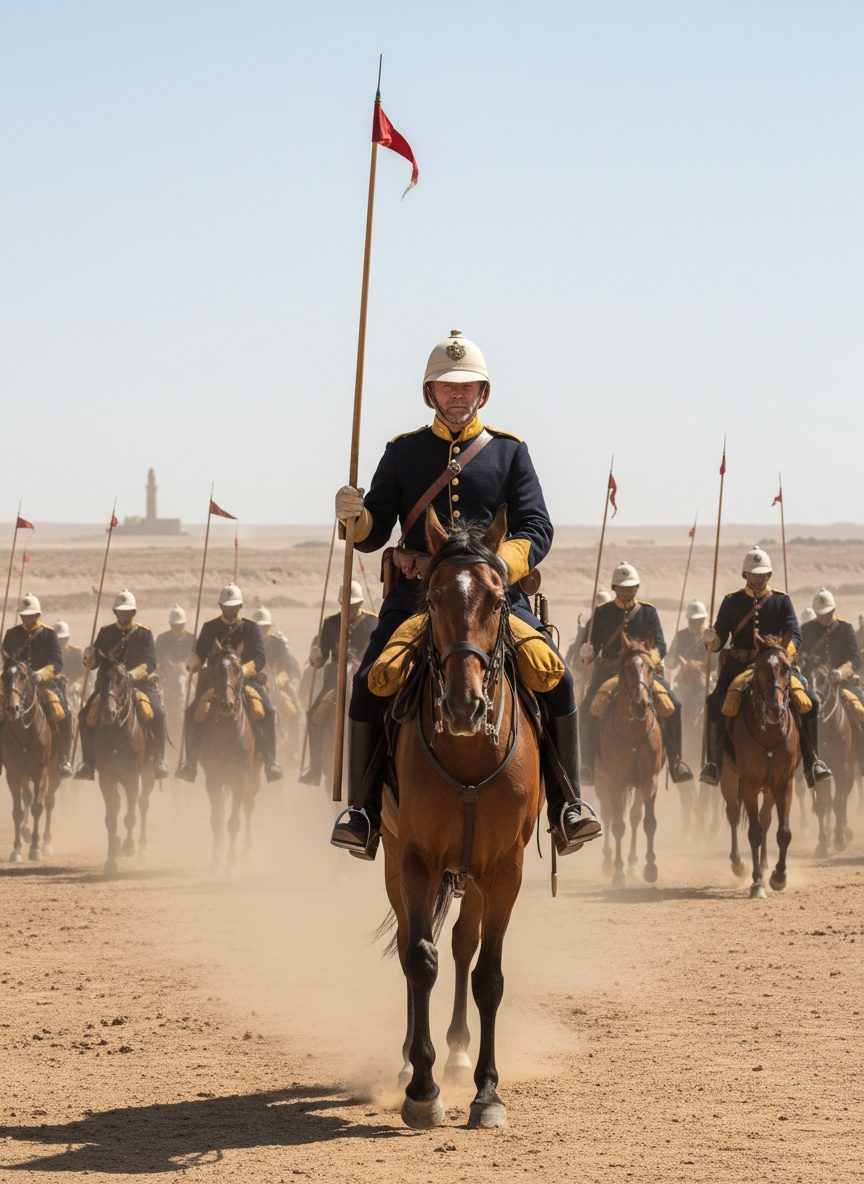
On the unforgiving plains outside Omdurman on September 2, 1898, the 21st Lancers, a regiment of British cavalry clad in brightly polished helmets and brandishing their long spears, prepared for what seemed a routine exercise. Dust danced in the piercing late-morning sun as the regiment thundered forward. What they didn’t know was they were galloping toward a fate sealed by misleading intelligence and a relentless desert mirage. On the surface, the stretch ahead appeared barren, but hidden from their immediate view were two thousand Dervish fighters, patiently waiting in the dry riverbed like a lethal horde sprung from the earth itself.
The command for the charge had come from a leader fully aware of the typical risks involved in cavalry tactics. Yet, even in the disciplined quiet of a military career, assumptions can swiftly unravel. As the Lancers closed in, reality revealed itself with brutal immediacy. Two minutes later, twenty-one men lay dead amidst the tumult of dust and sound, shot down in what became one of the most costly maneuvers in British military history. For those who survived, questions lingered in the hot wind about the unanticipated ambush—questions that burdened not just the men but the very commander who had bid them onward.
The Man Behind the Decision
The officer responsible, a man educated in the world of military strategy, was no stranger to the theatre of war. But on that day, his decision turned from a calculated directive into a harrowing ordeal, one that would haunt his name through the annals of history. Unyielding, he stood by his choice to send the regiment into the unknown. It had been a decision rooted partly in a dire need for strategic advantage and partly in the cloud of plausible misinformation that often silhouettes military engagements.
Read next: The Day a Surgeon's Son Chose Death Over Silence
These hidden fighters had executed their ploy with the kind of patience and precision that can decisively alter a battle's outcome. Reports post-battle painted vivid pictures of how the Dervishes remained crouched and concealed, using the natural terrain to invoke a deadly element of surprise. Meanwhile, the cavalry charged on with the unbending hope of encountering an enemy they could freeze in fear. Instead, they met a torrent of spears and bullets that came slicing from all sides, turning pristine uniforms into shambles of fabric and blood. For the Brigadier who ordered the move, the scene unfurled like a catastrophic echo he could never silence.
Lessons from the Riverbed
In the piercing examination that followed, this infamous cavalry charge became an emblem of the unpredictable nature of war—a study in the repercussions of leadership decisions made under uncertainty. From the start, the terrain's deceptive allure and the intelligence reports should have been elements tempered with caution. The commander, though, chose action over hesitation, and history was written in those seminal, harrowing (and brief) moments. It would be a decision dissected by historians and military critics, dissecting how victory and disaster can ride tandem on a blade’s edge.
Read next: The Day a Chimney Sweep's Son Shamed a Whole Parliament
And while the commander spent his post-war life articulating his reasoning, the battle's nuanced horror continues to challenge conventional narratives. We think of commanders as heroes of strategy and salvation, yet here was a lesson that even the best-laid plans could falter under the weight of extraordinary circumstances. The clash is illustrative of how, in an instant, glorious military triumphs can be overwhelmed by unseen variables—the nature of war that remains stark and unforgiving.
The legacy of the two-minute charge reverberates beyond the dusty troughs of Omdurman. It's a telling reminder of how leadership under pressure remains one of history's most rigorous tests. An ordinary riverbed became an extraordinary chapter in Britain's military memoir—a potent moment etched in time when courage rode unshackled into unexpected peril, and a commander's resolve was irrevocably tested.