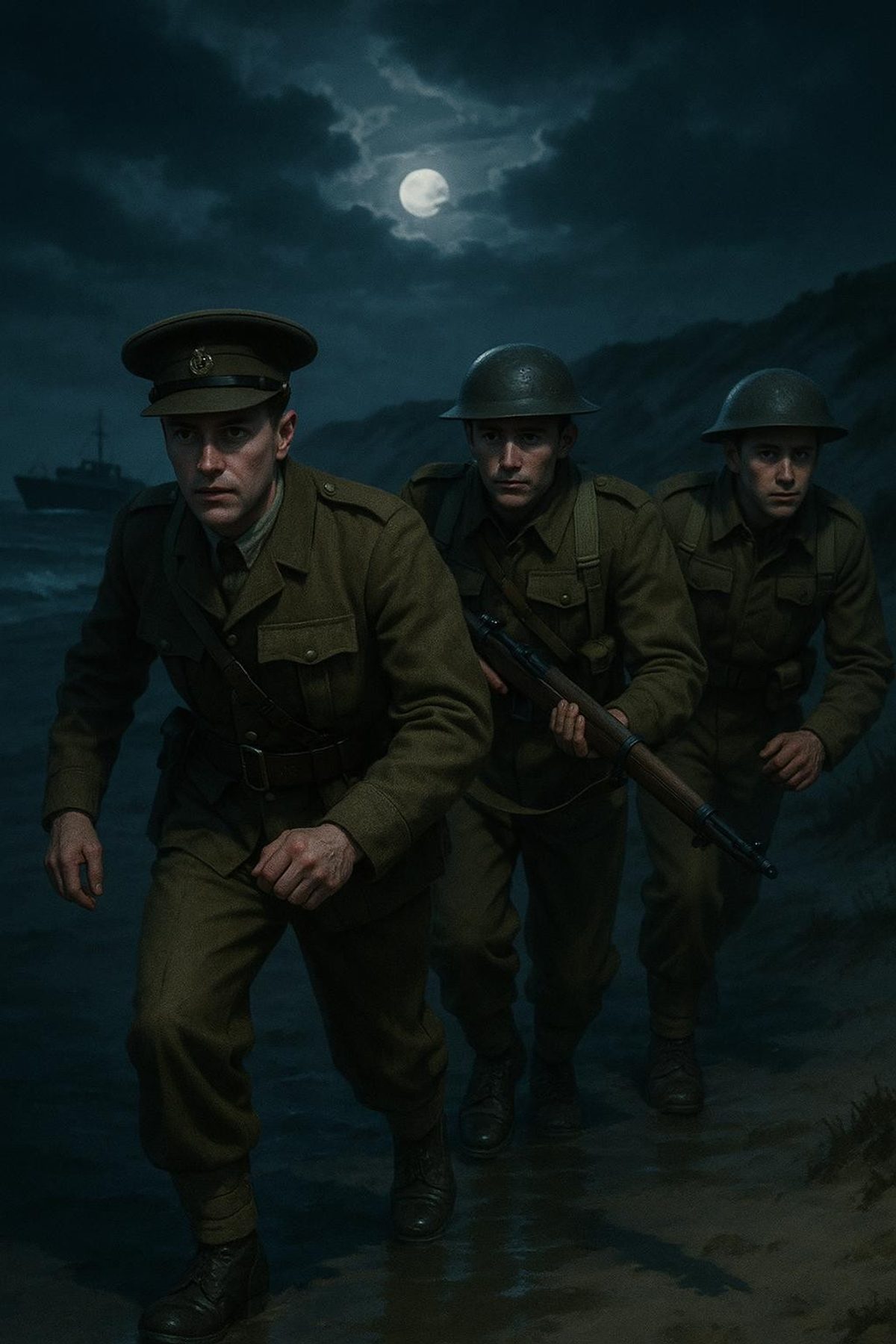
January 1942. Frost crested the edge of the narrow inlet of Saint-Nazaire, glistening under the dim light of a shrouded moon.
The air was brittle in its chill, cutting through the early morning quietude. A silent silhouette emerged stealthily at the water’s edge, casting a sharp reflection which trembled with the gentle lapping of the waves against the rocky shore. This was no ordinary night, nor an adventure of the typical kind. It was the first act of a daring endeavor that seemed more myth than military strategy. Alone in the darkness, Nigel Willmott prepared to plunge into the merciless Atlantic, his mission one that defied reason and hope.
Saint-Nazaire, perched strategically on the western coast of France, was more than just another sleepy port under German occupation. It bore the weighty title of the most heavily defended port in the occupied territories, its notoriety underscored by the imposing dry dock capable of harboring the mighty German battleship Tirpitz. This colossal naval structure, deemed essential to Nazi control of the Atlantic, could, in the wrong hands, pivot the balance of naval supremacy towards the Axis powers. Thus, it lay under a shroud of formidable defenses, a seemingly impenetrable fortress in Europe’s wartime tapestry.
Into this formidable fortress swam Willmott, wearing only his swimming trunks and clenching a waterproof bag that carried his lifeline: a map, a compass, and the hopes of a force greater than himself. Tasked with what appeared as an insurmountable mission, to reconnoiter the harbor and assess the potential for an assault, Willmott's journey underscored the convergence of grit and sheer lunacy that typified the best of the British war effort. No weapons cushioned his vulnerability. His strength lay solely in his resolve, an unyielding determination forged by necessity and nurtured by the audacity required of a lone commando.
Read next: One Gun. Two Hours. Three Victoria Crosses.
The harbor waters, numbing and opaque, whispered indecipherable tales of both ambition and ruin as Willmott navigated his way through the liquid labyrinth. Saint-Nazaire, even at its quietest moments, lay wrapped in an eerie vigilance. Its defenses studded with bunkers, watch towers, and naval vessels, each component a deadline reminder of the human ingenuity harnessed for destruction. His was a path fraught not only with the peril of discovery but with the oppressive fear of failure. Willmott was the scout in this unfolding drama, the silent observer whose eyes would craft the blueprint for one of the most improbable yet celebrated raids in Allied memory.
Hours passed, each tick of the clock drowned by the unforgiving seas. Emerging at last from the harbor’s unforgiving grip, Willmott carried more than just the tautness of his muscles chilled to bone; he emerged carrying vital observations that would eventually penetrate the core of the Kriegsmarine's Atlantic bolster. Back in the trusted confines of Allied hands, his intelligence was as improbable as his survival. It laid the foundation for Operation Chariot, a plan steeped in daring, reliant upon the ephemeral threads of surprise and bravery knitted together by men with hearts firm against the tyranny they sought to dismantle.
The Saint-Nazaire raid, conducted months later in March 1942, remains a tale whispered with reverence and incredulity. Willmott’s intelligence illuminated the labyrinthine defenses, the tactical weak points he had painstakingly mapped placing the element of surprise firmly in Ally hands. British forces, against odds and with reckless courage, launched a seaborne assault that saw destroyer HMS Campbeltown rammed into the dock gates at full tilt, laden with timed explosives poised to rend both man and machine asunder. The Germans, caught in the dazzle of a gutsy offensive, struggled amidst a conflict that waged with unrelenting fury and determination. The destruction of the dock was a crippling blow, rendering it unusable for the rest of the war. The Tirpitz, bereft of a safe haven, lay constrained, its threat diminished, its attendance at sea thereafter sporadic and inconsequential.
Willmott's journey, while short in its scope, reveals an essential truth of history often left unsung. Behind every headline-grabbing feat of arms, there lies a web of unseen fingers that shape the contours of such courageous narratives. The lone officer swimming through Saint-Nazaire's icy defenses reminds us of the immense weight carried by those who dared to probe the depths alone and unarmed, driven merely by duty and defiance. It is in these quiet acts of valor, where risk was embraced without reserve, that the war's tenor was transformed, one heartbeat, one harrowing mission at a time.
Beyond the stark lines of strategic success and tactical audacity lies the enduring legacy of those who fashioned victory from the threads of improbable undertakings. Willmott, and those of his ilk, extend an invitation through time to challenge the strictures of possibility, to cast light on the malleable nature of history rote in the bravery of small deeds amid grand events. Their stories serve not just to inspire but to remind us that the courage to act often begins with a single step—or a lone swim—into the unknown.