August 1814 was just another month in the War of 1812. Until it wasn’t.
The British Knock at America’s Front Door
It was hardly imaginable that the British, fresh from battles in Europe, would find themselves marching into Washington, D.C., the American capital. Yet, that is precisely what unfolded as British troops, unchallenged and unopposed, led their way into the heart of a fledgling nation unprepared for such audacity. This brazen incursion was not just a strategy, but a statement — a roar of British presence in a war that, until now, had seemed mired in distant skirmishes rather than direct assaults on symbols of American sovereignty.
The summer of 1814 brought British veterans from Napoleon's European conflicts across the Atlantic. Seasoned and effective, they became a formidable force against the relatively untested American defenses. As they advanced into Washington, the gravity of their mission was gripping. It wasn’t just a capital they were marching into; it was the symbolic hearth of a nation's identity, an audacious choice meant to echo far and wide.
An Uninvited Dinner Party
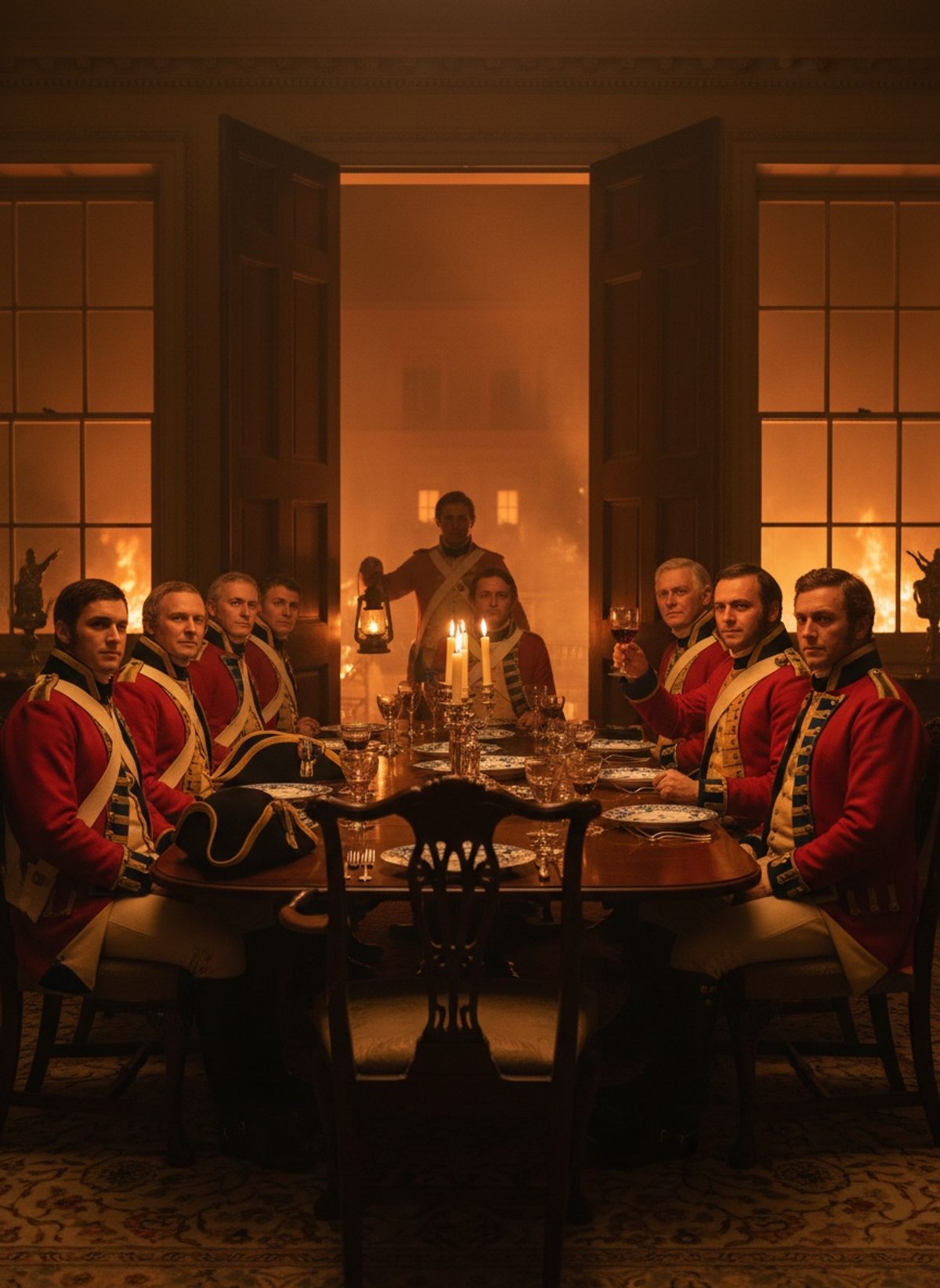
The mansion at the center of chaos wasn't just any house—it was the President’s residence. As the British soldiers entered the White House, they found a surreal scene. The dining table, capable of seating forty, was impeccably set. Plates were adorned with food, still warm from the kitchens, a silent testament to the abruptness of American retreat. Wine glasses stood filled with claret, the opulent hues catching the waning light of day — awaiting a toast that would never come in its intended company.
Read next: The Day a Black Sailor Walked Into Court and Freed Himself
In a twist suffused with irony, the British troops sat down in this grand dining room, indulging in a meal prepared for the President of the United States and his guests. Toasts were made in mockery — to President James Madison — with his own wine, an impromptu bonhomie that, despite the animosity, seemed undeniably human. Even in war, moments of absurd camaraderie appear, revealing the complex tapestry of human conflict.
The Destruction of a Symbol
Appetites sated and spirits raised in bizarre celebration, the British soldiers turned to their next task—the utter destruction of what had quickly become an iconic symbol of American freedom and leadership. As the last morsels were consumed and the empty bottles clinked hollowly, torches were lit, and with deliberate intent, flames were set upon the regal structure.
The conflagration that followed was nothing short of epic. Flickering flames consumed the mansion's grandeur, sending plumes of smoke spiraling into the sky, visible for miles. As walls once steeped in elegance and authority cracked and crumbled, the sound was a brutal reminder that no nation, however new or aspirational, was untouchable. The burning of the White House was more than the destruction of a building—it was a concerted effort to demoralize and destabilize a nation still finding its feet.
Repercussions Felt Far Away
While the flames crackled in Washington, the effects rippled far beyond the capital's borders. This incursion was a message to the world: the British Empire remained a formidable force capable of reaching across oceans to strike at the heart of its adversaries. Yet, rather than cow the Americans, the devastation sowed seeds of resilience and unity within the United States.
Read next: The Day a London Clerk Walked Into Court for a Dying Slave
News of the capital's occupation and destruction sparked outrage and determination across the fledgling nation. Calls for retaliation were amplified by a renewed resolve to defend the territory previously held dear—and it didn't take long for America to mount its counteractions. What was intended as a crushing blow became a catalyst for change, adding more fire to the American side of the war effort, ultimately propelling them toward resilient peace negotiations with the British and a future treaty to end the war.
A Cautionary Tale of Conflict
The episode of British soldiers dining in and then burning the President's House stands as a stark reminder of the unpredictable nature of war and its unintended consequences. On one hand, it illustrates the reach and impact of imperial might. On the other, it highlights the resolve of a young nation thrust into a broader theater of global conflict.
It's a tale resigned to the annals of history but still lingering in the shadows of modern consciousness. It raises enduring questions about the fragility of power and the lengths to which nations will go to defend their sovereignty. More than two centuries later, as the world stares into a multitude of conflicts and disputes, the night when the British walked into Washington resonates as an eloquent cautionary tale, reminding us that the freedom to dine—and to rebuild—often comes at a hefty cost.