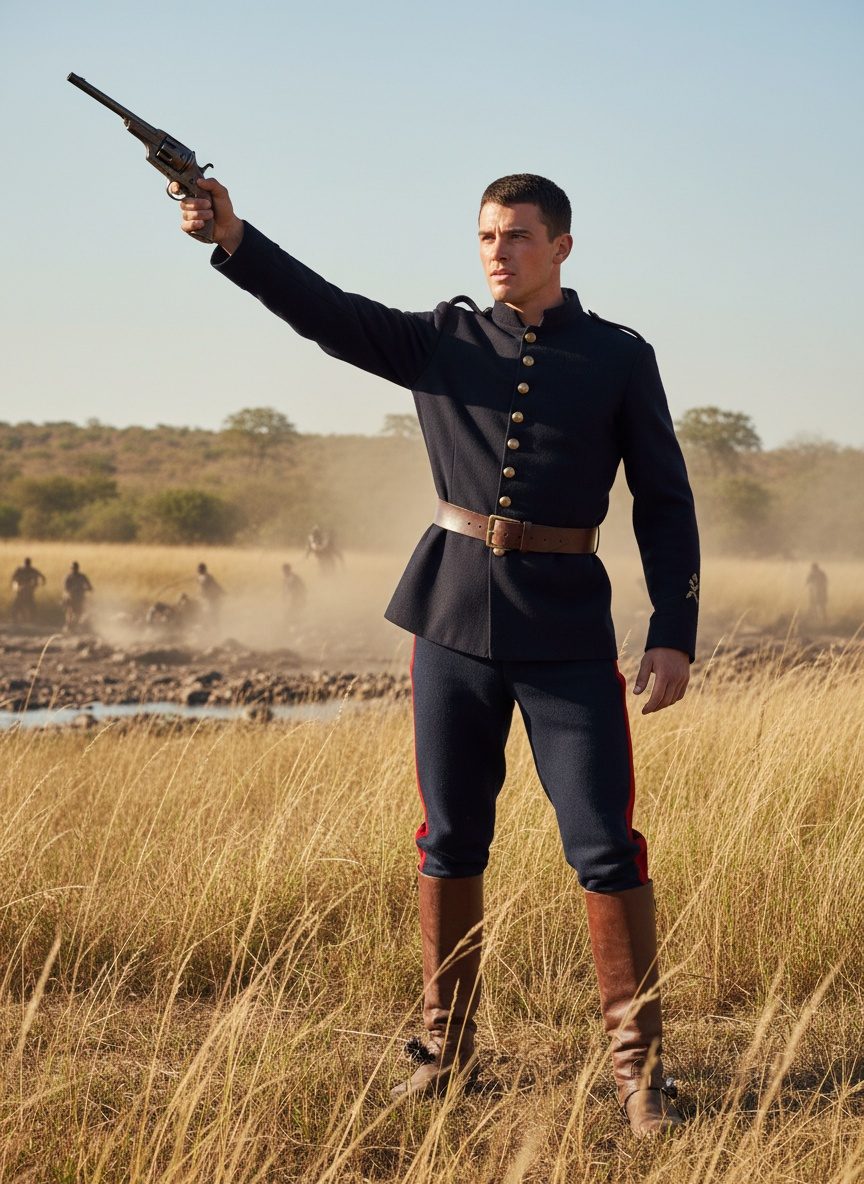
The sun was nearly swallowed by the ridge when the sharp cries of Zulu warriors pierced the tranquil dusk air of Zululand. Young Prince Louis Napoleon Bonaparte, sweat glistening on his brow, clutched a borrowed Webley revolver, his heart pounding in sync with the rhythm of war drums. Alone on foot, with his horse startled and galloping into the distance, he stood firm amid the swirling grass, an heir to the greatest dynasty in Europe, yet here, a mere cadet clad in a British uniform, facing imminent doom.
It was June 1, 1879, and among the chaos and call of duty, the weight of history bore heavily on the shoulders of the 23-year-old Prince Imperial. Exiled from the French empire after the fall of his father, Emperor Napoleon III, Louis Napoleon's life had been one of displacement and continuous longing for greatness—a longing now perilously close to its tragic culmination.
Born on March 16, 1856, in the illustrious backdrop of the Tuileries Palace, Louis Napoleon entered the world enveloped in privilege and power. His godmothers were none other than Pope Pius IX and Queen Victoria, and he grew up amidst the splendor and intrigue that characterized the waning days of the Second French Empire. Yet, the equations of power are always in flux, and the young prince was only 14 when fortune's wheel turned, throwing him onto foreign soil after the Franco-Prussian War saw the collapse of his father's reign.
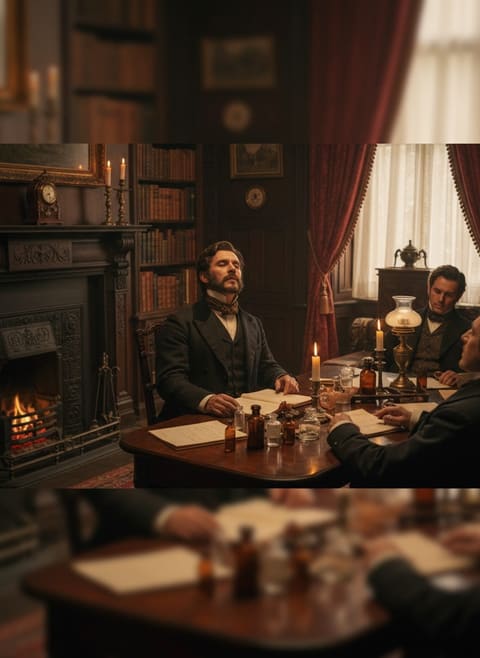
In the cool climes of England, his dreams of regaining the French throne were nurtured in the comforting expanse of Camden Place in Chislehurst, Kent. It was in this exile that Louis found a family friend in Queen Victoria herself, who embraced the young prince as one of her own. Despite the warmth of the royal embrace, the fire of Bonapartist ambition continued to burn within him, urging him to epitomize the valor and legacy that his name demanded.
Read next: The Day a Surgeon's Son Chose Death Over Silence
Enrolled at the Royal Military Academy Sandhurst, Louis Napoleon distinguished himself as a capable cadet, showcasing the military prowess befitting his lineage. To gird himself further in the art of war, he expressed a fervent wish to see battle, a desire that aligned with Queen Victoria's own favor and thus opened the path for his assignment to Zululand during the Anglo-Zulu War. Here, amidst the sweeping African savannah, he sought the glory and recognition that eluded him in Europe.
Louis's assignment was tinged with both adventure and peril—a reminder of the labyrinth of colonial geopolitics in which he was cast. The Anglo-Zulu War presented itself not as a quest for his own empire, but as a subplot within the larger arena of European expansion. Yet, within its folds, Louis sought a proving ground—one where bravery and strategy could sublimate the realities of political exile.
This quest for glory intersected fatefully with an ill-chosen reconnaissance mission, one that saw his small patrol ambushed by a formidable Zulu force near the Ityotyosi River. It was then that he faced the warriors of King Cetshwayo, standing resolute in the face of the tempest. With his horse long fled, Louis turned rapidly, but his foot tangled in the treacherous terrain, sending him sprawling—a desperate moment frozen in time.
The Zulus descended swiftly, their assegais gleaming in the dimming daylight. Louis Napoleon fought valiantly, refusing to yield even as the odds mounted against him. Seventeen times did the spears strike, each blow met with refusal to retreat, his fallen form a testament not of defeat, but of a fierce allegiance to courage.
Read next: The Day a Chimney Sweep's Son Shamed a Whole Parliament
The aftermath was riddled with shock and search. As rumors of the prince's demise filtered through the imperial grapevine, Queen Victoria was beset with grief over the loss of her godson. His body was found later, lying in the tall grass—a poignant tableau of a life steeped in historical expectation yet consuming itself in a distant land.
In remembering Louis Napoleon, one must ponder the paradoxical threads of his life, encapsulating the oft-unseen interconnections between empire and destiny. Here was a Bonaparte, ardently navigating the corridors of British imperial ambition, bound by the tenacious grip of ancestral expectation even as he faced the shadows of dislocation.
The threads of Louis Napoleon's narrative extend beyond mere personal or ancestral tragedy. His story evokes broader reflections on legacy, loyalty, and the perpetual motion of historical forces. In his final stand, swathed in elements of valor and dramatis personae, lies the universal tale of individuals caught at the forefront of tradition clashing with transformative epochs. It illustrates how, navigating mighty cycles of empire and exile, one's quest for identity and place can culminate in the ultimate act of self: the steadfast embrace of character in the face of inevitable fate.