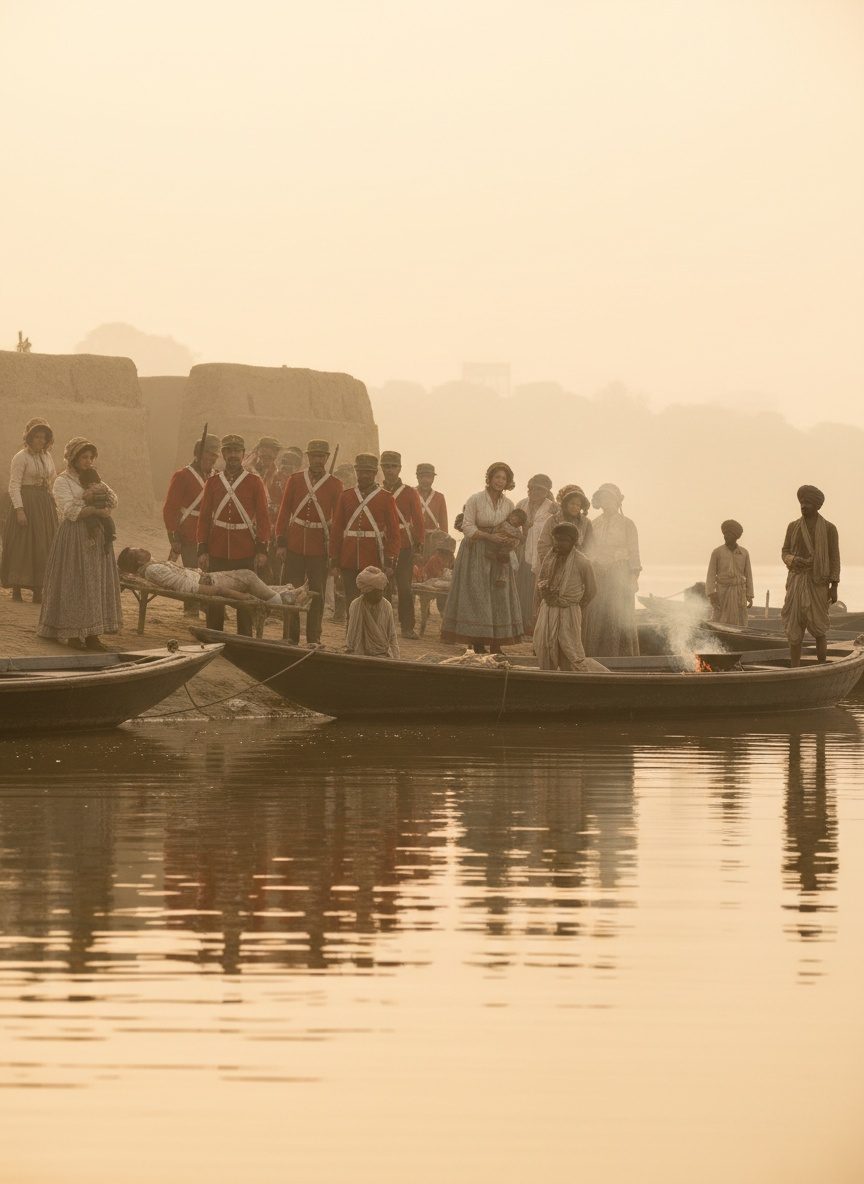
June 27, 1857. The dust hung silent and heavy over the Camp of Cawnpore.
For twenty-one days, the air had been thick with heat and despair. Nine hundred British men, women, and children clung to life under the relentless sun of the Indian summer, surrounded within their makeshift fortifications by an uprising of monumental scale. The Siege of Cawnpore, a small outpost on the Ganges River, was a microcosm of the wider upheaval known today as the Indian Rebellion of 1857. But to those trapped within the camp, these broader machinations mattered little; survival was paramount, and the odds seemed insurmountable.
Water was the cruel currency of this siege. The few meager wells inside the encampment were quickly depleted or fouled, forcing men to venture beyond the relative safety of their barricades to fetch water from the river under a constant hail of enemy fire. Each trip claimed lives, diminishing hope with every draw of the bucket. Torn between duty and desperation, the beleaguered defenders watched in anguish as children withered in the arms of helpless mothers, the numbers of the dead climbing higher each day.
Amidst this desolation came a glimmer of hope, a promise that must have felt like redemption in written form. A safe conduct offer arrived, ostensibly guaranteeing all within the compound passage to Allahabad. The terms were explicit: lay down arms, prepare for evacuation. In their deprivation, with no more strength to hold out and little left to brace themselves against possible treachery, the occupants of Cawnpore hesitated only briefly. The prospect of relief, the chance to flee the fevered grip of the rebellion, was too enticing to dismiss.
Read next: The Day a Surgeon's Son Chose Death Over Silence
On June 27, the British began their promised exodus, moving toward the boats docked by the riverbank. Tension hung as palpably as the afternoon heat, each footfall towards the sacred promise of safety fraught with apprehension. It was at the edge of the river where this trust met betrayal. As they embarked, the boats—crafts that should have borne them to freedom—were set ablaze. Amidst the roar of fire and cries of panic, the sinister truth unravelled. The massacre that ensued on the banks of the Ganges cast a shadow so deep it would alter the narrative of the rebellion, and of the Empire itself, forever.
The violent chaos of that day defied the Victorian belief in the Empire's order, the tragic inferno carving itself into the annals of history under the dark moniker of the Cawnpore Massacre. Survivors were few, their tales testament to the abrupt shift from hope to horror, and to the heartless calculations that cloak warfare in treachery and deceit. It was an event that would herald a tide of brutal retribution as the Empire, stung by the loss and perceived betrayal, unleashed its vengeance upon the populace.
Read next: The Day a Chimney Sweep's Son Shamed a Whole Parliament
The subsequent actions, brutal and unrestrained, were marked by revenge. The narratives of British soldiers embarking on punitive, and often indiscriminate, campaigns became grisly lore among their ranks. The cruelty exacted in retaliation mirrored the ash-filled winds of the Ganges bank, swirling spectres of justice and fury blindly swung at both the culpable and innocent as the line between justice and revenge blurred.
For history, those smoldering banks remain a haunting backdrop to the complex tapestry of imperial conquest and indigenous uprising. Every scar of the 27th of June bears testimony to the fragility of trust when weighed against the scales of survival and power. Despite the passage of time, the echoes of that day reverberate, urging us to reflect on the cost of dominion and the human condition's susceptibility to the sirens of fear and retribution.
Today, the story of Cawnpore is one less of rigid battle lines, and more an intricate, deeply human cautionary tale. It challenges us to consider the promises we forge in desperation, and the carnage that often follows when they splinter. As we unspool the ways in which history shapes our current world, we see at Cawnpore a stark reminder of the layers beneath our narratives, powerful enough to transform the fate of empires and the lives caught in their expanse. While the details of that fateful day may flicker and waver, the lessons endure beneath the still waters of the Ganges, waiting to be remembered.