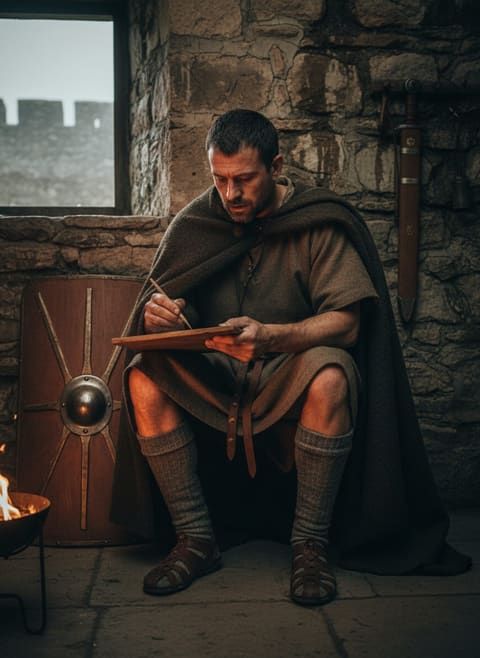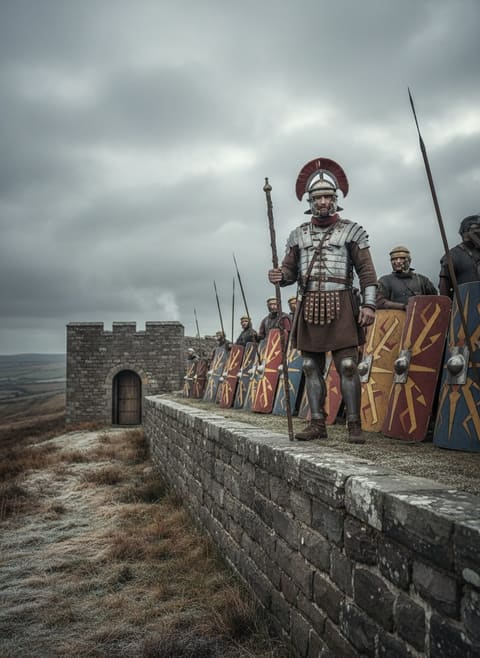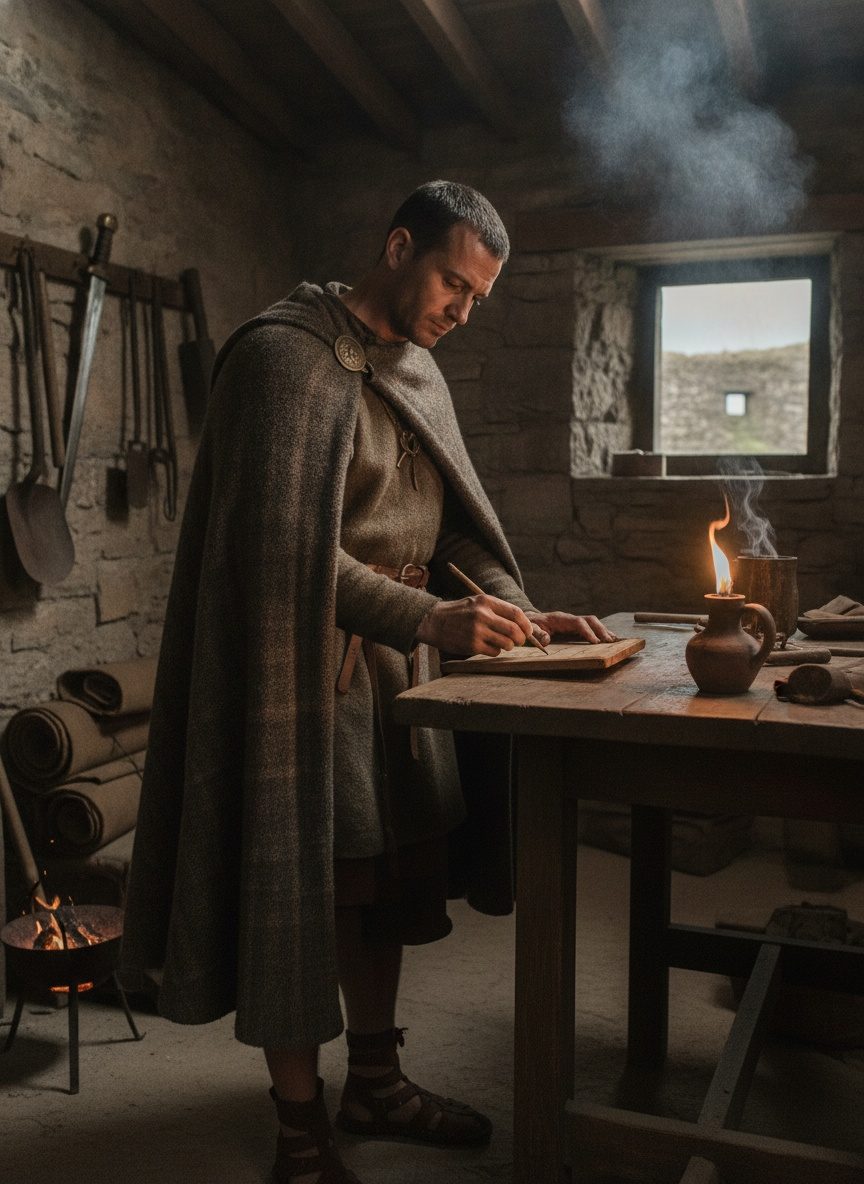
The sharp chill of a northern wind whipped across the open landscape, stirring the coarse grass that clung to life in the shadow of Hadrian’s Wall. Among the clattering of harnesses and the stamping of hooves, a soldier sat huddled against the cold in the fort of Vindolanda. His breath rose in wisps as he carefully inked words onto a thin slice of wood — mundane words that harbored a timeless humanity, destined to echo through centuries.
A Glimpse into Ordinary Life
The year was around 100 AD, a time when Roman Britain was a rugged frontier. Stationed at the edge of the empire, soldiers like the one at Vindolanda faced a landscape as harsh as any. This fort, perched high upon the windswept hills of what is now Northumberland, served as a strategic outpost for Roman forces. Far from the bustling realms of Rome, these soldiers occupied a world filled not with grand stories of conquest, but with small nuances of daily life captured in the lines of a letter.
This piece of wood, smaller than a modern-day postcard, offers a rare window into the past. Amidst requests for simple comforts—beer, socks, and a plea for warmth and familiarity—the soldier's scrawling handwriting reflects longing, resilience, and an enduring connection to home. It’s the voice of an everyday man whose words survived the eroding sands of time.
From Whispers to Discoveries
The fort at Vindolanda holds more than stones and remnants of ancient walls; it’s a treasury of forgotten stories. Unearthed in the 1970s, the Vindolanda tablets remained hidden beneath the cobbles for nearly two thousand years until the iron-rich soil preserved them just beneath the oblivious modern world. Among them was this soldier's letter, a delicate wooden fragment that resisted decay against all odds.
Read next: The Day a Roman Slave Left a Message That Outlasted an Empire
Resonating with the echoes of footsteps long silenced, these tablets brought new vigor to our understanding of Roman Britain. They offer a mosaic of lives captured in ink, from soldiers lamenting the chill of northern nights to merchants detailing their wares. It’s a testimony to how the seemingly inconsequential can become profoundly significant with the passing of centuries.
The Everyday Cravings of a Roman Soldier
Reading these inked letters is like catching sight of forgotten faces across time. The soldier’s seemingly trivial requests for beer and warm clothing speak volumes about life on the edge of the Roman world. Beer was not just a drink to them; it was a thread connecting them to camaraderie and familiar comforts far removed from the disciplined life in a cold, distant land.
Socks, unremarkable in their mundane necessity, reveal the soldier’s struggle with the British climate. Far from the Mediterranean warmth, he fought the chill with every warm layer he could secure. These requests, rather than diminishing his station, amplify his humanity. Beneath the armor and discipline, he was a man—missing home, yearning for connection, clinging to whatever scraps of normalcy he could.
The Man Behind the Ink
While the letter’s author remains anonymous to us, his words are vibrant with personality. There’s a world-weariness in his tone, underscored by an intrinsic hope for better days. The Roman army, often portrayed through tales of fierce legions and grand campaigns, here pivots to the personal, the intimate. For the soldier at Vindolanda, life comprised not of grand battles but of waiting, enduring, and the quiet resilience required to forge on in an alien land.
Read next: The Day a Roman Officer Freed His Captive and Walked Away
Scratched into wood with a stylus were his heartfelt thoughts—words that resurge in modernity, whispering an earnest plea suspended in time. It’s an ancient chorus that hums beneath history’s grand fanfare: the universal quest for warmth, connection, and the solace of home. This fragment allows us to hear that ancient voice once again, vivid in its authenticity.
Reflections from a Bygone Era
The letter from Vindolanda renders history in human dimensions. It anchors us not to the glory or expanse of the Roman Empire but to the individuals who lived it—men and women documented only by the vulnerability of their needs and desires. In this cryptic, enduring connection to the past, we’re reminded that history is built on a mosaic of the everyday lives and experiences, each echoing softly through time.
This story of a soldier's yearnings is not just an idle curiosity; it forms a bridge between modernity and antiquity, making the past tangible and human. While empires fade and walls crumble, human hearts continue to seek warmth, camaraderie, and home. The scrap of wood from Vindolanda, therefore, persists not as a relic but as an enduring testament to the commonality shared across millennia—an eternal conversation with those who came before.