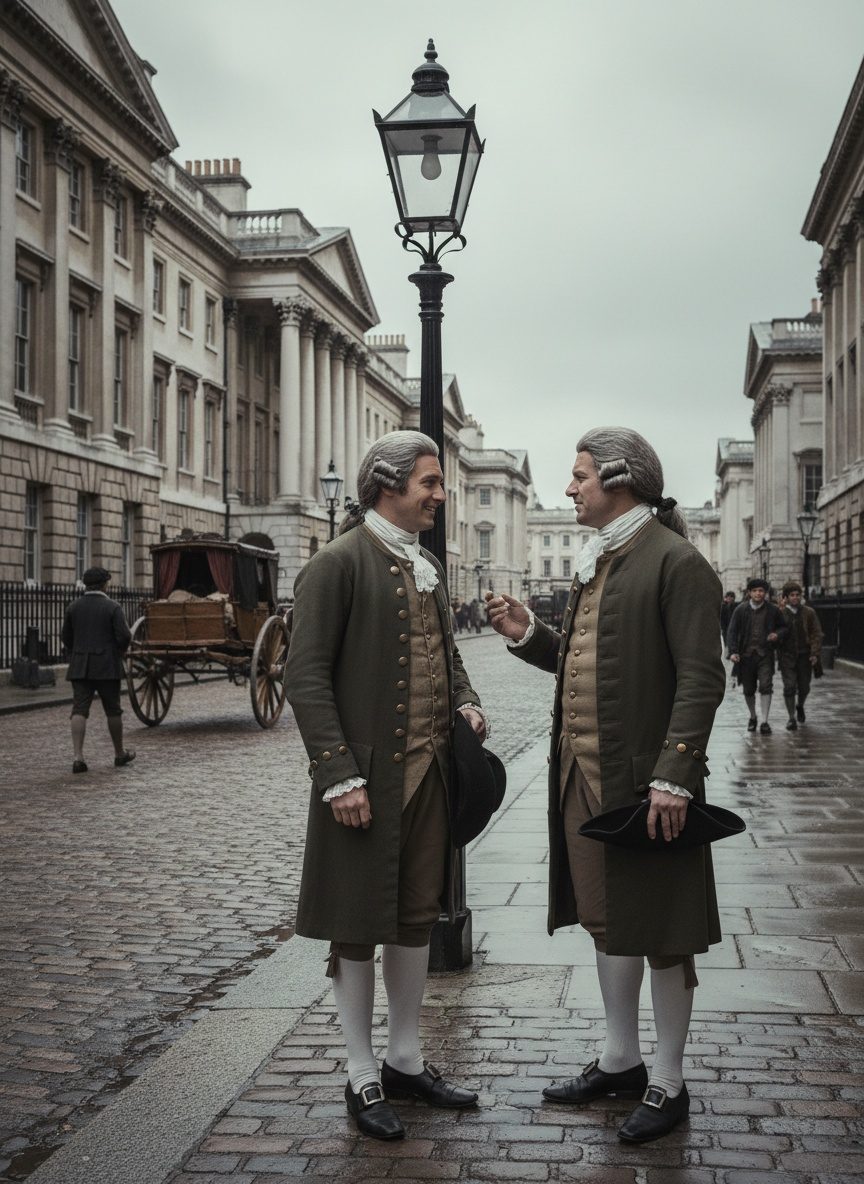
The cobblestones feel slippery beneath her feet as rain teems down, cascading off the tricorn hats of the crowd clustered along Whitehall. A carriage rattles by amid a symphony of whinnying horses and decidedly British mutterings about the weather. It's a familiar scene; one can almost hear the echo of powdered wigs rustling with anticipation. Little do they know, this street — seemingly ordinary — is about to bear witness to the planning of empires as it has countless times before, leaving behind secrets in its stonework.
The Brick and Mortar of Power
In 1749, the world was a different place, yet Whitehall’s essence was already cemented. Built to spearhead the ambitious heart of a burgeoning empire, this thoroughfare was more than mere passage. Between the cobblestones and lampposts lay centuries of whispers from Tudor courtiers who slyly plotted within shadowed recesses, dreaming of the throne's favor.
The grandeur of buildings lining Whitehall was matched only by the grand personalities who passed through. Though King Charles I famously walked it one last time to his fateful execution, the street’s beating heart continued its relentless march through time. Anchoring the dreams of Georgian admirals, the street bore plans whispered over maps where Britain shifted maritime strategy and calculated dominance over the high seas.
Of Bombs and Resilience
The eerie whine of air raid sirens cut through the stillness of wartime London, piercing the fabric of daily life. Yet Whitehall stood firm as bombers sliced through the night sky above. The Blitz, that relentless assault of destruction, tested every cornerstone's resolve, yet the street emerged resilient, a stark contrast to the modern devastation it witnessed.
Read next: The Day a Black Sailor Walked Into Court and Freed Himself
Nazi ordnance pummeled at its stoic façades—evidence of history’s relentless determination. Those who worked within Whitehall’s iconic quarters knew that their windowpanes shivered not just from the bombing raids but from the undercurrent of resolute defiance that has perennially flowed here. Each detonation echoed the past, drawing dust into the air, sooty shadows that danced like ghosts recounting tales long forgotten to those braving the rubble below.
Carved by Traffic, Polished by Time
London’s lifeblood coursed through Whitehall in the years that followed as the city embraced a velocity not yet seen. The street juggled its dual roles, an artery for pressing traffic, honking horns, and black cabs distilling the clamor of modernity with the intrigue captured in each passerby’s step.
Yet amid the roar, Whitehall’s soul remains unbeaten. The tumultuous vibrancy of 21st-century rush hours is but the latest chapter in its ongoing story. Miraculously, some of the Georgian cobblestones trodden by ministers planning vast territories now cushion the clamorous stride of hurried modern professionals. The stones, worn but unchanged, are testimony in granite and mortar of eras interlocked seamlessly.
The Echoes of Yesterday
Walking Whitehall today invites a cacophony of echoes from the past three centuries—a mixed hymn of old secrets and continued ambitions. Those aware cannot help but sense how the street cradles both the imposing grandeur of reported and unreported history and the warming familiarity of continuous government duty.
Read next: The Day a London Clerk Walked Into Court for a Dying Slave
This street is more than a scenic corridor; it holds the resonant footfalls of Victoria's ministers, rapid discussions among political titans who debated the fates of nations within nearby halls. Each corner whispers its own tale—often overlooked, unadorned in textbooks, yet readily shared by stones should one pause to listen amid the hubbub.
A Timeless Passage
The heart of a constantly evolving city, Whitehall remains as diligent in purpose today as when first forged. It’s renowned for resilience and perseverance, attributes intrinsic to the British spirit it has so long represented. The metamorphosis of nations, wars, and eras have streamed past these steadfast edifices, leaving behind unnoticed yet profound legacies that define Britain in its now globalized form.
Walking Whitehall encapsulates touching the nerves of history in real-time, illuminating the idea that among the stories we document and the moments that shape the world, some tales are grounded not by bricks or deeds but by the spaces between—a curious street shaped by time’s vast tapestry, too often forgotten, yet vivid for those willing to see past the distractions of the present.