October 25, 1854. The air was crisp on the Crimean hilltop.
The mists of early morning had lifted, revealing a landscape bruised by conflict. Below, an expanse of earth, once fertile, now lay battered under the tread of marching boots and the gallop of hooves. The scene that morning was quiet, almost serene, save for the hundreds of men standing shoulder to shoulder, waiting for the bombshell of war to explode in their midst. This was the day the 93rd (Sutherland Highlanders) Regiment of Foot would write itself into legend as the resolute "Thin Red Line." In defiance of military textbooks, seasoned battle strategies, and overwhelming odds, they stood two men deep on a low hill, ready to face a wave of Russian cavalry. Commanded by Sir Colin Campbell, they were not going to retreat. They were going to hold.
The Calm Before the Clash
Balaklava was a strategic location in the Crimean Peninsula, important for Britain and its allies in their ongoing conflict with Russia. It was here that decisions made in the steely hours of dawn would become immortalized in history. The British base was vulnerable. The six-mile perimeter around the besieged city was under constant threat from Russian advances. Yet, despite the looming danger, the Highlanders stood remarkably composed, perhaps because their leader, Sir Colin Campbell, was as steadfast and stony as the hills themselves.
Sir Colin, a grizzled veteran with years of combat etched into his face, was unmoved by the vast Russian force bearing down upon them. Drawing his strength from a lifetime on battlefields far from home, he commanded with a Spartan philosophy: simple, direct, and unwavering. "There is no retreat from here, men," Campbell declared, his voice carried by the wind to all who could hear. "You must die where you stand." They responded with a word that would echo into eternity: "Aye."
Read next: The Day a Surgeon's Son Walked Into a Burning Slum Alone
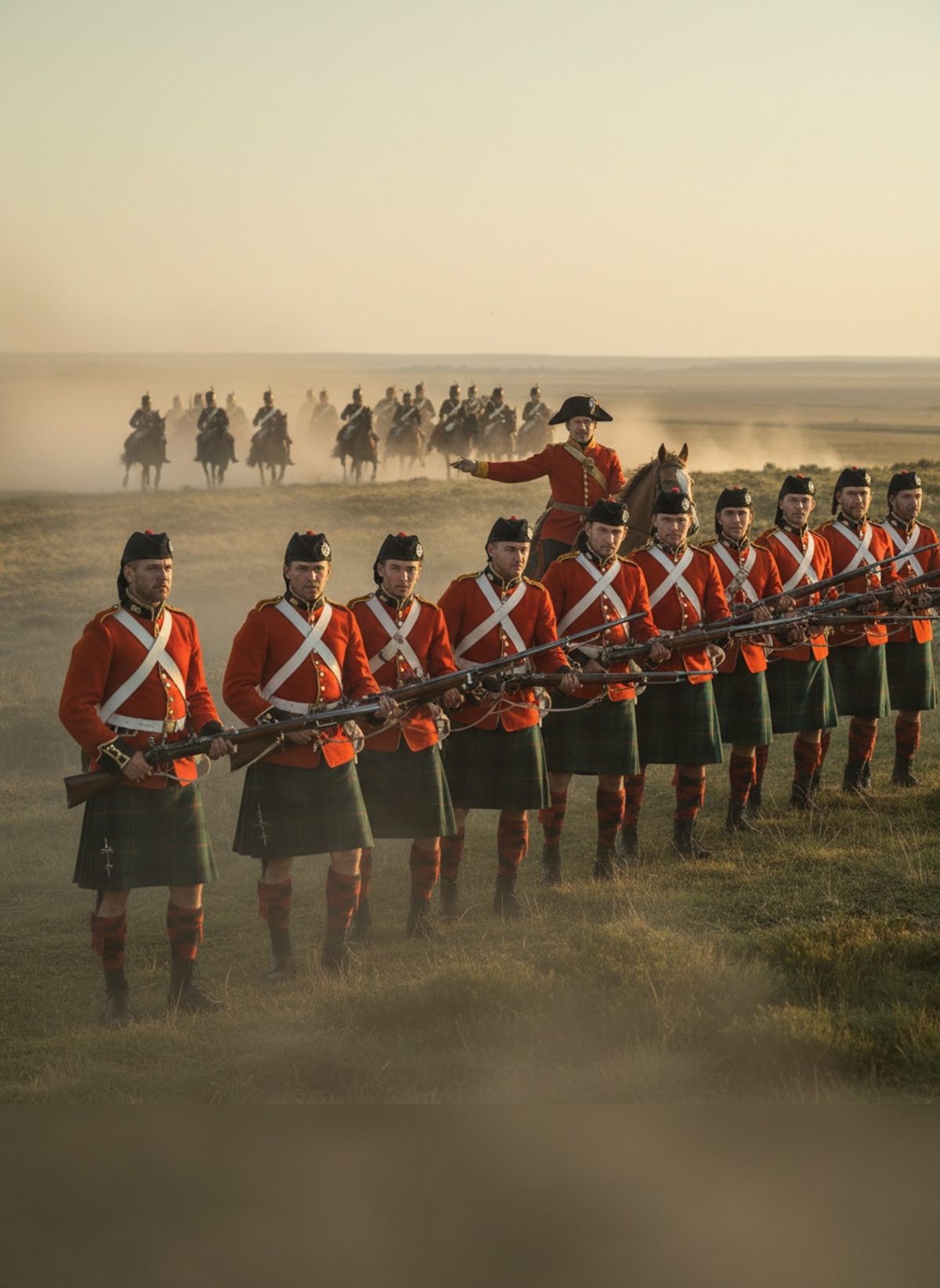
Five hundred Highlanders, lesser in number against the mounted Russian division galloping towards them, stood two ranks deep. The conventional military wisdom of the time dictated that when faced with cavalry, infantry should form a square to reduce vulnerability. But Campbell, with his own brand of audacity, ordered his men to form a line. What his adversaries underestimated was the unyielding spirit of his troops—men who carried the blood of ancestors who had stood firm for centuries.
The Majestic Madness
As the Russian cavalry bore down upon the Highlanders at surprising speed, the earth trembled beneath the thunder of their hooves. It was a sight to stir terror in the bravest of hearts, but not the men of the 93rd. The Highlanders, tartan kilts adorned with the red tunics of their regiment, stood unflinching—a symbolic thin red line against the green earth that flanked them. The scene was almost picturesque, a painting of war that seemed impossible and surreal.
Despite the pounding heartbeats, the soldiers' hands were steady as they handled their Enfield rifles with clinical precision. They held, not firing until the enemy was mere meters away. The first crack of gunfire split the air, a deafening reminder of the stakes at play. The result was chaos for the advancing Russian cavalry. Initial volleys caused confusion, breaking the pace of the charge and scattering the cohesion of their attackers.
Wave upon wave of Russian horsemen attempted to break through the line, but the Highlanders remained resolute. Each successive charge was met with disciplined rifle fire and unbroken resolve. The spectacle that unfolded was a clash between sheer numbers and indomitable spirit, a reminder that bravery is sometimes found in simplicity—in standing your ground with nothing but your courage and the resolve not to move an inch back.
Read next: The Day a Surgeon's Daughter Walked Into a Medical School and Won
A Legacy Carved in Courage
As the cannon smoke cleared and the day waned, the Russians withdrew, their ambitions thwarted by an improbable band of Scotsmen. The impossible had happened: five hundred Highlanders had stopped an entire army of two thousand five hundred Russian cavalry. The "Thin Red Line" had held not just a physical ground, but a place in history where myth and reality entwine to define the essence of bravery and strategic genius.
In the aftermath, critics and fans of military tactics alike would argue about the sheer audacity of Campbell's order. Some denounced it as reckless; others hailed it as visionary. Yet the truth lay in the outcomes—in stories told over campfires, in paintings inspired by their stand, and in the hearts of those they protected. What happened that day transcended military textbooks. It was a moment that reminded the world of the underdog's tenacity, of the strength found in a unified line drawn not in blood or in geography but in shared resolve.
Why does this story matter? In a world constantly challenging established norms, the Highlanders' defiance of conventional wisdom echoes across time, encouraging us to rethink and rediscover courage in the unlikeliest forms. The "Thin Red Line" remains a captivating narrative not just for its drama, but for the undeniable truth it underscores: sometimes, the greatest victories come not from overwhelming might or technology but from the simple, fierce dedication to stand firm in what you believe impossible to lose.