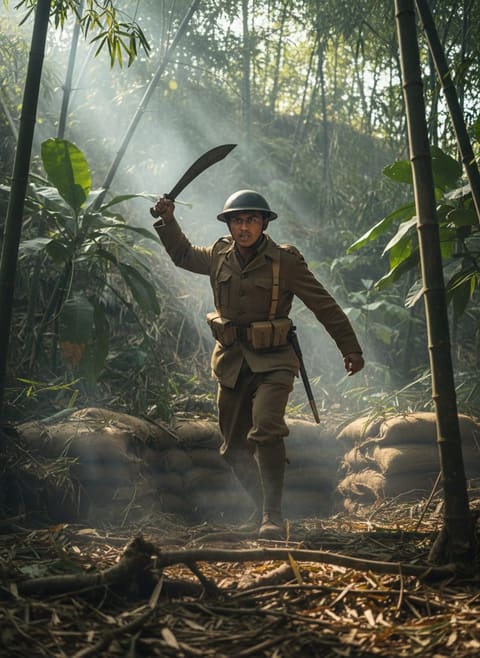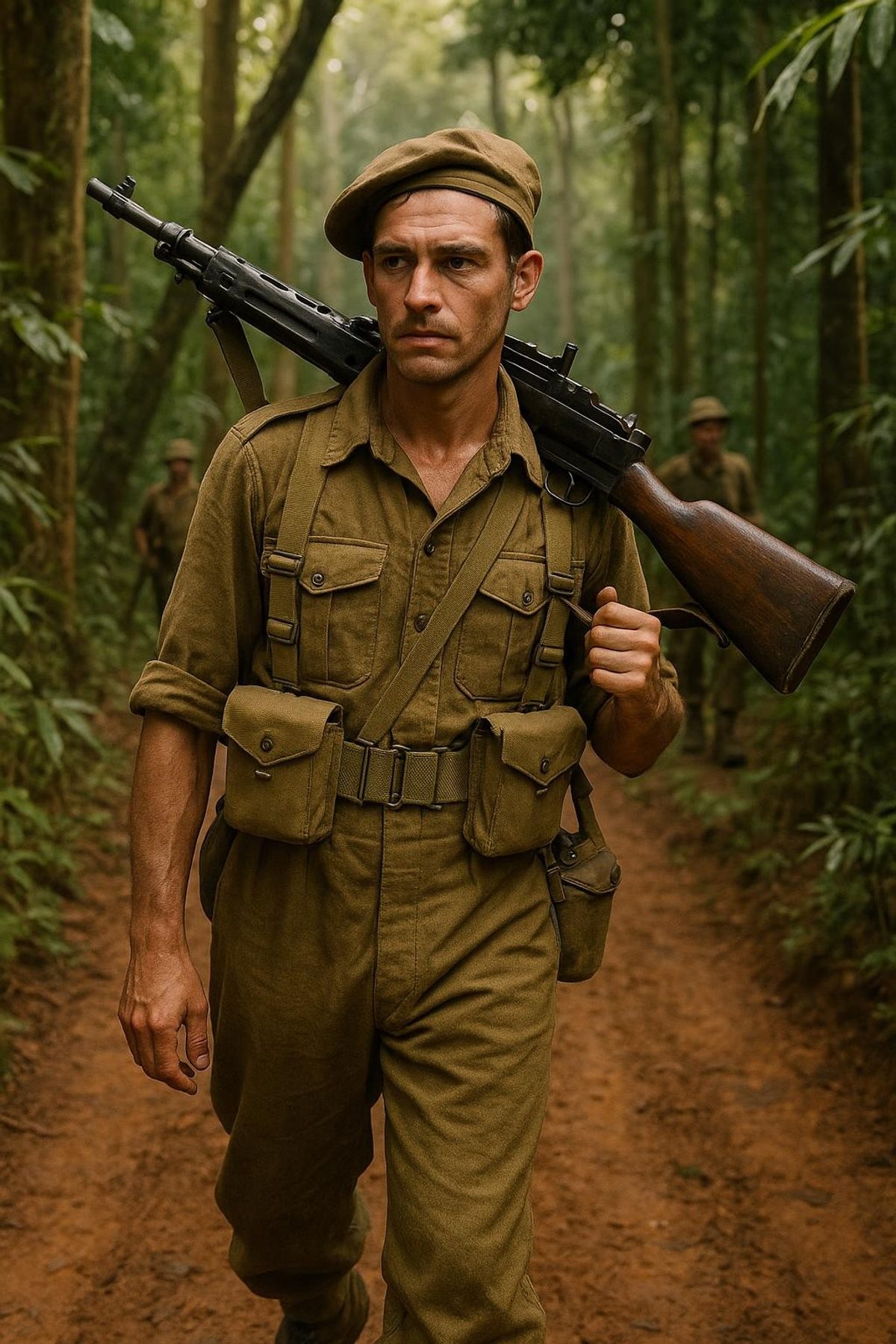
The mud clung like a viscous parasite to his boots as the dense humidity of the Burma jungle enveloped the British corporal. The jungle was alive with eerie sounds that echoed his footfalls, a symphony of insects and hidden creatures that seemed to mock his every struggling step. Sweat stung his eyes, blurring the already treacherous path ahead. Behind him, his squad followed, their breath labored and unified in a shared ordeal, their resolve anchored by the steely-eyed corporal who refused to yield, even with the weight of the Bren gun pulling on his shoulders.
The Heart of the Jungle
As they advanced deeper into enemy territory, each step became an interplay between man and nature. The Burma Campaign of 1944 was grueling, a test of endurance against both the terrain and a relentless adversary. The jungle was their battleground, its foliage as much a foe as the uniformed enemy waiting beyond the treeline. For the men fighting through this emerald labyrinth, survival meant enduring its sweltering embrace, fighting against thirst, disease, and the ever-present threat of ambush.
Our unnamed corporal was not a man of renowned stature or famous for rousing speeches. His was the quiet determination of the everyman, a steadfast figure whose footsteps carried the weight of responsibility. The Bren gun he hauled was a crucial component of their survival, a tool that transformed this small band from targets to a formidable defensive force. Each ounce of the 22-pound weapon seemed to conspire with the oppressive heat, yet the corporal knew too well the real burden it carried — the lives depending on his strength to wield it.
Beneath the Banyan Canopy
The jungle canopy swallowed them, towering banyan trees forming an impenetrable fortress overhead. Every rustle in the underbrush set nerves on edge, a reminder of the lurking dangers that could spring from the shadows at any moment. The scent of wet earth mingled with the sharp tang of sweat, a sensory presence that marked the soldiers' odyssey through this unforgiving environment.
Read next: He Was 58, Dying, and He Still Led the Charge
Soldiers like the corporal were the Empire's backbone — the mythic yet mundane figures who formed the bulwark against Axis expansion. Their names may not grace stone memorials, but the tales of their tenacity permeated the ranks. To the corporal and his squad, jungles were not just obstacles but traps laden with malaria-carrying mosquitoes and venomous snakes, every stride within marked by the constant threat of Japanese patrols.
For days that bled into weeks, they navigated this shadowy expanse, the corporal leading onward with a resilience chiselled not from speeches or medals, but from comradeship and an unyielding will to see the mission through.
The Gun That Spoke Volumes
The Bren gun, the corporal's burden and salvation, was known among the squad as "the voice of God" — its staccato burst a decisive answer to the silencing threat of enemy fire. It was a trusted ally and a dreaded beast, a masterpiece of engineering ingenuity capable of altering the odds in the tight-forested skirmishes of the Burma Hills. The corporal carried it like a sacred trust, aware that its presence could dictate the moments between life and death.
Designed for reliability and ease of use in a variety of terrains, the Bren was ideally suited for jungle warfare. Yet, its acclaimed features mattered little compared to its simple ability to stop the unseen foe in their tracks. Those who lived through its wrath, manning the gun beside the corporal, would recount its bark with the reverence of those who've been saved by miracles.
Read next: He Stepped Forward in Lucknow and Offered His Life
A Soldier's Quiet Tenacity
While history might overlook the individual acts of service, these men were immortal in the stories shared over rations amid the flickering glow of campfires. The corporal’s unfaltering presence offered solace and strength, a tangible reminder of duty borne not from orders alone, but from an innate sense of shared purpose and camaraderie.
The corporal's tale, though bereft of named accolades, endures in the living memory of those who witnessed his silent heroism. A man's story is often larger than recorded chronicles, characterized by the lives touched and the challenges silently overcome. In every haul of his Bren, there was an unspoken bond, the spirit of a warrior who understood that his greatest honor was the unwavering trust of the men beside him.
In the Shadows of Unsung Heroes
As the sun slowly dipped below the canopy horizon, the Burma jungle began to fold into night — a silent curtain call for a day spent in survival. The corporal, weary and sweat-sodden, cradled the Bren like an extension of himself, his thoughts geared towards the dawn that promised yet another chapter of their relentless march.
The legacy of our unnamed corporal and countless others like him thrives not in textbooks but in the quiet moments of reflection that honor their sacrifice. They remind us that the foundations of great endeavors often lie in the shoulders of the unsung, those who quietly embrace their roles not for glory, but for those they defend. It is a lesson as enduring as the jungles they traversed: history may forget names, but never the courage that forged its path.