No one forgets the name Banastre Tarleton. Few realize he was just twenty-six when he terrorized the American South.
The Relentless Commander from Liverpool
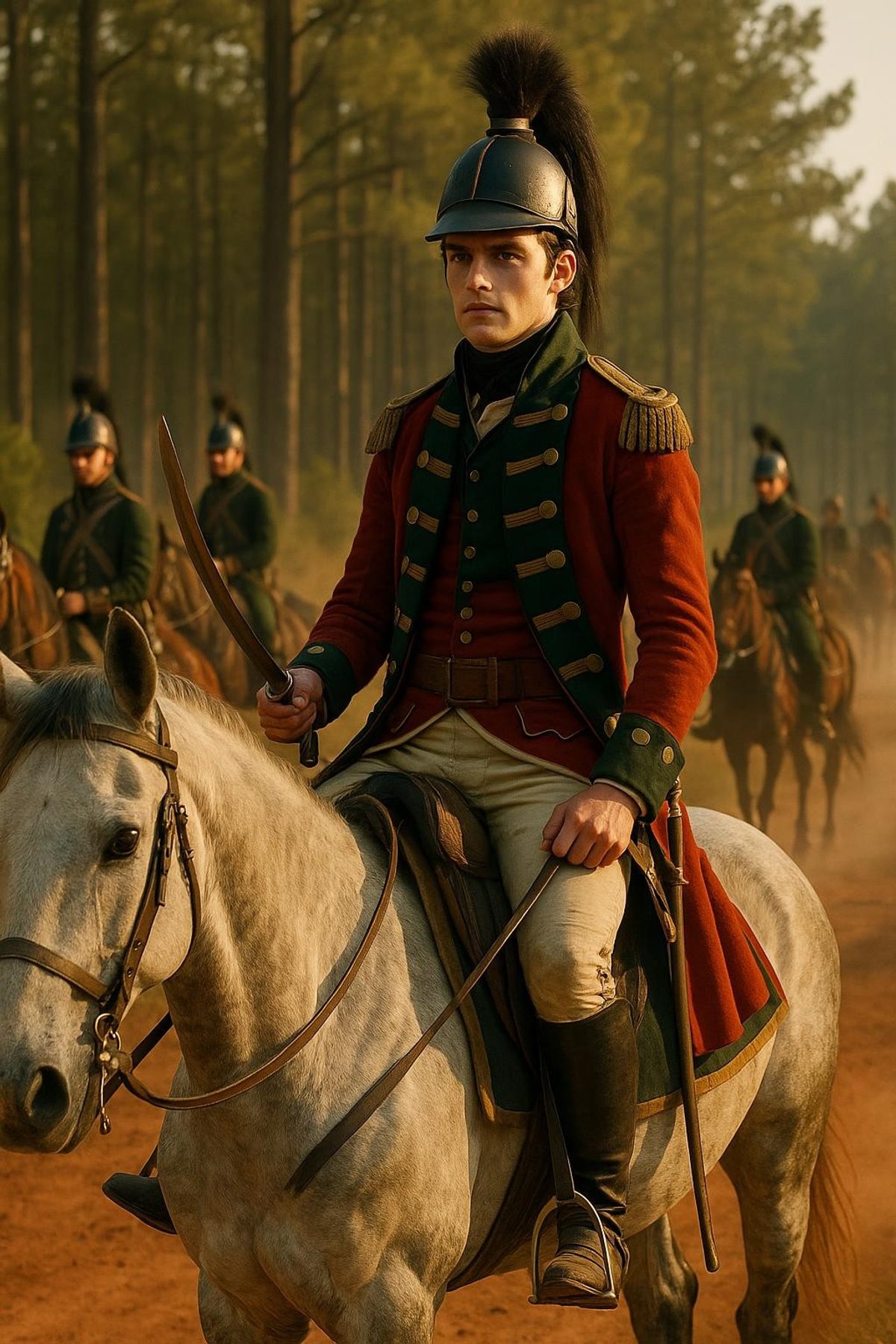
Banastre Tarleton, the son of a prominent merchant family from Liverpool, England, had a penchant for military prowess from a young age. He wasn’t merely a soldier; he was an epitome of the very brutality and tactical brilliance that defined 18th-century warfare. Commissioned as a lieutenant colonel, he led the British Legion—a cavalry and light infantry brigade—as they carved a fearsome reputation during the Southern Campaign of the American War of Independence. His legionnaires were a motley band of former Loyalist prisoners and equipped with the finest in British military innovation, renowned for their striking leather helmets and unparalleled ferocity on the battlefield.
By the time Tarleton set foot on the American soil, the Colonies were in the throes of revolution. Yet, for all the ideals of liberty and self-governance that fueled the rebelling Americans, the sheer terror inspired by Tarleton’s lightning raids and relentless assaults made even the bravest contemplate retreat. Under his leadership, the British Legion became known for rapid, surprise attacks that left the Continental Army dazed and severely weakened. The stories of his exploits—both embellished and brutal—made him a figure of dread and fascination alike.
Waxhaws: The Field of Tragedy
If there is one event that etched Tarleton’s name into the annals of American history, it would be the encounter at Waxhaws on the South Carolina frontier. In late May 1780, Tarleton and his Legion caught up with a detachment of Continental soldiers led by Colonel Abraham Buford. Unbeknownst to Buford, Tarleton executed a harrowing chase, forcing the Americans into a desperate defensive position late in the day. The British Legion launched a blistering attack; the air was thick with gunfire, the ground trembling under the rushing hoofbeats of cavalry.
Read next: He Was 58, Dying, and He Still Led the Charge
Amidst the chaos, what occurred next is disputed but has become the spectral shadow of Tarleton’s legacy: the blood-soaked spectacle of *Tarleton’s Quarter*. As the American line crumbled under the onslaught, surrendering troops purportedly received no mercy. Instead of restraint, the Legion's sabres and bayonets delivered death, turning the field at Waxhaws into a tableau of carnage. Whether these reports were exaggerated or entirely accurate, the incident sent shockwaves throughout the South, coining the notorious phrase "Tarleton's Quarter" as a synonym for ruthlessness without clemency.
The Fearsome Tactics That Redefined an Army
Tarleton's military strategy was a potent mix of innate aggressiveness and adroit utilization of his resources. He leveraged the Legion’s mobility to conduct quick strikes and raids, disrupting American supply lines and morale. Far from the clumsy and rigid maneuvers that characterized much of the period’s warfare, Tarleton's approach was dynamic and brutally efficient. Though constantly outnumbered, he was adept at maneuver warfare—a relatively new concept at the time—using speed and surprise to unbalance his foes.
His perception extended beyond mere battlefield victories. By maintaining a foothold over the swampy, treacherous terrains of the Carolinas, he not only wrangled control from the Americans but also struck fear into the hearts of militia forces enticed by the prospects of independence. His methods inspired both admiration among his peers and a stark horror that flared across the burgeoning nation.
The Shadow He Cast on the Revolution
For the American colonists, Tarleton became a symbol of everything detestable about British rule—a brutal enforcer of King George’s will. His actions were woven into the Southern campaign's narrative as a tale of invincible British might portrayed in full, horrific splendor. Tarleton’s reputation was further immortalized by the pens of American propagandists, eager to galvanize local sentiment against the British Crown’s seemingly merciless attachments.
Read next: He Stepped Forward in Lucknow and Offered His Life
The tales spread quickly—the swift tree cover that their news traveled under only gave rise to a wildfire of resistance and resentment toward British assaults. On the ground, however, the duality of terror and respect would lead many a Southern colonist to rethink their commitments, fanning the flames of rebellion even as they recoiled from the Legion's onslaughts. Tarleton's war, filled with pragmatic malevolence, shook the colonies’ resolve yet, indirectly, strengthened their unity against a common enemy.
A Legacy of Legend and Infamy
As time has distanced us from those turbulent days of revolution, Banastre Tarleton remains an enigmatic figure in the tapestry of American and British history. His youthful vigor and tactical audacity embody the spirit of an empire seeking to retain its wayward colonies. Conversely, his actions and the infamous moniker of "Tarleton's Quarter" breathed a warriors' defiance into the colonial cause, a rallying cry for freedom echoing louder with every whispered tale of his methods.
Whether viewed through the lens of a scholar, an armchair enthusiast, or an impassioned descendant of the revolution, the story of Banastre Tarleton is a reminder of the complexities of war. It illustrates how fear can drive a movement as much as it seeks to intimidate. It poses the question of how legends—often shaped as much by the flames of reputation as by deeds—can become cornerstones in the foundation of a nation’s identity, forever being a tale that both illustrates the terror of bygone battle and the grit of spirited resistance. In Banastre Tarleton, we find the paradox of war: the terrifying adversary who, ironically, played an inadvertent role in the birth of a nation.