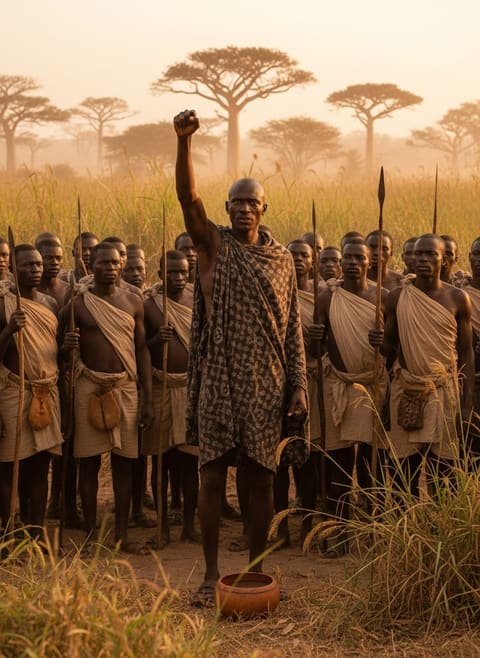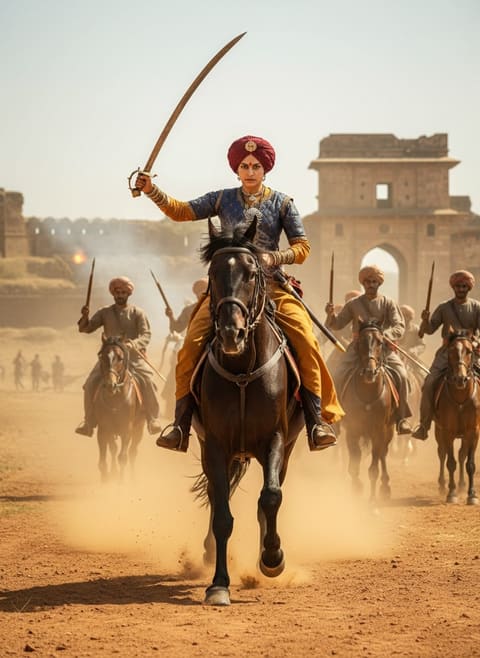
The dawn mists crept through the dense sal forest of Chota Nagpur, casting ethereal fingers over thatched huts and tangled foliage. The jungle awoke to the echo of rustling leaves and distant bird calls, yet beneath this serene exterior lay a simmering unrest. It was the early days of 1900, and one young leader’s call to arms reverberated through these woods, urging the Munda tribes to reclaim their sacred land from colonial hands. Against the oppressive grip of the British Raj, a fervent movement was stirring, led by a charismatic figure named Birsa Munda.
The Prophet of the Jungle
Born in 1875, at a time when the British Empire was tightening its hold on India, Birsa Munda grew up amidst the lush expanse of Chota Nagpur. From early on, he was a product of the tensions between ancient tribal traditions and the encroaching forces of colonialism and missionary influence. Educated by Christian missionaries, Birsa absorbed Western teachings but soon recognized the intrinsic value of his own culture and spiritual heritage. Despite his exposure to the new world, it was the spiritual realm that shaped his destiny.
In the late 1890s, Birsa proclaimed himself a prophet — the Singbonga, the deliverer — destined to guide the Munda people in their struggle for freedom. Charismatic and articulate, he utilized his understanding of both tribal customs and the discontent simmering beneath colonial dominance. His message was simple yet profound: the land that their ancestors had nurtured and revered was theirs by right, not to be tainted by foreign rule or the oppressive zamindari system.
With his growing band of followers rallying around him, Birsa advocated for an end to the oppressive practice of bonded labor, urging his people to eschew European dresses and customs, and to return to their indigenous roots. His fame spread like wildfire through the forests, and the young prophet soon became a symbol of defiance against the colonial yoke.
Read next: When Wat Tyler Faced the King in Smithfield, 1381
The Ulgulan: A Movement Takes Root
By the end of the 19th century, the Ulgulan, or "The Great Tumult," began to take shape under Birsa's leadership. It was not merely a rebellion but a broader social movement advocating land reforms, challenging the power of landlords, and revitalizing the tribal identity and customs that had been eroded by years of foreign influence. This movement was as much about the spirit as it was about the soil.
In these dense forests where paths twisted endlessly and the canopy sheltered all beneath, the Mundas prepared for their struggle. Birsa instilled in them a profound sense of unity and purpose. Armed with traditional weapons — bows, arrows, and the occasional musket — the tribal warriors were emboldened by a belief in divine support.
The British colonial administration viewed Birsa's rise with mounting concern. What began as a grassroots movement soon caught the attention of officials whose authority had long been accepted without challenge. Reports of gatherings in the jungle, where Birsa preached to thousands, sent alarm bells ringing through the corridors of colonial power.
The Clash of Worlds
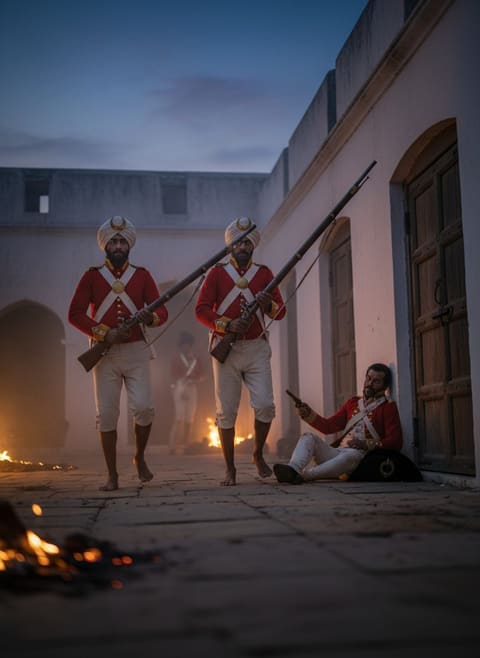
As 1899 turned to 1900, tensions reached a boiling point. The British attempted to quell the rebellion with a heavy hand, deploying police forces into the dense jungle. These were not just battles over terrain but over ideologies; the British wielded rifles and artillery, while the Mundas relied on spiritual fervor and the intimate knowledge of their land.
In the ensuing skirmishes, the jungle itself seemed to conspire against the foreigners, swallowing them in its maze-like depths. Yet, despite their numerical advantage, the tribal forces were gradually worn down by the superior armaments of the British. It was a relentless campaign that took a heavy toll on both sides.
Amidst this chaos, Birsa Munda remained a beacon of hope. He inspired his followers with promises of a return to the golden age, free from the yoke of colonial oppression. But the jungle prophet's defiance could not shield him from the tide of history forever. On February 3, 1900, Birsa was captured by the British, the final act of the movement he led with such fervor.
Read next: When Disguise Carried a Fugitive Through Empire's Heart, 1876
The Memory Endures
Though Birsa Munda was imprisoned, dying in custody on June 9th, 1900, his spirit lingered on in the Chota Nagpur Plateau. His sacrifice galvanized his people, leaving an indelible mark on the collective consciousness of the tribal communities. He became a martyr and a hero, with his legacy celebrated by millions who revered him as "Dharti Aaba" — the Father of the Earth.
Over time, Birsa's revolt and vision gained recognition far beyond his homeland. His legacy has continued to inspire India's indigenous communities in their continuous struggle for rights and recognition within the larger framework of a modern nation-state. Streets, schools, and even the Birsa Munda Express train, traversing the routes once imbued with his spirit, bear his name as a perpetual reminder of his life’s work.
The Ember of Resistance
Birsa Munda’s life and legacy offer more than a footnote in the sprawling annals of history; they serve as a stark reminder that the fight for land and cultural identity resonates deeply within the human spirit. His is a story not only of conflict and sacrifice but also of an eternal struggle between the indigenous and the colonial, the spiritual and the material.
As one walks through the forests of Chota Nagpur today, it's as if the whisper of Birsa's voice can still be heard, carried by the wind among the sal leaves, urging unity, resilience, and a return to the sacred. His tale highlights the enduring power of resistance against overwhelming odds and reminds us of the invisible ties that bind people to their land, culture, and each other. In these lessons lies a legacy of hope and defiance — a beacon guiding future generations toward their rightful heritage and dignity.