January 15, 1940. Snow blanketed the fields around the Georgian mansion, quieting the world outside.
The Illusion of Freedom
As the wheels of war machines ground across Europe, a peculiar sanctuary quietly emerged at Trent Park, a sprawling estate nestled just north of London. Its graceful architecture, manicured gardens, and the quietly falling snow might suggest a place of peaceful reprieve. But beneath its elegant veneer, Trent Park concealed one of World War II’s most ingenious espionage operations.
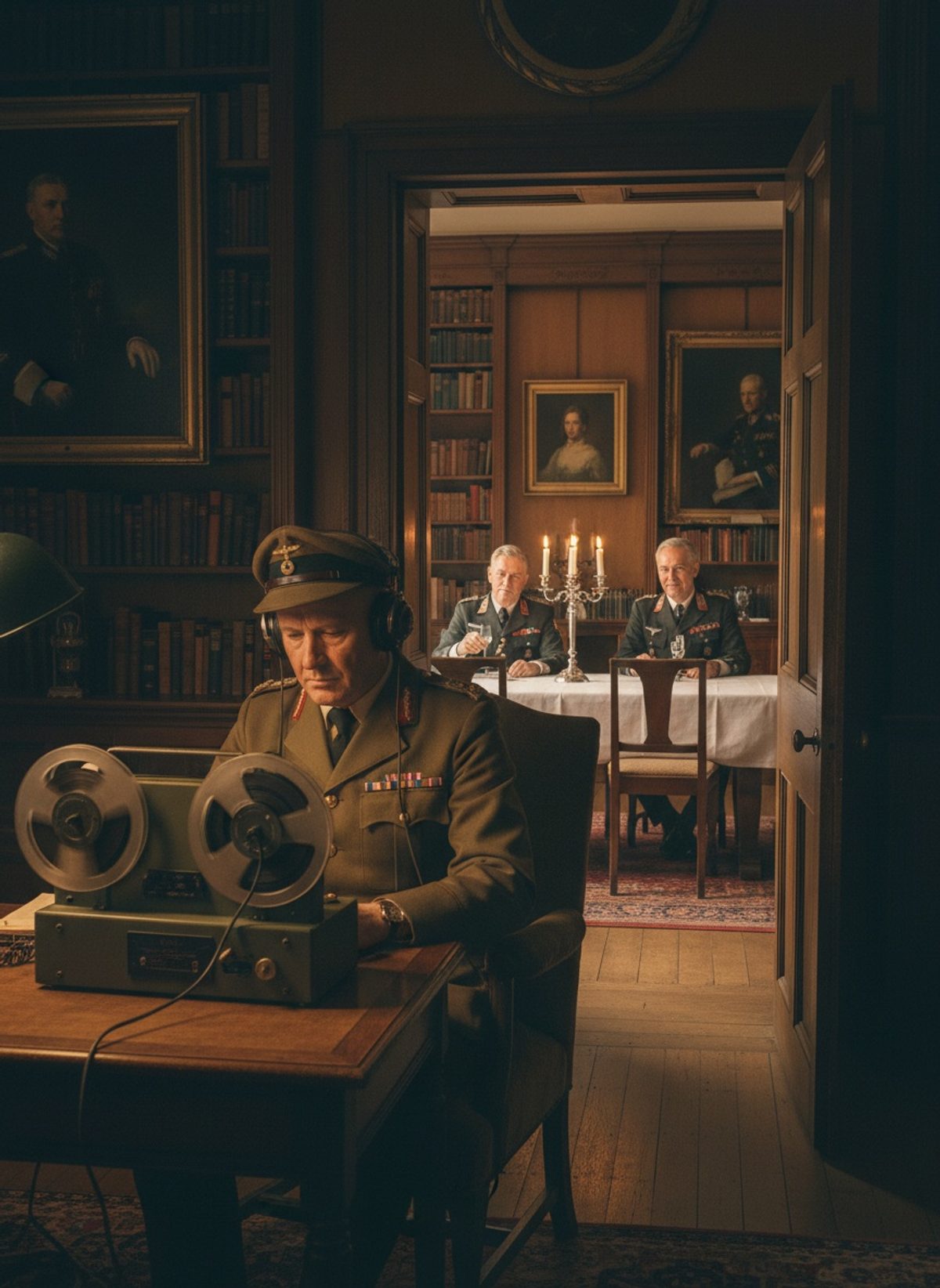
Requisitioned by British intelligence agency MI19, the mansion served as a bespoke prison for captured senior German officers. The guests were treated to a seemingly decadent life, where the daily rigor of war was replaced with leisurely strolls and unlimited wine. The course of history, however, was being subtly bent by myriad hidden microphones expertly woven into the very fabric of the mansion. Each whispered word, each careless confession, was captured and relayed directly to a nondescript room in Whitehall – where British intelligence analyzed the conversations with meticulous precision.
The Art of Conversation
To lure the captured generals into a false sense of security, the British indulged them with the finest comforts. The prisoners were introduced to a life that blurred lines between friend and foe, mingling in a charmed setting where record players spun familiar symphonies and stewards served delicacies that rivaled the finest of Berlin’s dining halls.
Read next: When Flora Sandes Picked Up a Rifle and Fought for Serbia
The sociable clinking of glasses often masked the gravity of talks that took place within the mansion's drawing rooms or around its grand dining tables. A seemingly ordinary conversation about architecture or art could deftly shift towards the strategic – unwittingly yielding invaluable military secrets. It was a subtle craft, knowing just when to pour a second glass or bring forth a fond memory of pre-war life that might stir a bout of nostalgia-imbued honesty.
This ambiance turned Trent Park into more than just an intelligence operation. It became a psychological theatre where the actors, while aware of their captivity, could not resist the allure of comfort and camaraderie enough to guard their tongues.
Voices in the Walls
The true brilliance of Trent Park lay hidden within its walls. An intricately designed web of state-of-the-art listening devices lay ensconced in every conceivable location – behind the ornate wallpaper, tucked into sconces, and even within threshold creases. This network transmitted grainy but discernible German monologues to sensitive receivers in shadowy rooms.
The technicians and translators working tirelessly in these clandestine rooms became the invisible ears of Britain. Armed with the latest developments in audio recording technology, they sieved through countless hours of hushed deliberations and boisterous exclamations. While the unending hum of enemies’ voices was challenging in its complexity, it yielded a bountiful harvest of intelligence - from clear admissions of wartime strategies to cryptic hints of emerging technologies, like the feared rocketry advancements.
These revelations did not just fall unnoticed into the annals of intelligence reports. They provided crucial insights that informed numerous strategic decisions by the Allies, knitting a deeper understanding of the Axis’ internal mechanisms than battlefield surveillance ever could.
The Whispering Legacy
Trent Park shuttered its whispers after four intense years. The ruse of polite captivity quietly ended as the war drew to its inexorable close. Yet, the legacy of conversations continued to echo in the corridors of history. More than an elaborate intelligence coup, Trent Park symbolized the unexpectedly human element that often permeates war.
What resonates through this clandestine chapter is not merely what was gained, but how it was done – with the subtlety of a well-played note, with humanity and ingenuity serving as the unlikeliest of allies. The story of Trent Park compels us to ponder the boundaries of knowledge and deception, of trust and subterfuge. It serves as a reminder of the nuanced dance between liberty and restraint, even amidst the chaos of war. In the end, it reveals that sometimes, the most profound revelations are uttered not under duress or interrogation but over the clink of a glass in a mansion where the walls really do have ears.