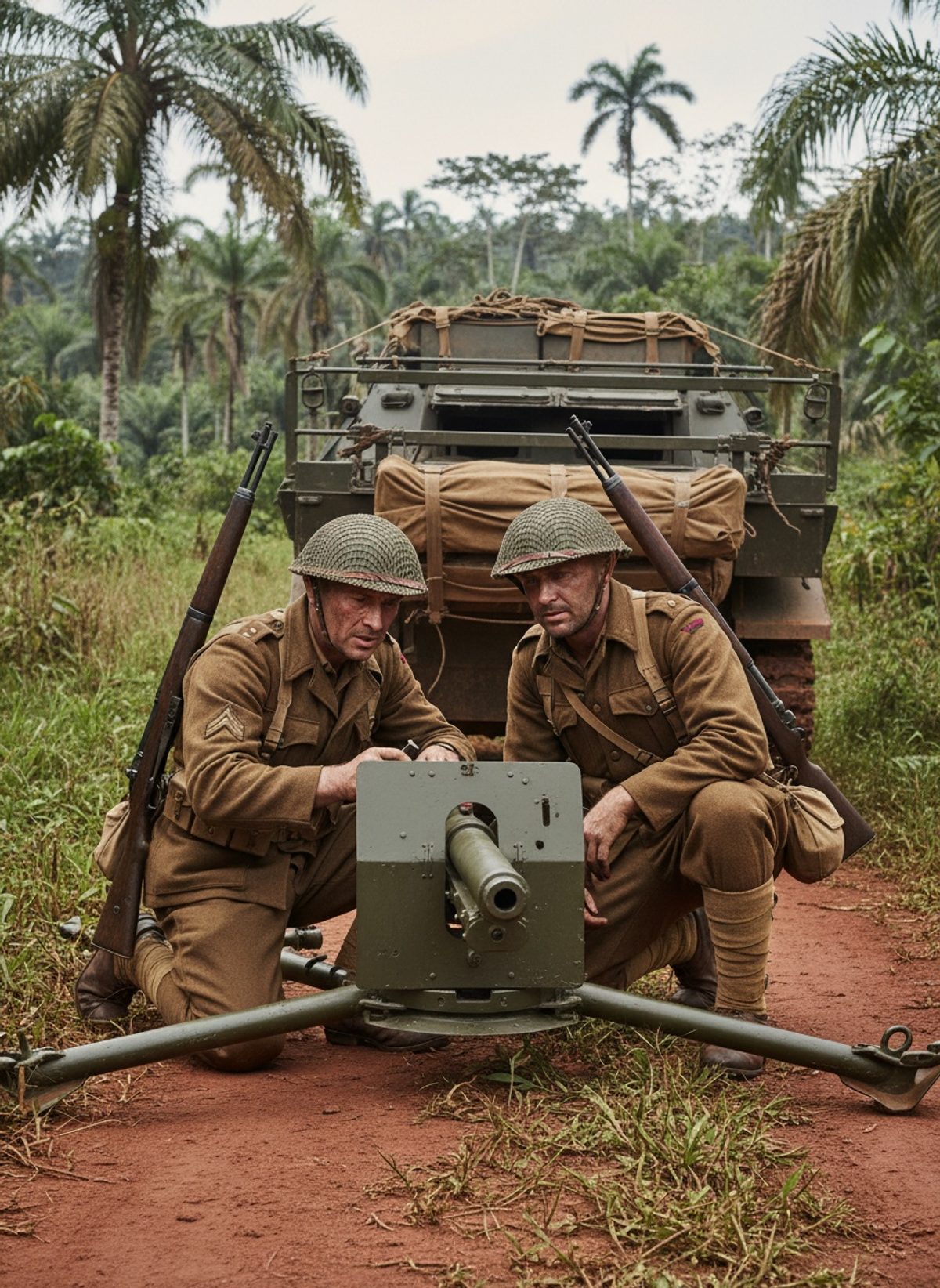
January 1945. The air in Burma was thick with uncertainty, punctuated only by the distant rumblings of an ongoing war that had reshaped the world. Amidst the dense jungle and unpredictable weather, a group of British soldiers stood transfixed by an unexpected prize—a Japanese 37mm anti-tank gun, captured intact and ripe with potential secrets.
Unveiling the Mechanical Beast
The soldiers, seasoned and weary, approached the captured gun with a mix of caution and curiosity. Crafted with a meticulousness that the Japanese military was renowned for, the gun was an enigma wrapped in cold, unyielding steel. The British forces knew that every rivet and bolt potentially held the key to understanding the weapon’s strengths and weaknesses. They also recognized that it wasn’t just the firepower that interested them, but how the ingenious design elements could be turned against its creators.
As they began to dismantle the gun, the soldiers’ fingers moved deftly over the metal contours, feeling the ingenuity of its design. This gun had posed a significant threat on the battlefield; its lightweight maneuverability and rapid-fire capability made it an effective tool against Allied tanks and infantry. Now, reverse-engineering its components could level the playing field against its makers. This operation was not merely a tactical exercise—it was a strategic unraveling of enemy strengths that could be used to fortify their own defenses.
Piece by Piece: The Anatomy of Innovation
The mechanical dissection of the gun was both a scientific exploration and a trial of patience. Every component was carefully cataloged, every spring and lever meticulously examined. The soldiers noted the clever design efficiencies—how minimal metal was used without sacrificing durability, the integration of quick-release mechanisms that allowed for easy transport and concealment, and the simplicity of maintenance that testified to its battlefield reliability.
Read next: He Was 58, Dying, and He Still Led the Charge
The firing mechanism particularly fascinated the British officers. It was a testament to Japanese warfare craftsmanship—reliable under the duress of jungle conditions, with components that seemed almost purpose-built for quick adaptation. By understanding how each feature functioned, information could be relayed to weapons manufacturers back in Britain, potentially inspiring adaptations to British anti-tank technologies or tactics.
The Strategic Impact of Intelligence
Though the mechanical aspects were crucial, the intelligence gathered from this exercise extended far beyond the metallic components. With a comprehensive grasp of the gun's capabilities, British forces could better strategize their movements in the region. They now understood the range and limitations of this deadly weapon and could plan troop movements and defense tactics accordingly.
Read next: He Stepped Forward in Lucknow and Offered His Life
Information gathered from this single gun contributed to a broader intelligence network designed to anticipate enemy strategies and undermine their effectiveness in the sweltering jungles of Burma. Interrogations of captured enemy soldiers frequently corroborated the mechanical insights the British had gleaned, each piece of intelligence enhancing the greater strategic mosaic necessary for warfare in such challenging terrain.
Reversing the Curve of War
The thoughtful dissection of the Japanese 37mm anti-tank gun not only represented a technical triumph but also underscored the importance of intellectual warfare during World War II. By converting enemy assets into valuable intelligence, the British forces in Burma were actively transforming the battlefield calculus.
In the broader tapestry of WWII history, this lesser-known act of tactical deconstruction is a stark reminder of how warfare is as much about wits as it is about weaponry. It illustrates the dynamic interplay between adversaries, where each revelation is a potential game-changer, offering a glimmer of advantage in an otherwise overwhelming ocean of conflict. Amidst the relentless grind of war, moments like these become catalysts for ingenuity, allowing for reverse-engineering an adversary's might into an ally’s advantage—one piece at a time.