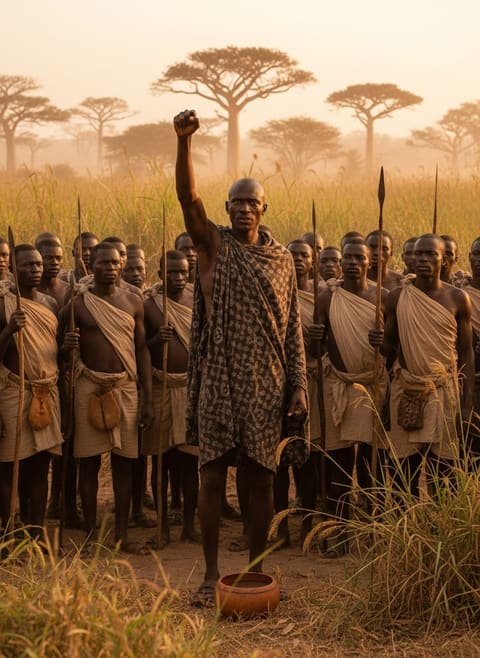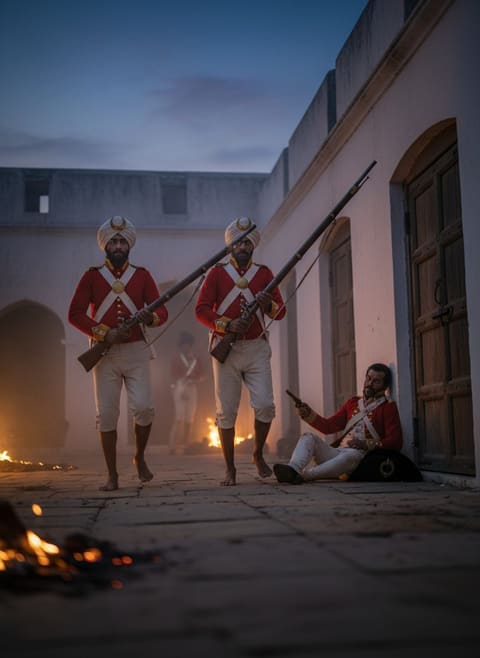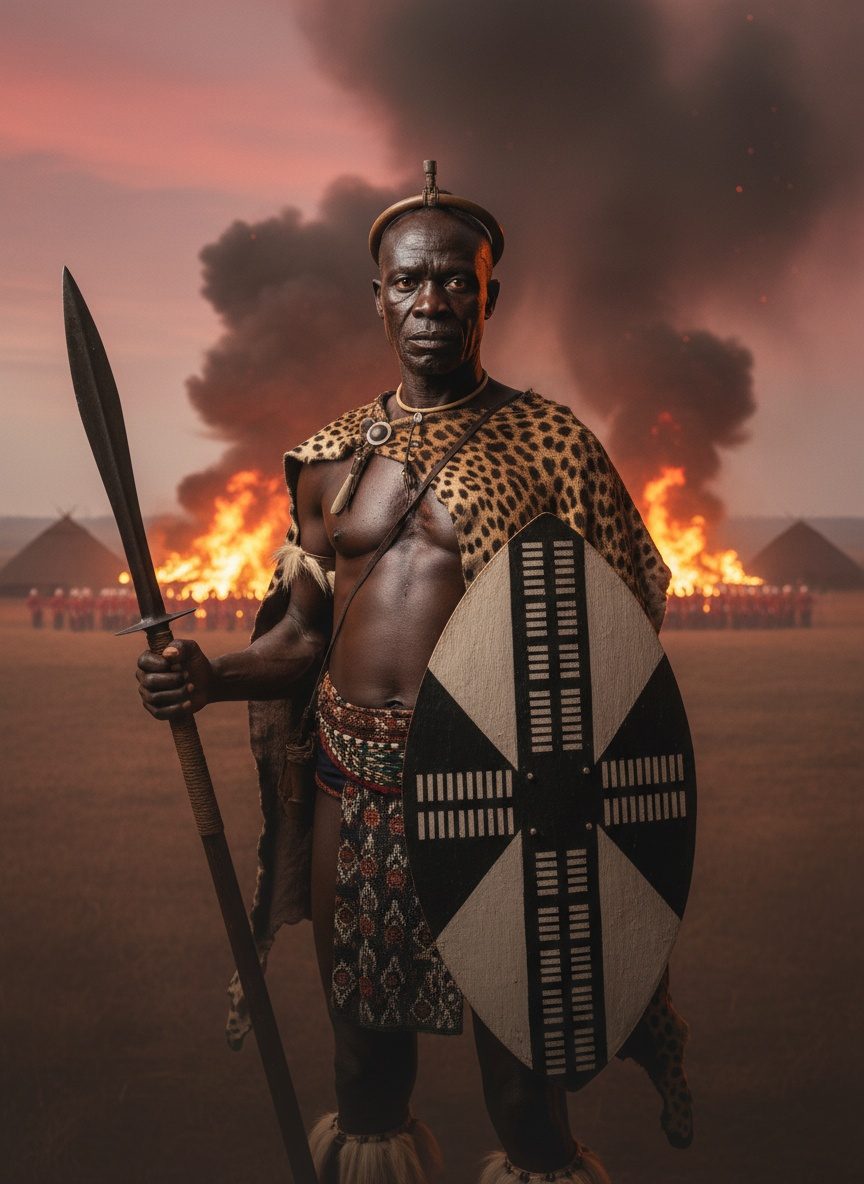
He had already defied an empire. The man who stared into the flames at Ulundi did so with the same resolve that had once brought him victory over one of the world's mightiest armies.
The Unyielding Induna
As the commander at Isandlwana, Ntshingwayo kaMahole had written himself into the annals of military legend. In January 1879, his tactical genius shattered a British column in the most humiliating defeat for the empire on African soil. That day, his forces, equipped with spears and shields, defeated an army outfitted with rifles and artillery. It was not mere luck or numbers that secured their victory; it was the unparalleled leadership and unbending resolve of Ntshingwayo. This Zulu general managed to outmaneuver the might of British soldiers, who had long believed they were invincible.
By July 1879, the situation had dramatically shifted. The Zulu kingdom was on the brink of collapse, its strength drained away by relentless British advances. The decisive battle at Ulundi was now at hand, and just as he had stood against British forces before, Ntshingwayo held his ground again. There he was, an induna facing the inexorable tide of a foreign empire. He stood not merely as a soldier, but as a guardian of his people and their pride.
The Flames of Ulundi
Ulundi, the Zulu capital, became the final stronghold against a methodical and vengeful British assault led by Lord Chelmsford. This time, however, the Zulu forces faced a juggernaut that had learned from its mistakes. The British entered Ulundi in a square formation, their rifles and Gatling guns ready to spew death onto any adversary daring to challenge them. It was July, a month now marked by smoke, fire, and the resolute clangor of shields challenging bullets.
Read next: When Wat Tyler Faced the King in Smithfield, 1381
The royal kraal became an inferno, the flames licking up the walls as if to devour the history and heart of a kingdom. But Ntshingwayo, unlike others who might have seen the inevitability of their downfall, stood his ground. The once proud landscape of Ulundi—resplendent with its cattle kraals and bustling with the vibrant life of a kingdom—was now enveloped in chaos and despair. Yet, as the fires raged and the British closed in, he did not turn away. Here was a man who refused to be defined by defeat, embodying the tenacity of a leader who would rather witness the end than concede to it.
Trails of Uncommon Courage
The story of Ntshingwayo kaMahole is not merely about military prowess; it's about the valor of a leader amid overwhelming adversity. At Isandlwana, he had crafted a victory that resonated globally, forcing even the mightiest empire to reconsider its strategies. For the Zulu people, Ntshingwayo’s triumph was not just a battle won but a symbol of resistance against imperial subjugation. Despite the catastrophic spell Ulundi cast on the Zulu spirit, Ntshingwayo’s defiance became an enduring tale of resistance.
Read next: When Disguise Carried a Fugitive Through Empire's Heart, 1876
Not every person finds such resolute purpose in the face of overwhelming odds. Ntshingwayo’s courage was uncommon, akin to those few leaders throughout history who fight for their people, not purely for the triumph of battle but for the preservation of their identity and dignity. He did not attempt to flee the flames, nor did he seek peace with the invaders. Instead, he remained a vigilant sentinel in the heart of the inferno that signaled not just the end of a battle, but an era for the Zulu kingdom.
Legacy in the Ashes
In the end, Ulundi fell, but Ntshingwayo kaMahole’s story did not crumble with the walls of the kraal. If his tactical brilliance at Isandlwana was initially feared by his colonial adversaries, his composed defiance at Ulundi left an indelible mark of respect. The Zulu kingdom ultimately dispersed under the pressures of imperial expansion, yet the character of its defenders like Ntshingwayo continues to resonate. His actions at Ulundi remind us that history is often crafted not by those who merely conquer and claim lands, but by those who face such empires with unfaltering resolve.
As empires rise and fall, the figures like Ntshingwayo live on as powerful testaments to bravery and resistance. In them, we find stories that were excluded from textbooks but cannot be forgotten. As much as this reflects a collision of cultures and empires, it also captures a timeless narrative: some legacies endure, not because they yielded to the forces of change, but because they stood against them, refusing to flee. In the shadows of Ulundi’s flames, Ntshingwayo kaMahole didn't just make a stand for a kingdom, but for the endurance of strength through conviction. That legacy is one now forever etched into the chronicles of history.