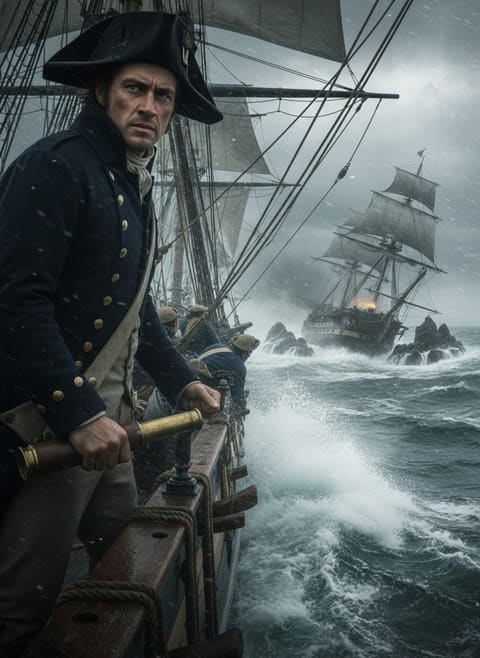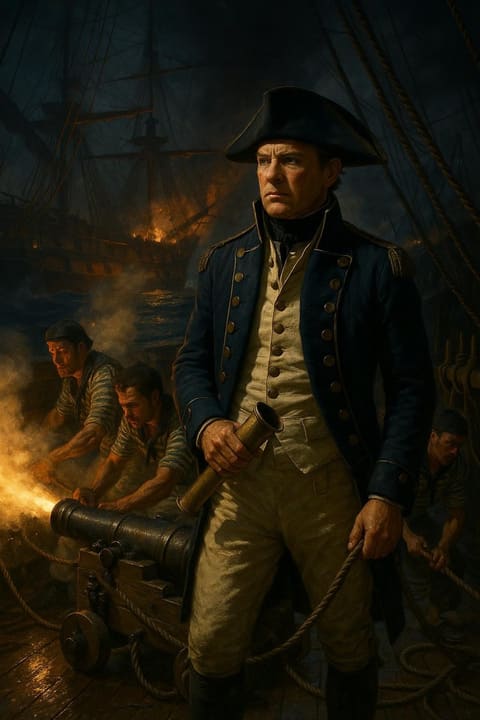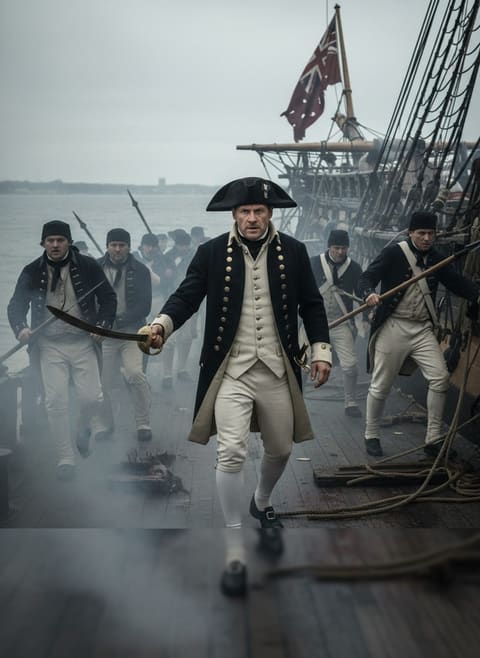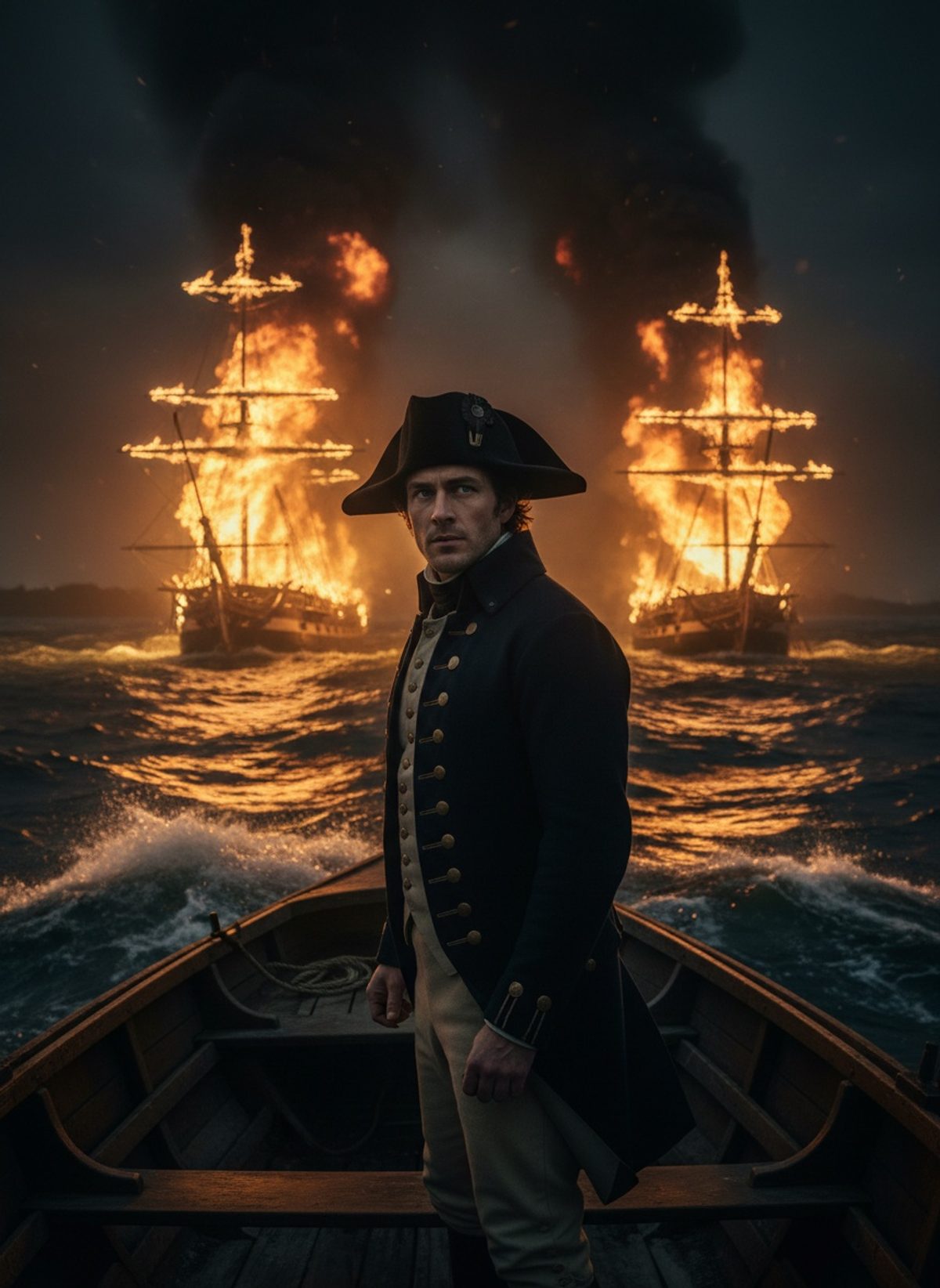
The crackling flames danced atop the water, casting flickering shadows onto the French warships anchored at Basque Roads. The salty night air was thick with smoke as the blaze from the fireships illuminated the darkness, casting a fiery glow over the restless sea. Amidst this chaotic scene, Lord Thomas Cochrane steered his tiny vessel with steadfast determination, eyeing the French fleet that lay seemingly invulnerable behind their great chain boom.
The Unseen Hand: Lord Cochrane's Gambit
In the heart of the Napoleonic Wars, Cochrane stood as a maverick, someone whose bold decisions often courted controversy but equally delivered results. The French Atlantic squadron, shielded by the protective embrace of the chain boom at Basque Roads, was a formidable symbol of Napoleon's power on the seas. To disrupt this stronghold would seem to require an armada, yet Cochrane, armed only with his boldness and a handful of fireships and explosion vessels, took on this Goliath.
On the night of April 11, 1809, as darkness enveloped the channel, Cochrane set his plan into motion. It was a simple strategy, yet daring in its execution. With the Royal Navy offering a scant few fireships, Cochrane led them toward the anchored French vessels. Knowing full well that the fireships would sow panic, the ingenious sailor ensured the vessels were loaded with combustibles and explosive materials. The heavens had yet to cast any moonlight, allowing Cochrane’s approach to remain cloaked until the very last moment.
The French sailors, awoken by the unexpected light and commotion, erupted into pandemonium. The fiery spectres hurtling towards them brought forth visions of naval destruction. Just as Cochrane anticipated, chaos reigned supreme. Panic-stricken, the French cut their anchor cables, robbing themselves of their stability in a desperate attempt to escape the advancing inferno. It was precisely this unforeseen cutting that would prove their undoing.
Read next: When Piper Findlater Played On With Two Bullets in Him, 1897
The Night of Fire: A Fleet Scattered
The night sky above Basque Roads flickered with an incandescent glow as one by one, the floating fortresses of the French navy broke away from their orderly formation. While the fireships blazed harmlessly outside the primary fleet lines, it was the psychological impact that Cochrane banked on—fear and confusion spread to men who had until then believed themselves sheltered by their mighty boom.
In the darkness, French admiral Victor-Joseph Duperré's flagship, Océan, led the flight. What transformed this bold escapade into a resounding triumph were the very actions of the French themselves. The cut cables and absent anchors meant that many ships ended up grounded on the shoals and sandbanks within the confines of the sheltered harbor, transformed from symbols of power into beached leviathans of timber and canvas.
With dawn breaking on April 12, the full scale of Cochrane’s audacious mission came to light. What was once Napoleon’s mighty Atlantic squadron now lay scattered, mired by the very landscape that had once offered protection. More than twelve vessels, flagship Océan amongst them, found themselves entrapped by the low tide, rendered immobile and powerless against any oncoming assault.
It took only one night, one calculated risk, born from the mind of a man often described as reckless, to dismantle part of the French naval might. The French fleet, to which Napoleon held Europe’s maritime supremacy tethered, had been unhinged by the very element they had believed shielded them—the ocean's unpredictable nature.
Read next: When Cochrane Bluffed a Fleet With a Single Frigate, 1801
A Tidal Shift: Transformations Beyond the Tactical
Captains are often remembered by the victories they claim on the battlefield, yet Cochrane’s genius resided beyond mere tactical brilliance. His unconventional approach sparked an era of metamorphosis within naval warfare, laying bare the simplicity and potency of psychological operations against more substantial, entrenched forces. It underscored a lesson intrinsic to warfare: the mind could unravel the most tenacious of anchors.
While Lord Cochrane advanced further into maritime lore, his actions at Basque Roads set ripples across the channels of naval strategy. It solidified the understanding that superior tactics required keen intellect allied with audacious courage. The encounter served as a reminder that complacency amidst seemingly impenetrable defenses bred vulnerability—a weakness that warriors like Cochrane were primed to exploit.
Cochrane's daring endeavor reached even further than his own legacy, inspiring a generation of naval tacticians around the world to rethink traditional approaches to warfare. His life continued to be peppered with similarly bold exploits, yet few could match the singular impact realized that fateful night of April 1809, when he—alone against the expanse of night—transformed the hum, crackle, and roar of flames into a decisive stroke against Napoleon’s naval aspirations.
Indeed, beyond the night’s flames and fear lies a powerful reminder relevant even today: that the often-overlooked human mind, relentless in its creativity and fearlessness, can forge paths through darkness and defy the mightiest of fortresses. The tumultuous waters of history ripple with such stories—where one man's audacity reshapes tides and draws new charts upon the endless, undulating sea.