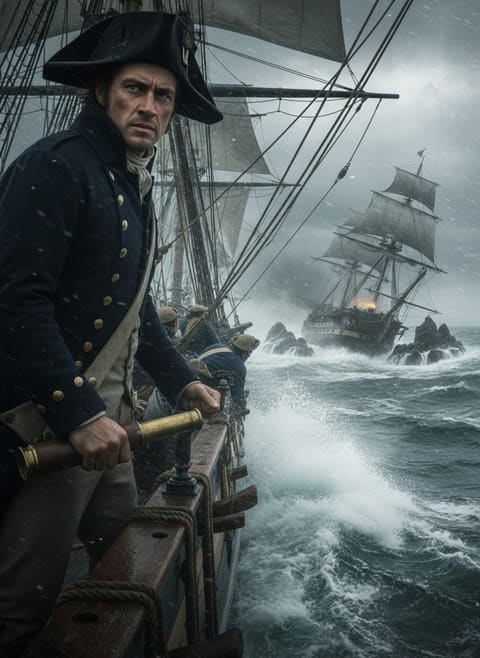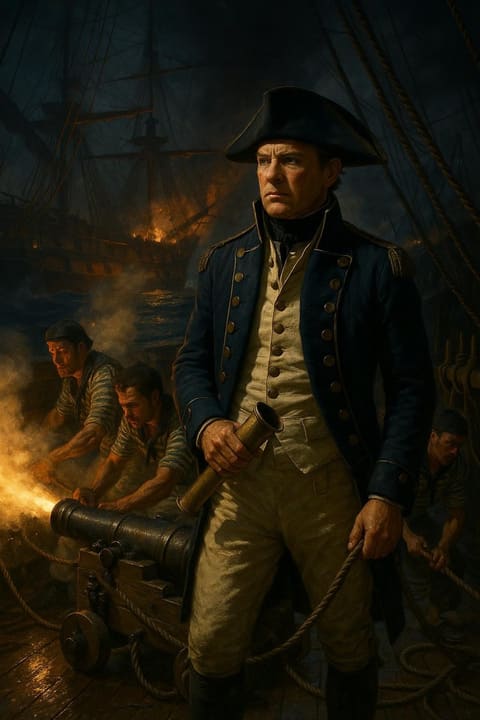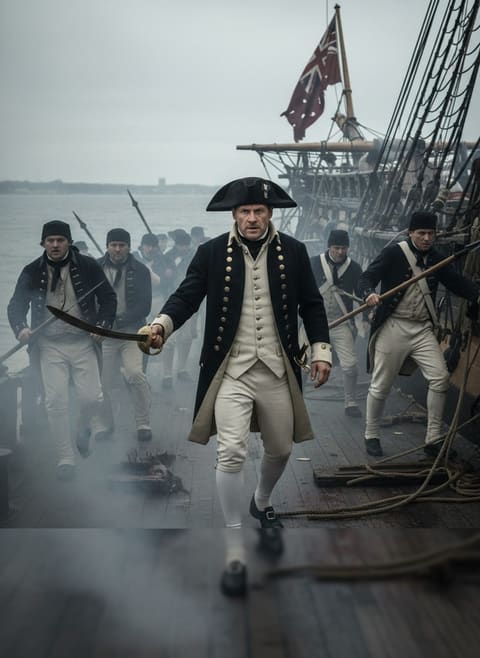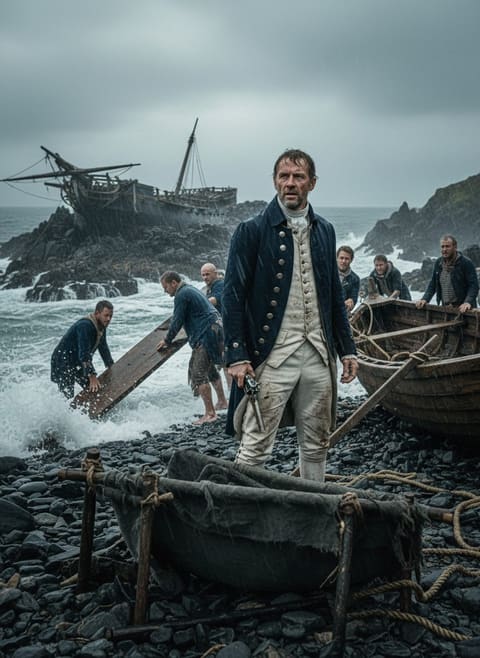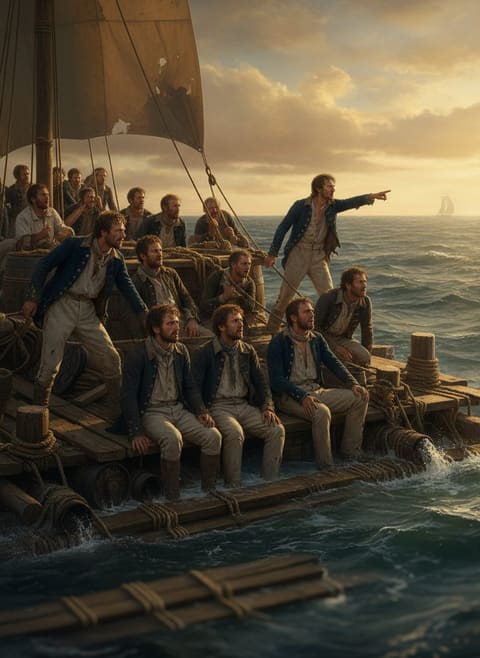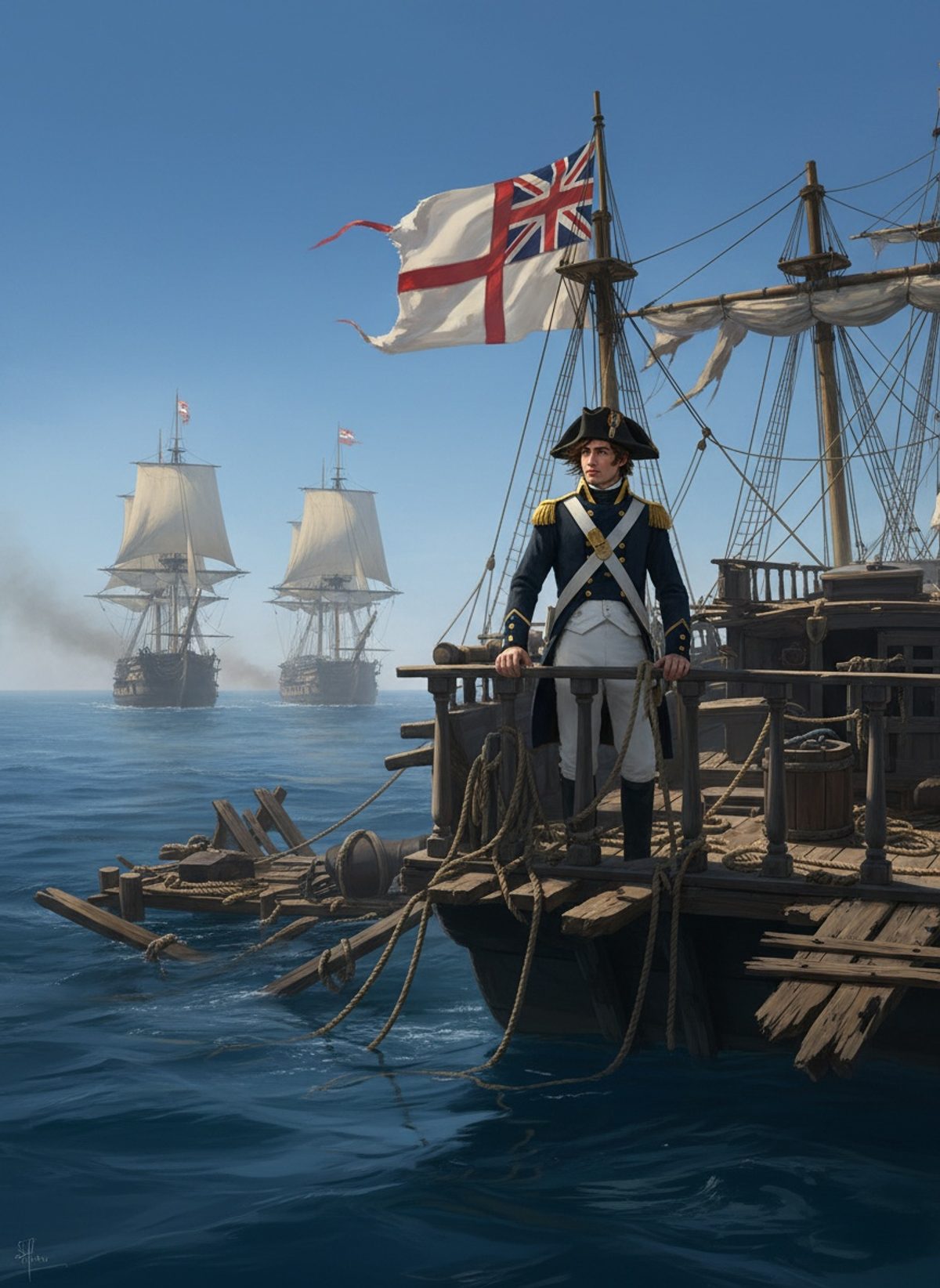
He had only a handful of officers at his disposal. Fearlessly commanding amidst chaos was a 25-year-old Thomas Cochrane, a man whose boldness would soon become the stuff of legend.
In August of 1801, the Mediterranean waters glittered under the sun, serene and expansive. Yet for Cochrane and his crew aboard the HMS Speedy, this tranquility belied the storm on the horizon. Surrounded by the towering presences of three Spanish warships, the HMS Speedy—an unassuming 14-gun brig—was outmatched in every conceivable way. As the Spanish vessels encircled him like hawks circling a beleaguered prey, it seemed an inescapable conclusion dawned on his crew: defeat. Yet, Cochrane, a former student of naval strategy and an innovator of unorthodox tactics, was made of sterner stuff.
Hailing from a lineage of military service, Cochrane was nonetheless an outsider, a rebel in his approach to warfare. His early career, filled less with honor and more with reprimands for irreverence, was marked by a refusal to conform to the stodgier protocols of the British Navy. But this rebellious streak would prove advantageous in the dire moments aboard the Speedy. With no ammunition left to fire, the sloop’s crew might have considered surrender. Cochrane, however, chose audacity over resignation. He refused to strike his colors, the naval signal of surrender, an act of defiance more bracing than a full broadside.
The broader stage for this drama was the Napoleonic Wars, a time when the Royal Navy was stretched across vast oceans, safeguarding Britain's interests while countering the ambitions of the Spanish and French fleets. Command of the seas was paramount, and every ship, no matter how small, had its part to play. The Mediterranean was a particularly contested region, the azure waters a chessboard of hidden maneuvers and explosive encounters. It was within this dynamic that Cochrane had operated, and it was here, amidst uncertainty, that he would stake his claim to history.
Read next: When Piper Findlater Played On With Two Bullets in Him, 1897
The Speedy had seen its share of encounters and triumphs but never against such overwhelming odds. Depleted of ammunition, simply remaining afloat under the scrutinizing gaze of three seasoned battleships was a feat of nerve. To put this into perspective, consider the orchestration Cochrane had to perform. With rugged determination, he resisted, each ticking second a carefully measured gamble to stall for time. His actions spoke not only of courage but of a wily understanding of the psychological theatre of war.
Cochrane’s defiance was a calculated risk, built on his reputation as a resourceful and tenacious captain who could outthink and surprise his adversaries. The Spanish, aware of his formidable tactics, possibly hesitated, wary of potential traps he might set. Would this young captain, famous for his successes with limited resources, truly be so cornered? Or did he have one final trick hidden up his sleeve?
In the absence of cannon fire, the deck of the Speedy became a world of quick movements and urgent whispers. Cochrane conferred with his officers, devising stratagems on the fly—decoys, distractions, anything to buy precious minutes. Two hours ticked by, each moment seeming an eternity to those peering over the rails. It was a tense dance, the Speedy bobbing determinedly amidst the looming shadows of destruction, the sun casting long shadows as if to see how this naval ballet would resolve.
Read next: When Cochrane Bluffed a Fleet With a Single Frigate, 1801
While the Spanish remained in formation, Cochrane’s courage radiated. Every minute of defiance meant potential rescue, hope slowly dawning. Within those two hours, it wasn't just survival that was furthered—it was an embodiment of the indomitable spirit of those who dare defy the odds, a reminder that warfare was as much art as assault. And so, the impassive Mediterranean witnessed this storied halt, the hush broken only by the rush of water against wood, the occasional creak of timbers, and the distant calls of the crew.
There are few tales where the lack of ammunition becomes a strength rather than a liability. Yet here was Cochrane, managing to extend his resistance and purchase time with nothing more formidable than sheer resolve and brilliance in the arena of human psychology. Eventually, strategy and shadow dissipated as circumstances allowed the stand-off to resolve without total catastrophe. Cochrane’s refusal to trounce drew admiration, his name etched deeper into the gritty annals of naval history.
The story of Cochrane and the HMS Speedy is an enduring reminder of how leadership, mettle, and creativity can tip the scales against overwhelming odds. It speaks to the essence of defiance as a strategic act, one where the mind can conquer even in the grip of defeat. Cochrane’s saga is less about a single victory and more about an ethos that whispers through history, a daring that sparked imaginations, and a tale that, though often overlooked, defines the intricate tapestry of maritime legend.