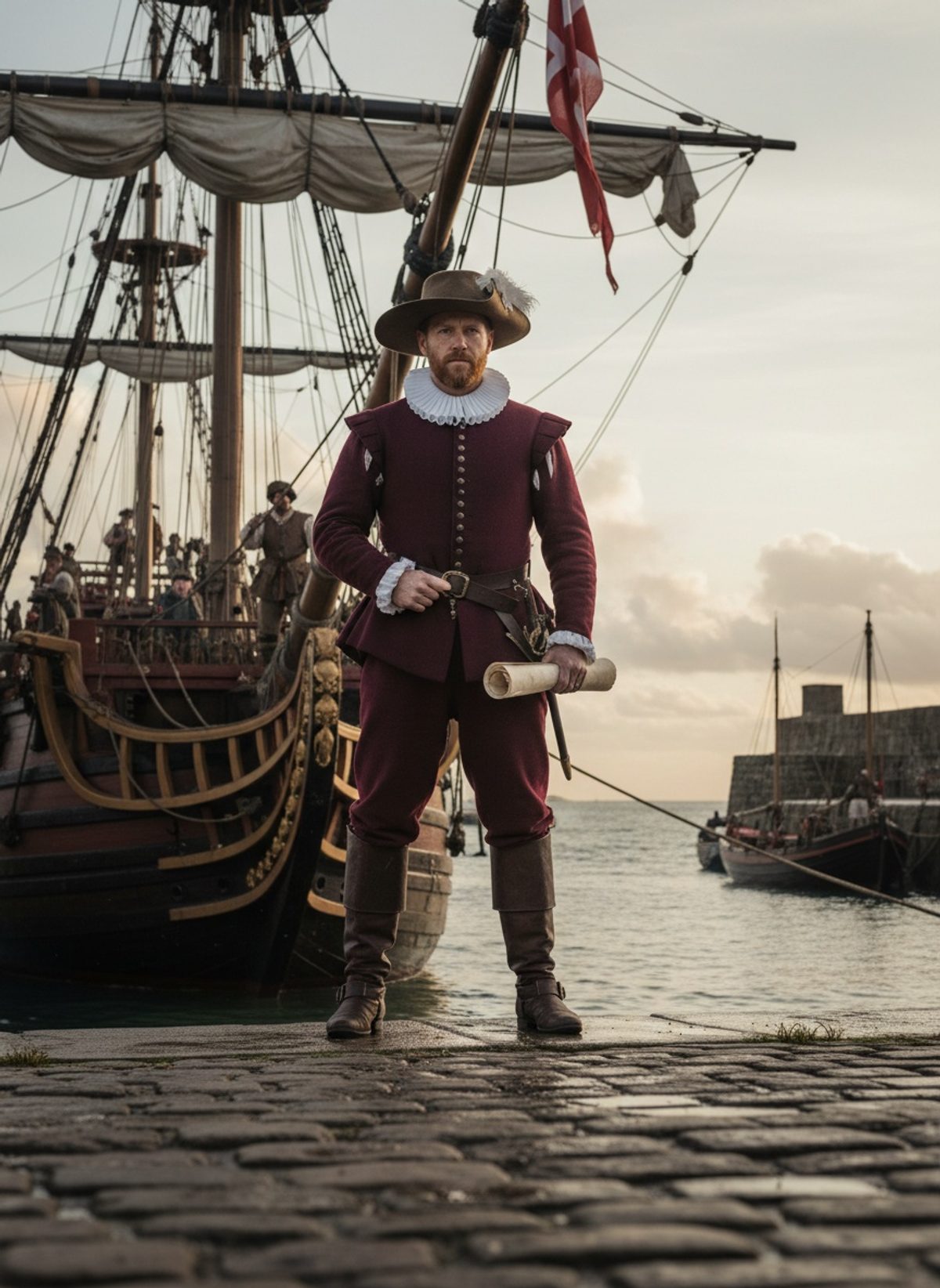
Henry Every is not a household name. Yet, in the waning years of the 17th century, his actions rattled the corridors of power far beyond his native England.
On an autumn night in 1695, Every, a sailor hailing from Devon, executed a heist so bold it reverberated through empires. This isn't just the tale of a pirate's romp across the high seas; it's the story of a single audacious act of piracy that forced the hand of a nation and threatened diplomatic ties on a global scale. Every, commanding a modest crew aboard a single ship, intercepted a Mughal treasure vessel like none other—the Ganj-i-Sawai, a name that soon sent shivers down the spines of merchants and monarchs alike.
The Ganj-i-Sawai was not merely another ship carrying precious cargo. It was the pride of the Mughal Empire, a floating vault that sailed with the bravado of an empire at its zenith, laden with a bounty fit for the grandest of emperors. The vessel was part of a convoy returning from Mecca, brimming with wealth and spiritual significance alike. For most pirates, the notion of taking on such a behemoth would have been suicidal—suicidal, that is, for anyone other than Henry Every.
Every's rise to notoriety sprang not from aristocracy or privilege but from the decks of the Royal Navy. Before turning rogue, he was a mere cog in the machinery of England’s maritime industry. Yet, the monotonous life of a sailor wasn’t enough for Every. He yearned for more—the kind of more that arrived in the form of unimaginable wealth and the kind that could be captured in a single breathtaking moment.
Read next: When Henry Every Took the Mughal's Ship and Shook the World, 1695
Preparation for such a feat required more than resolve; it demanded cunning and charisma. Henry Every knew this well. His charisma was not lost on his crew, who looked to him with a mix of awe and fear. Under his sharp command, the band of buccaneers was no ragtag band of desperados but a well-oiled machine. Every’s decision to seize the Ganj-i-Sawai was not an impulse but a calculated strike, planned with the precision of a predator eyeing its most elusive prey.
When dusk cloaked the waters, Every made his move. The ensuing encounter was as swift as it was brutal. On paper, the Ganj-i-Sawai appeared impervious, its massive build unmatched by Every's modest flagship. Yet, the element of surprise played perfectly into Every's hands. As his crew unleashed their assault, chaos reigned supreme. Canons roared, and the night sky brimmed with the smell of gunpowder and steel. Panic and mayhem spread like wildfire across the deck of the Mughal ship.
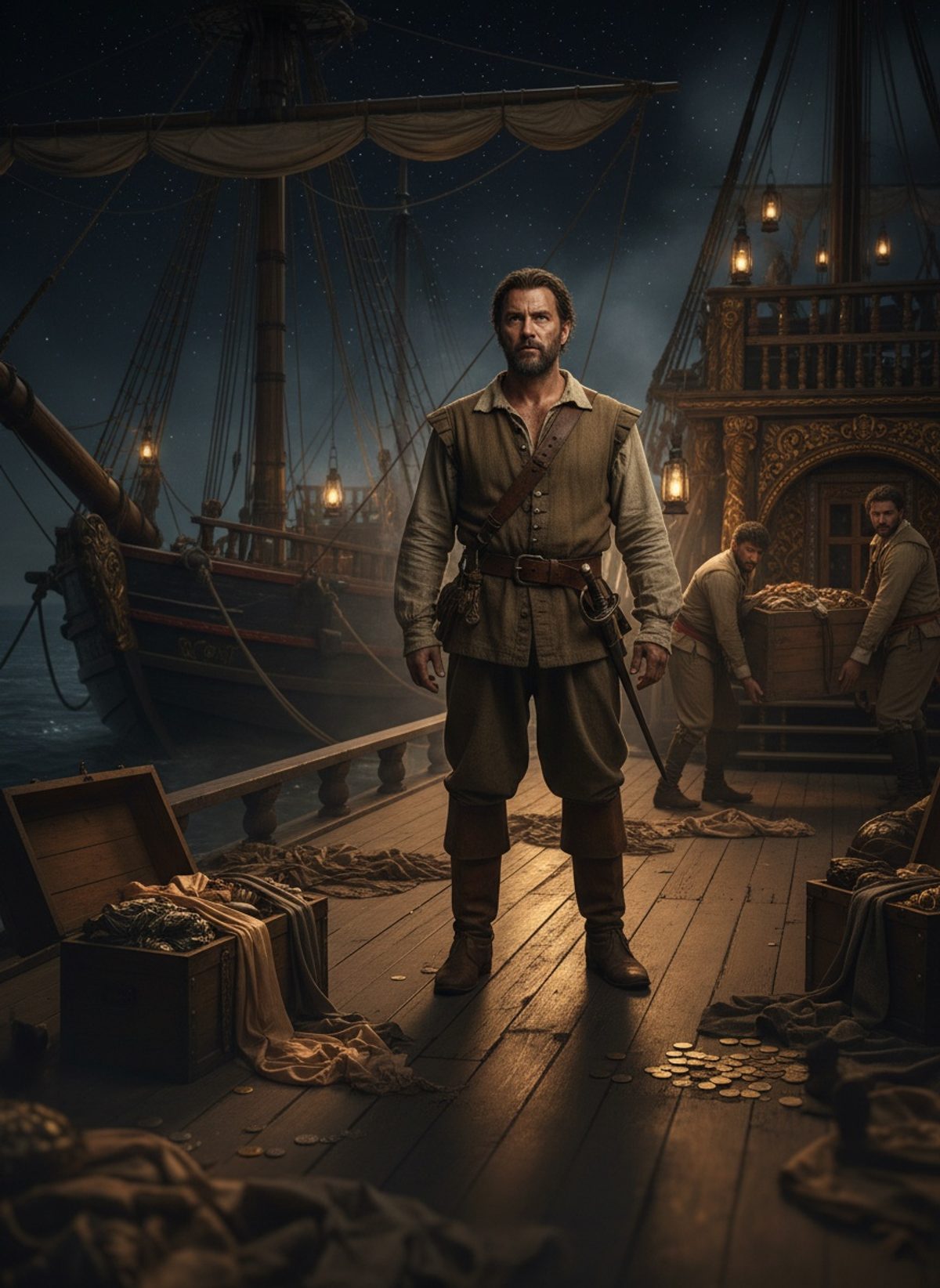
Accounts of the encounter vary, yet they converge on a singular truth—the Ganj-i-Sawai, despite its daunting defenses, fell to the pirates. The treasure that Every and his pirates discovered was beyond their wildest dreams. Chests inundated with gold and silver, jewels that glittered with a blinding brilliance, silks, spices—each piece a testament to the Mughal Empire's opulence. The heist, however, was not merely material; it struck at the very heart of Mughal prestige and pride.
Back in England, news of this audacious act spread like a tempest. The implications were immediate and ominous. Relations with the Mughal Empire teetered on a knife-edge. England's burgeoning empire relied heavily on trade with the Mughals, and the theft jeopardized not just merchant ventures but the very lifelines of colonial expansion. The East India Company, already a looming economic power, found itself backing against the wall, its trade routes threatened by this single pirate.
King William III, acutely aware of the ramifications, faced an unprecedented dilemma. Every’s actions demanded swift retribution, yet capturing the pirate proved elusive. A bounty was placed on Every’s head, a king’s ransom that incited the mythos surrounding him even further. Wanted posters adorned the ports and taverns worldwide, his name whispered in fear and admiration in equal measure.
The fallout was not confined to political or diplomatic realms. The episode ignited a fever of anti-pirate sentiment—an ironic spark, given England’s long history of maritime aggression that frequently skirted the line of legality. The image of the pirate, once seen with a playful twinkle in the public's eye, now bore the sharpness of a villain's dagger. Truths about the delicate balance of trade and empire began to untangle in the public consciousness.
Every's fate remains shrouded in mystery. Did he die a pauper or live in regal exile, basking in the spoils of his subterfuge? History offers no clear answers. What remains indisputable, however, is the legacy of his infamous act. It is an enduring vignette of audacity, the legend of which outstripped any bounty or map.
Why does Every's story matter? It’s because this tale punctuates a larger narrative about empire and ambition. It is a reminder that the glories of empire were not straightforward, nor were they unassailable. Behind the facades of politics and pomp, individuals like Henry Every wielded power in unexpected ways, altering destinies from the shadows. This story, left out of textbooks, is more than a footnote; it's a chapter in the rise of empire that underscores the intricate dance between power, treachery, and fortune. The legend of Every is a testament to how one man's actions can transcend the ledger of history, leaving an indelible mark on the world.