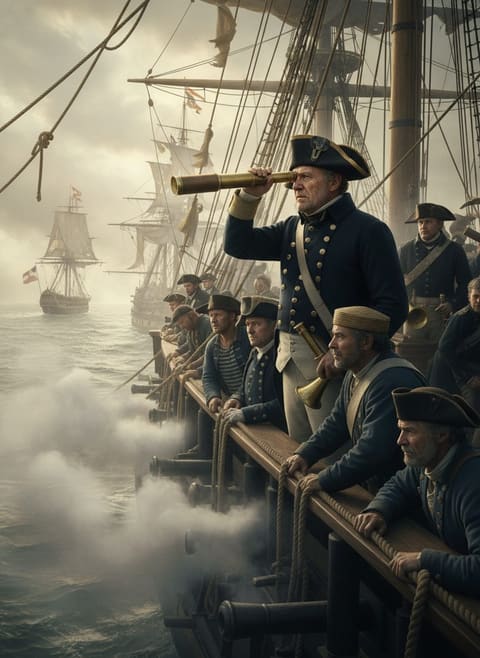
October 21, 1805. The smell of gunpowder choked the air.
The Calm Before the Battle
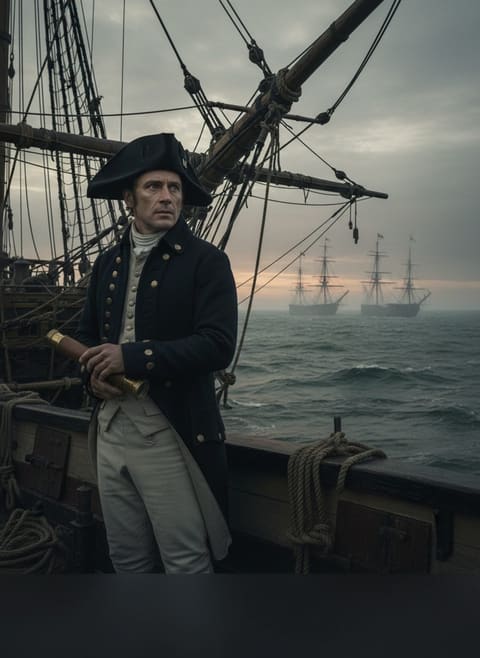
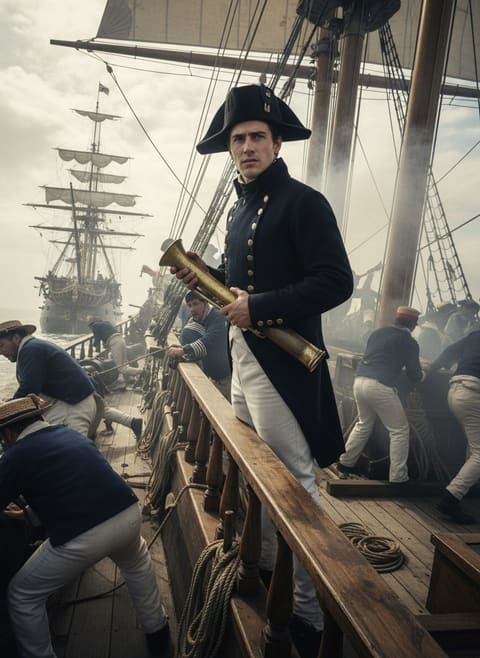
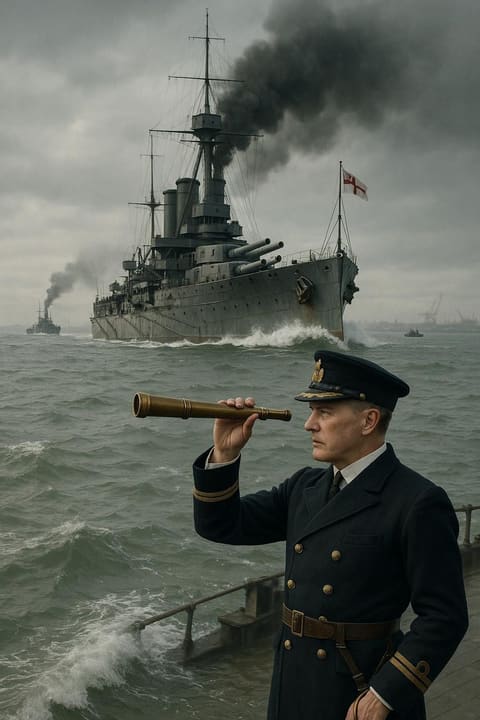
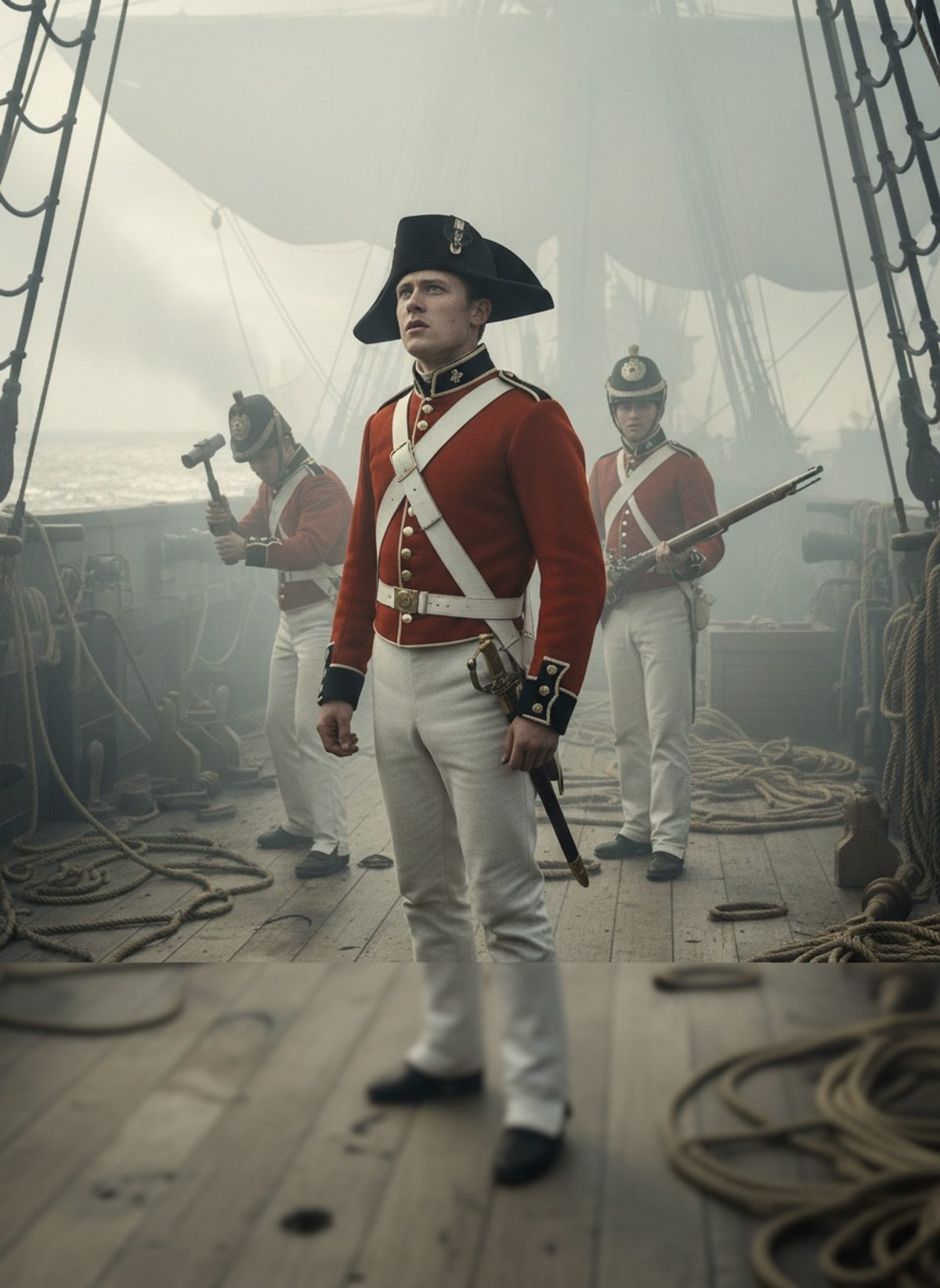
The day had dawned over the Atlantic with a deceptive calm. The sun rose slowly above the eastern horizon, casting a golden shimmer over the rolling waves surrounding HMS Victory, the flagship of Admiral Nelson. As the wind filled the sails and the ship creaked under the strain, the crew prepared for the imminent clash with the combined fleets of France and Spain. Below deck, the Royal Marines polished their sabres and checked their muskets, oblivious to the unusual weight of that morning. Among them stood Second Lieutenant Lewis Roteley, younger and less seasoned than many of the men around him.
Roteley, only twenty and fresh from the commissioning ceremonies that still felt like a lifetime ago, was not yet accustomed to the rhythm of naval warfare. As the youngest officer aboard this illustrious vessel, he was keenly aware of the eyes upon him. Rumors abounded of French and Spanish numbers and strength, and the anxiety among the crew was almost tangible. Yet in the claustrophobic confines of these wooden walls, Roteley found a camaraderie and an unspoken courage that spoke louder than the ocean’s roar. It was in this shared silence that the strength of future leaders often forged itself.
When Fate Intervenes
The order to engage reverberated along the decks as cannons boomed into life, sending shockwaves through every sailor and marine. Like a well-oiled machine, the men moved into their positions, loading, firing, and reloading with methodical precision. HMS Victory, ever the stalwart symbol of British naval power, charged into the fray, her guns unleashing destruction upon the enemy fleet. It was amidst this chaos, through the haze of smoke and the symphony of warfare, that the unthinkable happened.
Read next: When Britain Turned Its Navy Against the Slave Trade, 1808
Captain Adair, leading the Royal Marines alongside his fellow officers, fell to French musket fire. The news spread like wildfire; command had been severed at the critical hour. In that visceral moment of life and death, Lewis Roteley was propelled from an embattled youth clinging to his senses to the de facto commander of the marines on Victory. His veins sang with adrenaline, his mind racing beyond youth's boundaries into the field of fire where leaders are truly born.
This moment was more than a test of courage; it was a test of mettle. In mere seconds, Roteley had to muster his resolve and channel all the training drilled into him. With his heart pounding not with fear but with determination, he rallied his men, echoing shouts that broke through the cacophony like a clarion call. Here, beneath a sky blotted with smoke and ruin, leadership was claimed not by age or rank alone, but by necessity and gritty resolve.
The Ordeal of Command
As the battle raged on the sea's tumultuous canvas, Roteley's prime focus shifted to efficient and effective command. He barked orders with a newfound confidence, directing his marines to strategic points along the vessel, ensuring steady volleys against the encroaching enemy boarders. With the precision of a seasoned tactician, he orchestrated movements like a maestro conducting a chaotic symphony.
Throughout this inferno, Roteley exhibited an innate understanding of the dynamics at play: a blend of naval tactics and human emotion in the face of unrelenting opposition. In the throes of hand-to-hand combat, he stood alongside his men, sabre in hand, eyes fierce with determination. To the crew of the HMS Victory, he was no longer the novice among legends; he had become a linchpin, a keystone in the ever-rotating wheel of warfare.
Read next: When Captain Ian North Never Reached the Life Raft, 1982
The hours dragged mercilessly by, each deafening cannon blast a reminder of the stakes at hand. By twilight, the French and Spanish fleets were decisively defeated. Victory, triumphant yet battered, remained the flagbearer of Britain's unyielding maritime tradition. Roteley, bloodied and weary, was no longer an untested youth but a testament to fortitude born amid the flames of war.
Reflections Beneath the Stars
The Battle of Trafalgar irrevocably altered the balance of power in Europe. As night draped its velvety darkness over the victorious fleet, the image of the fallen Adair lingered in Roteley's mind. This young man, who began the day cloaked in the shadows of uncertainty, had emerged as a beacon of resolve for those he commanded. The gravity of his ascension weighed upon him, underscoring the somber reality of leadership bought at such a cost.
Looking to the stars above, reflecting on fate’s capricious nature, Roteley understood the legacy he was stepping into. Through this crucible, he had been indelibly marked by the nobility and ferocity of those he led. It was this unwritten contract that would guide him, echoing the forgotten tales of countless young leaders thrust too soon into the jaws of history.
Roteley's story, largely absent from the grand chronicles of Trafalgar, imparts an eternal lesson. It is one of youth harnessing the power of circumstance, of unexpected valor when destiny taps an unprepared shoulder in the swirling maelstrom of battle. Whether by chance or choice, the heroes not etched into stone or scrawled into headlines continue to shape our collective past. In the silent acknowledgment of these legends left out of textbooks, we glimpse the true breadth of human endeavor — where ordinary men rise to extraordinary heights.