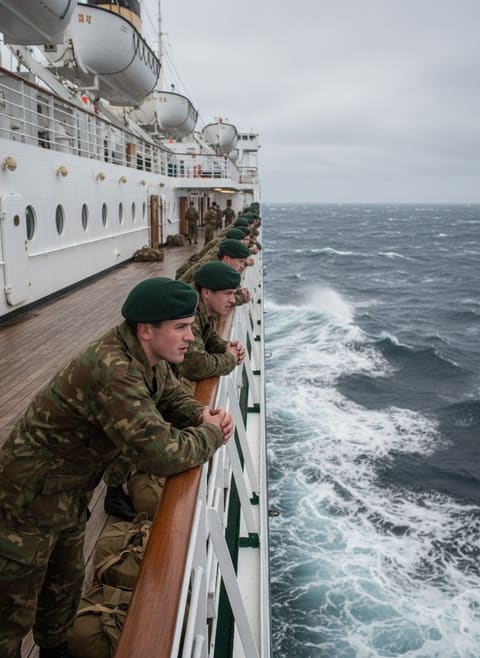
May 25, 1982. A chill wind swept across the South Atlantic, whispering ominously over the steel hull of the SS Atlantic Conveyor. The ship, a proud civilian vessel pressed into war service, sailed through the unforgiving waters of a conflict zone it was never built to confront. Registered in Liverpool, owned by Cunard, and accustomed to ferrying freight across the Atlantic, Atlantic Conveyor had become an emblem of the UK's resolve during the tumultuous weeks of the Falklands War.
As the war between Britain and Argentina over the Falkland Islands raged, the vital role of logistics could not be understated. The Atlantic Conveyor, bereft of military defenses, was carrying supplies far beyond her civilian calling to a land torn by conflict. Onboard were the tools of war that the Royal Navy could scarcely do without—helicopters for troop transport, weaponry, and essential field infrastructure. Yet, on that fateful day in May, destiny held an encounter with forces that the ship's crew, led by Captain Ian North, could not repel.
The vessel had embarked on her journey southward on April 25, sailing for Ascension Island laden with a cargo that was the lifeblood of the British Task Force. She was a floating runway, carrying one Lynx and six Wessex helicopters of the Royal Navy’s Fleet Air Arm, and five RAF Chinooks from No. 18 Squadron, off to the conflict-ridden archipelago. After loading additional aircraft—the Sea Harriers and Harrier GR.3s—her decks hummed with a rare, precarious energy. But the Atlantic Conveyor was never equipped for combat; no chaff launchers, no anti-aircraft guns, a mere unarmored merchant amid the war machines.
Mid-May saw the Harriers take flight to more appropriate platforms, HMS Hermes and HMS Invincible, while the helicopters remained lashed to the Conveyor's deck, poised for operational deployment. As the vessel approached the Falklands, the imposing silhouettes of Wessexes and Chinooks promised hope for the ground forces. They were to be instrumental in transporting troops, constructing airstrips, and supporting the brigade the UK had dispatched to reclaim the islands from Argentine occupation.
Read next: When HMS Ardent Took Wave After Wave of Jets in Falkland Sound, 1982
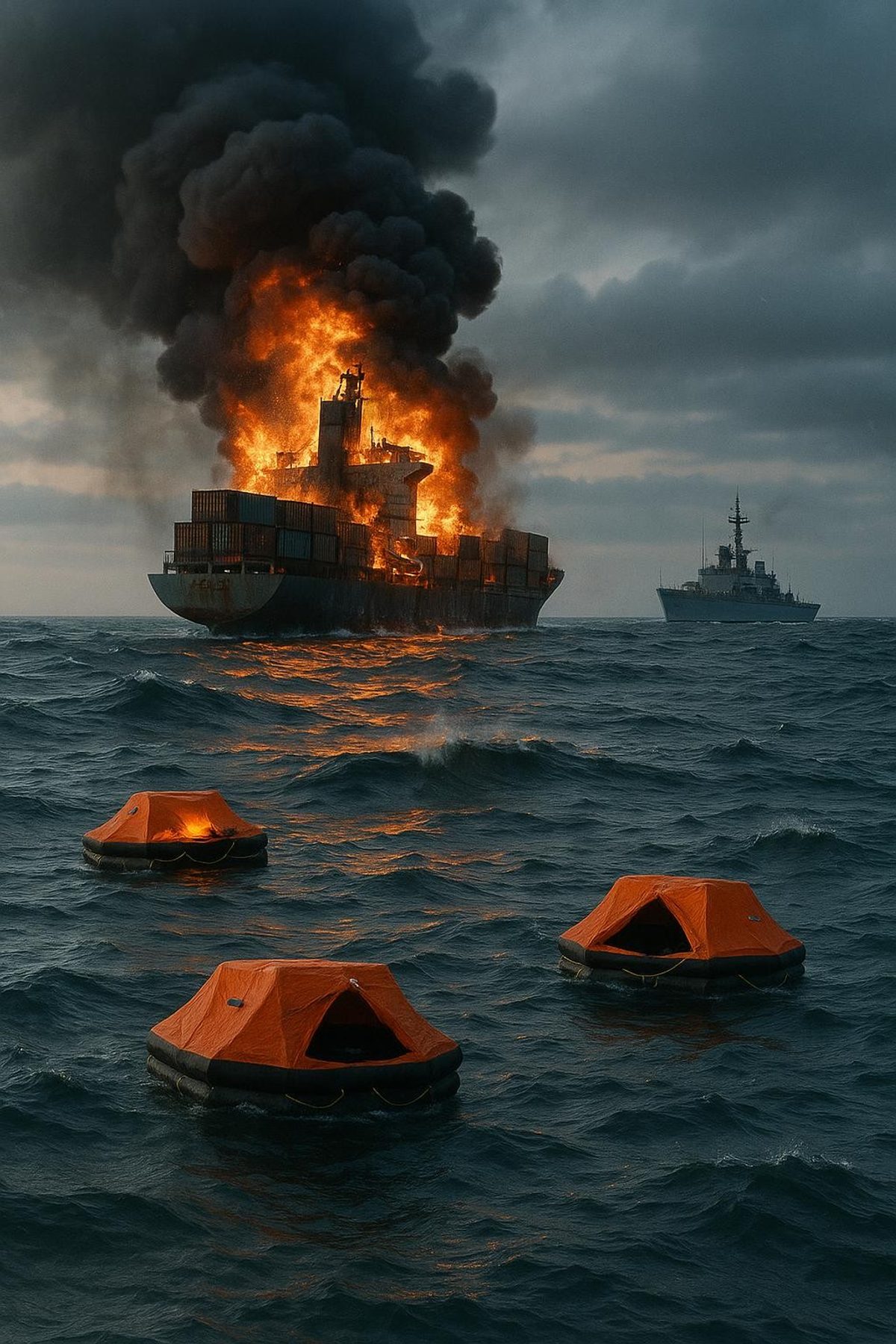
But as history unraveled, the significance of these machines blended into an ominous tableau of war that few had foreseen. On May 25, two Argentine Super Étendard jets pierced the skies, armed with deadly AM39 Exocet missiles. The jets—led by Captain Roberto Curilovic and his wingman Lieutenant Julio Barraza—were executing a precise, calculated spread of destruction. With a piercing shriek, two missiles blitzed toward Atlantic Conveyor, making contact with her port quarter, their unburnt propellant casting untamed flames that consumed their target.
Witnesses described the harrowing spectacle: the roar of the missiles, the explosion that showered debris into the Atlantic like fiery meteors, and the spreading conflagration that bespoke terrible misfortune. The missiles may not have detonated fully, but their engineered power was enough to set ablaze the fuel and ammunition stored below decks. The fire that erupted was beyond control, an inferno that stoked the ship's eventual doom.
Within moments, the ship’s environment transformed into a scene of chaos and dread. Twelve souls were lost that day—six men from the Merchant Navy, three from the Royal Fleet Auxiliary, and three Royal Navy servicemen. Among the victims was Captain Ian North, the ship's master, a man whose life had been dedicated not to combat, but to the domain of the sea in times of peace. In those frantic last moments, Captain North attempted a heroic swim towards safety, the slender chance of a life raft allowing hope to flicker briefly before the darkness swallowed him from view.
The survivors of the ordeal were taken to HMS Hermes, but the price was steep—a vessel vital to operations, a crew brimming with courage, and the future of the expedition in jeopardy. The conflagration that beset Atlantic Conveyor marked her as the first British merchant ship to succumb to enemy action since the days of the Second World War. She was beyond saving, and as the fire died down, her hulk was left to be reclaimed by towing, only to surrender to the deep in the early hours of May 28.
The loss was more than just a tally on paper. Six Wessex helicopters, three Chinooks, and the versatile Lynx were destroyed, robbing the British campaign of its much-needed air mobility. Only one Chinook, ZA718—affectionately dubbed 'Bravo November'—remained, having been off the ship preparing for operations. The men who would have flown in helicopters were now destined to march on foot across the rugged Falklands, forced to endure greater hardships to retake Stanley.
Read next: When HMS Euryalus Brought the Fleet Home After Trafalgar
1984 saw the birth of a new Atlantic Conveyor on Tyneside, built to replace her fallen predecessor. Within her confines, a tribute stood silent—a bar named the North Bar, a solemn nod to the master who gave everything. Captain Ian North’s posthumous award of the Distinguished Service Cross spoke to the valor he displayed, a fitting homage even though he was never forged for the battleground.
The relentless progression of war infrequently acknowledges the sacrifices made by those who find themselves caught within its grasp. Yet as we cast our reflections backward, the stories like that of Captain Ian North and the Atlantic Conveyor remind us of their supreme value. In the flames that consumed the ship and those who perished with her, we find the understanding of duty fulfilled amidst indescribable peril. This tale serves as a lesson etched in maritime lore, an enduring memory of courage in unexpected places, unfurled amidst the harsh waves of history.
The MoD has confirmed commemorations for the 45th anniversary of the war in 2027.
Part 13 of 24: One Falklands story a day until Remembrance Sunday