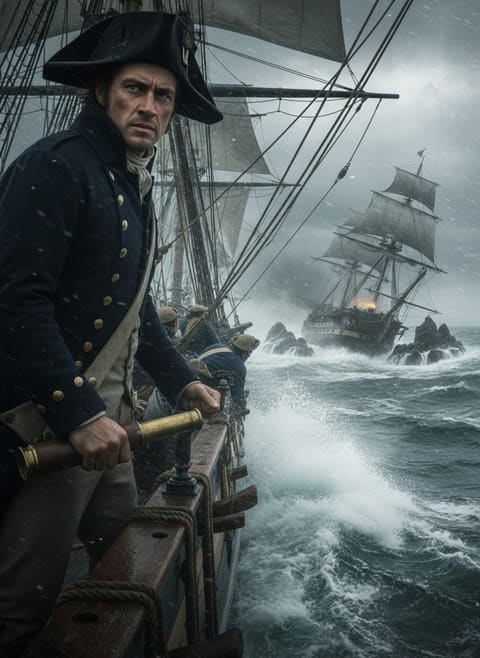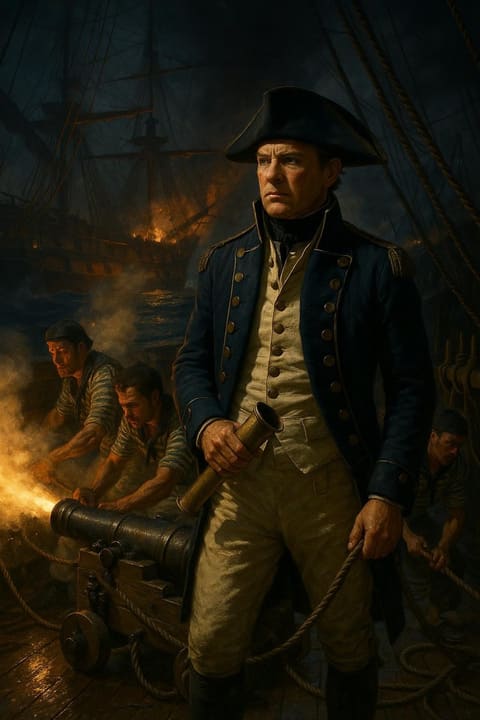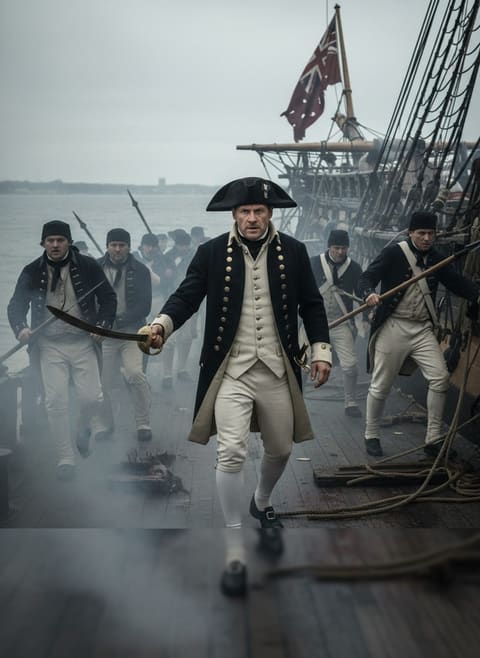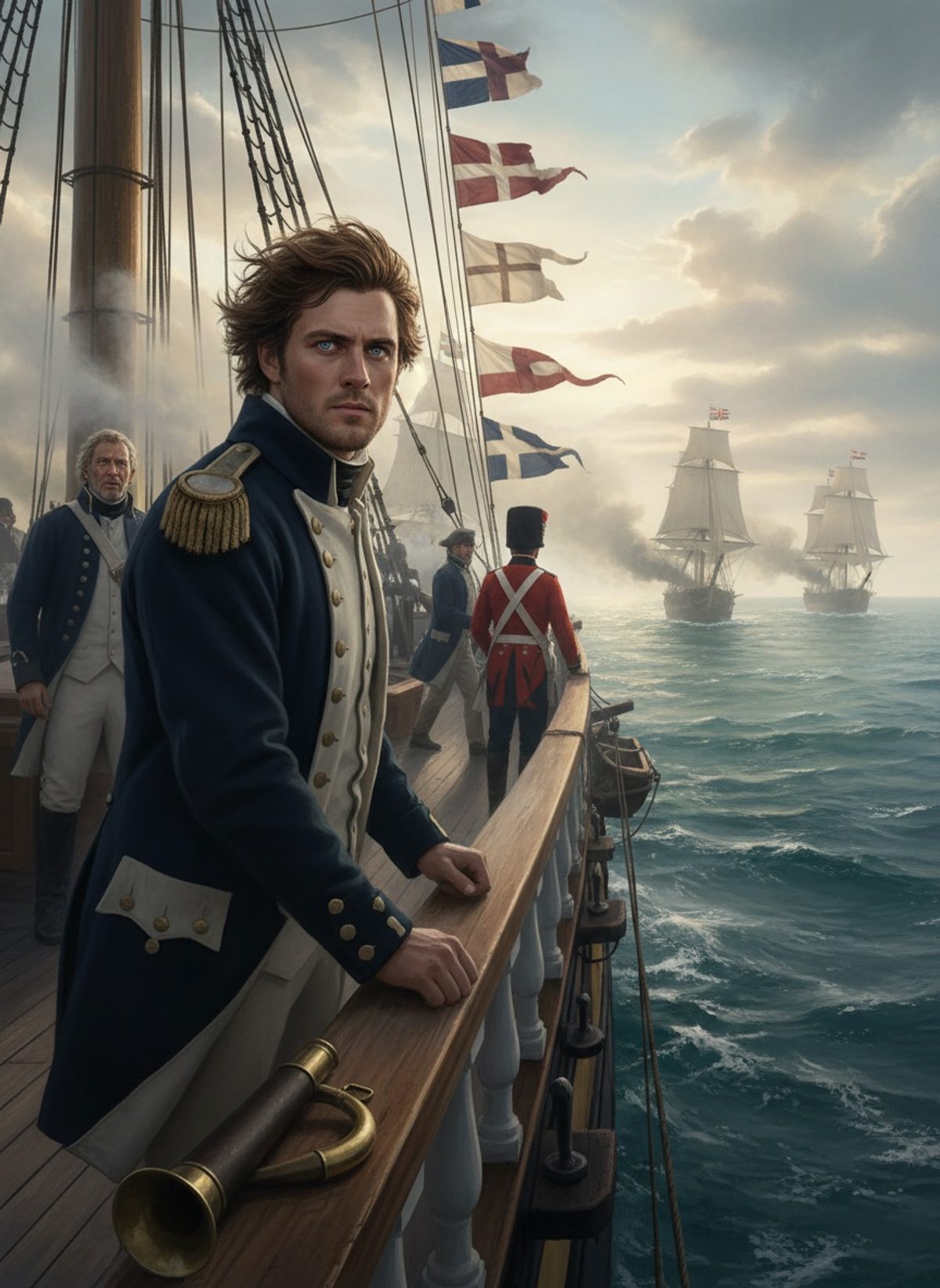
The sails flapped wildly in the fierce Adriatic winds as Captain William Hoste stood firm on the deck of his flagship, HMS Amphion. The seasoned deckhands strained under the relentless elements, their boots skidding over the brine-soaked planks. Hoste squinted beyond the spray to where the Franco-Venetian fleet loomed, counting more sails than his own meager squadron could boast. His hand rose to hoist a signal higher than any battle standard: 'Remember Nelson.' It fluttered defiantly in the breeze, a tribute to a hero and a rallying cry to those who would follow in his footsteps.
An Unlikely Gambit
The scene was set on March 13, 1811, just off the coast of the small Adriatic island of Lissa. Napoleon’s forces were strangling Europe, his influence strangling kingdoms and altering the fate of empires. Amid this chaos, Captain Hoste, commanding only four frigates, faced a daunting armada of eleven Franco-Venetian warships. Hoste’s orders were clear, and courage was his only recourse.
While tactics dictated caution, Hoste's heart was set on a daring offensive maneuver. His frigates, HMS Amphion, HMS Active, HMS Volage, and HMS Cerberus, contrasted starkly against the imposing enemy line. Yet what they lacked in firepower, they made up for in spirit and speed. To most, this uneven match seemed a folly. But Hoste, barely thirty, wielded a weapon sharper than steel: the legend of Admiral Horatio Nelson. Having served under Nelson at the Battle of the Nile, Hoste carried not only the weight of memory but the expectation of an impossible triumph.
The Thunderous Clash
As the British squadron surged forward, the lull of anticipation erupted in gunpowder thunder. Cannonballs streaked across the sky, a fiery writing that foretold victory for whichever side fate would favor. Hoste knew it was paramount to divide the enemy and capitalize on their confusion. With deft precision, he crossed the line of Franco-Venetian ships, causing them to falter in their coordination.
Read next: When Piper Findlater Played On With Two Bullets in Him, 1897
Amphion led the charge, her broadside delivering unrelenting fire. The sailors moved like clockwork, driven by the rhythm of battle and the hope of victory. HMS Active and HMS Volage followed suit, exploiting gaps in the enemy line. The sea shuddered with the impact of cannonades, smoke cloaking allies from foes. Yet within this chaos, Hoste’s daring strategy unfolded like a masterwork painting, his ships weaving between the enemy as if guided by the very hand of Nelson himself.
The Turning of Tides
As the skirmish raged on, the initial shockwave of Hoste’s strategy began to bear fruit. The Franco-Venetian fleet, previously confident in their superior numbers, found themselves beleaguered. Each swing of the tide found them battered and scrambling. In an uncanny testament to British naval prowess, the British frigates had weathered the storm of battle better, sustaining damage but maintaining formation and discipline.
Hoste's ability to conjure Nelson’s spirit had instilled an indomitable will in his men. The Amphion was pitted against the 44-gun Favorite, a vessel that stood as an emblem of French resistance. Yet, bravely, Hoste drove Amphion to engage. The ensuing barrage was fierce, the like of which many young sailors had never seen. When the smoke cleared, the Favorite was struck from the fight, her colors struck, marking a definitive shift in the battle's momentum.
Read next: When Cochrane Bluffed a Fleet With a Single Frigate, 1801
A Victory Carved from Valor
As dusk painted the Adriatic crimson and gold, the roar of broadsides began to lull. Hoste, at the head of his steadfast squadron, surveyed the sea. The Franco-Venetian fleet was in tatters; three had surrendered, and the rest fled or were captured. It was a victory unlike any other in the Napoleonic Wars; a victory for tenacity and tact over sheer numbers.
This triumph was not just a strategic win but a moral one. Hoste’s use of Nelson’s legacy was a clarion call to honor and courage. The battle of Lissa was dubbed “the most complete victor of the Wars” not merely for its tactical mastery but for the way it renewed a faith in the power of inspirational leadership, underscoring that sometimes the heart’s resolve is stronger than the sharpest sword.
As word of Hoste’s achievement spread, it reminded a world teetering on the brink that heroes might yet rise from the shadows of legends, and courageous acts could echo through time. Hoste's exploits, woven in the aftermath of war, offer a powerful reminder that history’s refrain often resounds with the tales of those who dared to defy odds in pursuit of something greater than the sum of their fears. It is these untold legacies, captured in fleeting moments, which time attempts to smooth into the crests of forgotten waves.