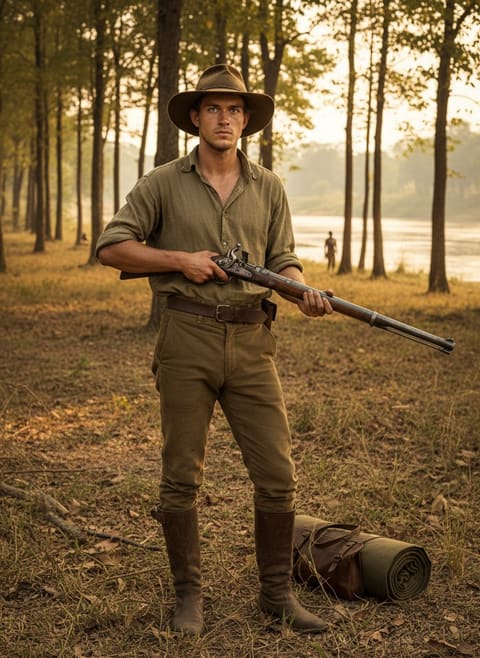
February 26, 1862. The dense air of the equatorial forest suffocated the senses, sapping energy and stifling the spirit. John Hanning Speke pulled his hat lower over his brow, shading his eyes from the piercing sun as he stood on the threshold of history, at the centuries-old enigma—where the great Nile River began. Yet, first, he had a meeting that would shape his legacy and unravel one of the longest-lived mysteries of the natural world.
The Sought-After Court of Mutesa
The journey to the heart of Africa often feels like an epic that is simultaneously fascinating and terrifying. When Speke reached the court of Mutesa I, the reigning Kabaka of Buganda, he was no stranger to the perils of exploratory expeditions. Having served in the British Indian Army and after several encounters with the unyielding landscapes of the African continent, Speke stood unflinching. Mutesa's court was opulent, a display of wealth and power at the center of Buganda—a kingdom respected and feared far and wide across the African hinterlands.
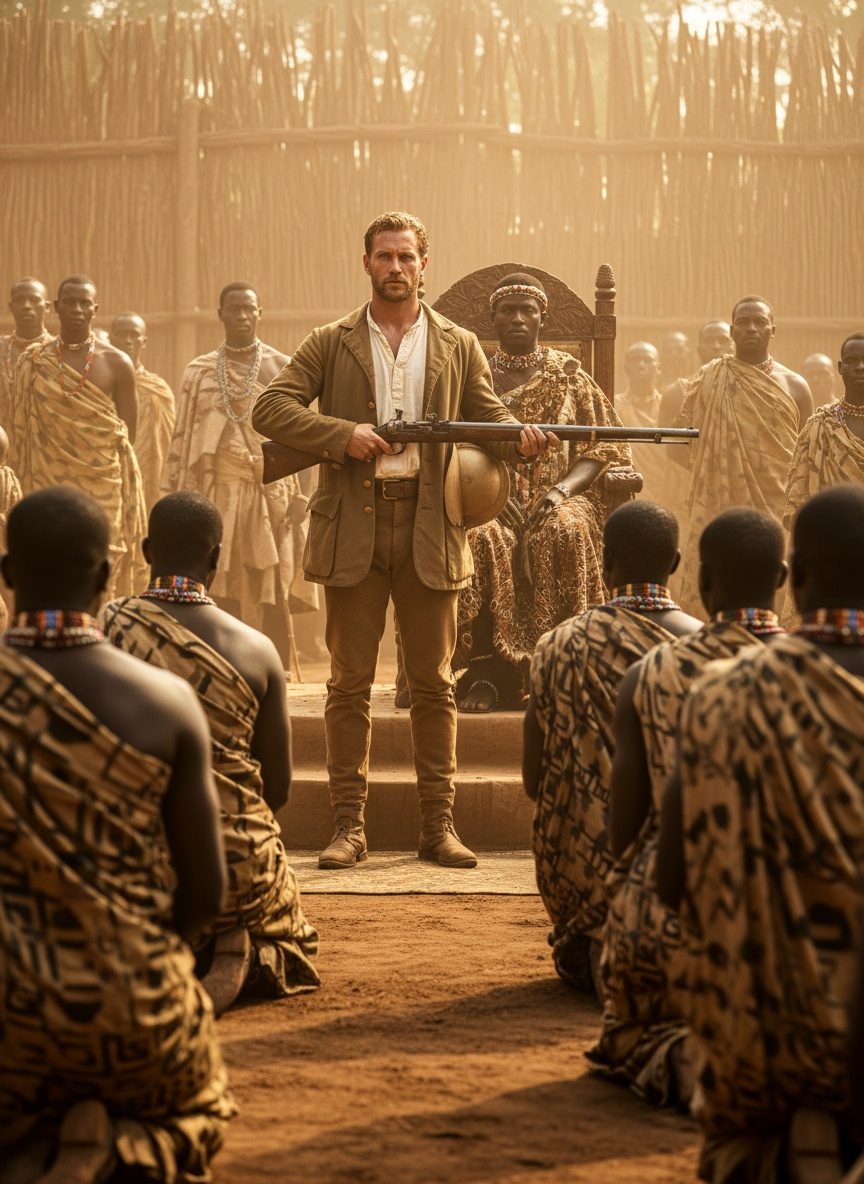
Speke was the first European to cross this formidable threshold. The British explorer, bringing with him the advances and ambitions of his era, had just one item he hoped would symbolize goodwill: a rifle. This gift, carefully chosen, was emblematic of both European technological prowess and the sobering reality of imperial power. To Mutesa, the rifle was a tangible embodiment of alliance with worlds beyond the mountains and rivers, full of both promises and perils.
A Meeting of Two Worlds
In Mutesa's court, resplendent with rich tapestries and vibrant colors that danced in the light, the air was thick with unspoken expectations. The Kabaka of Buganda, a man of striking presence and commanding authority, saw in Speke both an enigma and an opportunity. Here was a man from lands far removed from Buganda, with stories and motives encased in a language and demeanor foreign to the royal halls. Would this meeting mark the beginning of an alliance or an understanding? Or would it sow the roots of further conflict?
Read next: When William Speirs Bruce Planted a Flag on No Man's Ice
Speke, carrying within him the calculations and curiosities of a scientific mind, sought from Mutesa not only consent but cooperation. The explorer's journey toward unraveling the Nile's source depended upon mutual recognition and respect. Mutesa, a sovereign aware of the winds of change sweeping Africa, keenly weighed the possibilities. His acceptance of Speke and the rifle symbolized a cautious yet hopeful step toward engagement with the outside world.
Onward to Lake Victoria
As the welcome from Mutesa sparked a new page in the annals of history, Speke took his leave to continue his quest—a mission that had gripped the imaginations of explorers for millennia. Just days beyond Mutesa's court lay Lake Victoria, the immense body of water whose depths held the answer the world had long sought. For centuries, the source of the Nile had been a realm shrouded in myth and legend, evading the grasp of the most intrepid explorers. Yet in 1862, this "Pearl of Africa," as named by later explorers, emerged from the shadows into the light of world geography through Speke's eyes.
Speke’s encounter with Lake Victoria affirmed long-held suspicions—at last, here lay the source of the White Nile. He charted and recorded measurements with meticulous detail, sealing his place in history. Lake Victoria, vast and resplendent, confirmed that the heart of an ancient enigma beat in the cradle of Africa.
A Pathway Through Time
While Speke's discovery reverberated through the halls of European science and imperial ambition, it equally resonated in the royal enclosures of Africa. In Buganda, the echoes of Speke's visit lingered long after his departure. Mutesa I, ever the astute leader, had engaged with Europe not only in the spirit of curiosity but also with an awareness of the changing tides that history was soon to ferry across his continent. Would the benevolence of Speke's rifle resonate with the rumblings of future generations, or would it foreshadow challenges yet unforeseen?
Read next: When George Everest Measured the Roof of the World, 1856
Back in Europe, where phrenologists and cartographers laid pens and theories over Africa's diverse tapestry, Speke's journey reframed the continent from a land of speculation to a geography of opportunity and intrigue. His map didn't just delineate borders; it provoked aspirations, rivalries, and ambitions that would ripple across history.
The Legacy Written in the Waters
The moment John Hanning Speke's footprints left the sands of Mutesa’s court, a narrative of exploration and cultural intersection was set in motion. While Speke’s name graced records for having reached Lake Victoria, that mark extended beyond the accolade of discovery; it flowed into a broader dialogue of interconnected worlds and shared histories. What makes this tale intriguing is not just its answer to a riddle spanning millennia, but the reflection it casts on human curiosity's boundless limits.
Even today, when we think of the Nile, of Speke, or Mutesa, the narrative ties together an exploration expressive of the human spirit—a saga of seeking, encountering, and understanding. In these stories left out of the typical textbooks, we see not just the quest for knowledge but the convergence of cultures. As rivers always find their passage, so too do these tales chart the confluence of destinies. The Nile may reveal its secrets, but it keeps within its depths the ceaseless wonder that leads one to always seek out what lies beyond the horizon.