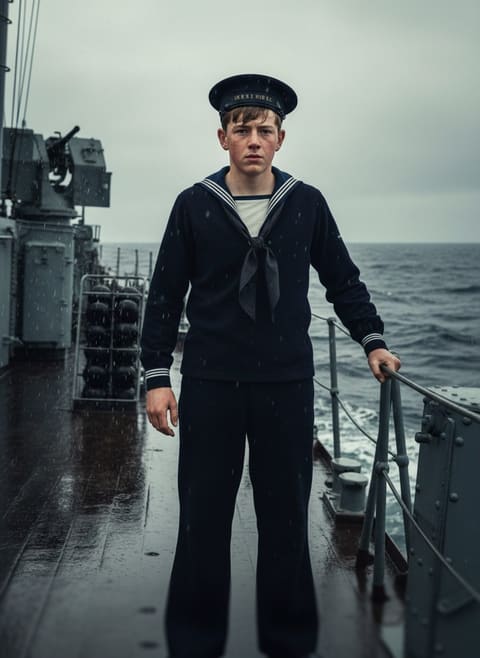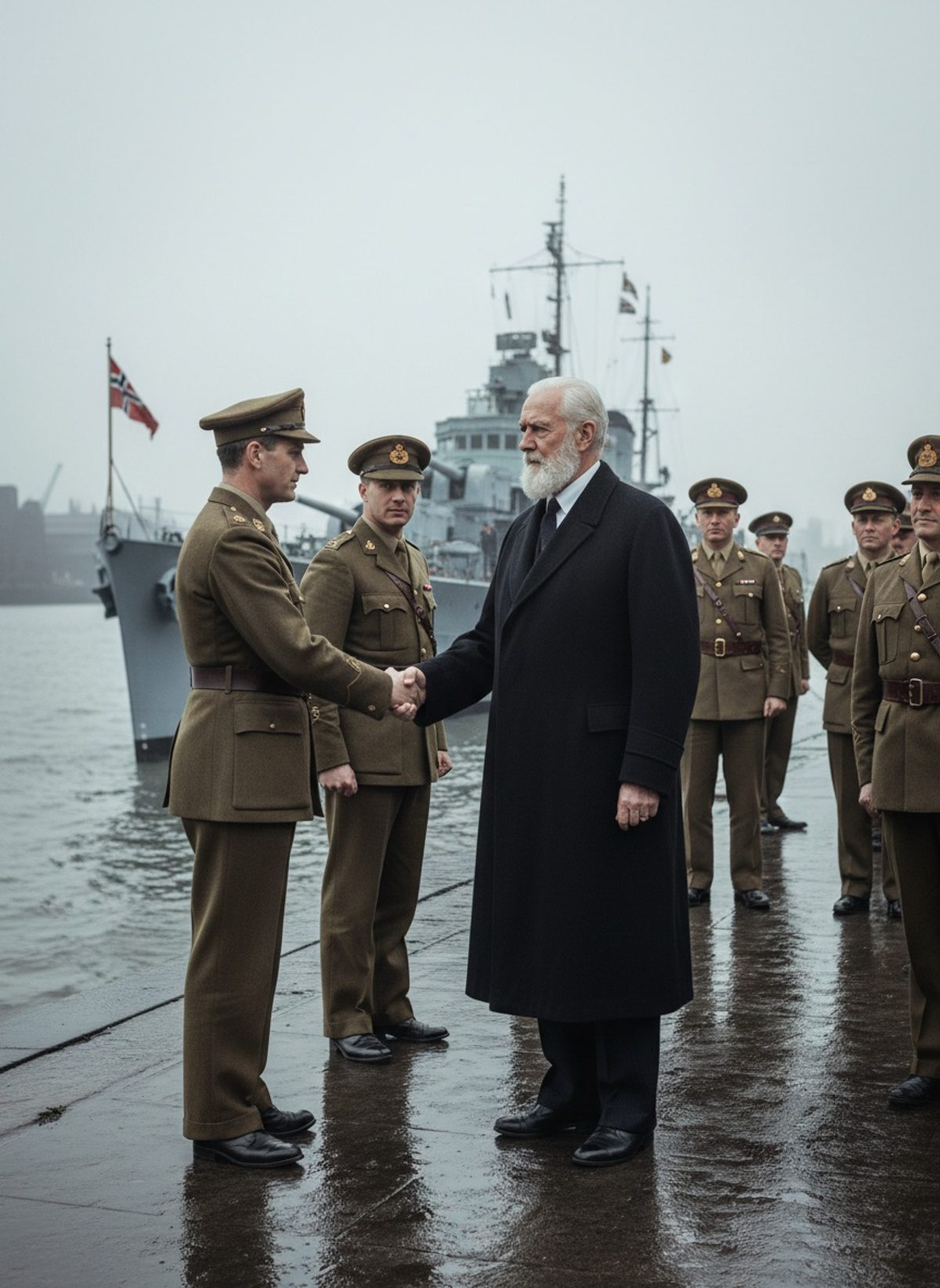
The cold, unyielding wind whipped through the narrow streets of Oslo as the German envoy stood waiting, his breath visible in the biting air. Inside the royal palace, King Haakon VII of Norway listened intently, his face expressionless, as the fate of his nation hung on a knife's edge. The envoy's ultimatum echoed off the painted walls: accept German occupation, or watch his beloved capital and country turn to ashes. The silence that followed was deafening, pierced only by the rhythmic ticking of the grandfather clock in the corner.
Winds of War
April 1940 was a time when the peaceful fjords of Norway faced an unexpected storm. The phantoms of World War II loomed larger, and Norway, with its strategic significance caught in the crossfire, became a critical chess piece in a deadly game. Germany's ambition to control Norway's coastline was, according to their grander strategy, indispensable to securing iron ore supplies from Sweden through the port of Narvik and blocking Britain's pressure on the North Sea. Thunderous German warships, camouflaged against the skies, appeared on the horizon, cloaked in the promise of power and unchecked ambition.
The Norwegian government, neutral and ostensibly unprepared for immediate conflict, found itself suddenly thrust into the forefront of this brutal theater. Diplomacy was meaningless in this landscape of aggression, as the German envoy arrived with a message as cold as the Norse winter: assimilate or face annihilation. Norway's leaders, huddled in agreement, turned to their monarch for a decision that bore the weight of history. Yet, Haakon VII, crowned with the legacy of Viking kings and steadfast in his principles, harbored no doubts.
A Monarchical Defiance
King Haakon VII was no stranger to the ethos of resistance. His early years from Denmark to the throne of Norway had instilled in him a firm belief in constitutional governorship and the will of the Norwegian people. Despite the accent of calm in his voice, the gravity of his refusal rang defiantly. His denial of the ultimatum stood as a beacon—inquiring neither acceptance of tyranny nor protection at the expense of sovereignty. The King's response, swiftly conveyed in a telegram to his ministers, echoed with a concise yet profound defiance: "I will not go down in history as the king who sold Norway." The palace, it seemed, reverberated with echoes of an age-old spirit: resistance at all costs.
Read next: He Was 58, Dying, and He Still Led the Charge
Rejecting the German demand was more than a simple rebuttal; it was a rallying cry that reverberated through Norway's rugged terrain. This courageous act not only empowered the national government to reject collaboration but laid the foundation for a unity that would prove pivotal in the coming months. Communicating through clandestine radio broadcasts, King Haakon managed to ignite a flame of defiance; his voice carried through the mountainous landscapes and sprawling fjords, instilling courage where there might have been despair.
Journey Through the Snow
The King's journey became legendary—a flight not just to elude capture but to crystallize hope. Accompanied by members of the Norwegian government, Haakon VII embarked northward; a majestic retreat masked as a tactical maneuver. The convoy snaked through snow-laden forests and barren plateaus, maneuvering past German advances, while shadows of encroaching enemy forces loomed large. This voyage, replete with misfortune and moments of peril, found itself etched into the collective memory of a nation that watched its sovereign lead by example.
As the convoy pressed north, the winter-breath of Spring hung heavy in the villages, where news of their King's refusal to concede emboldened a burgeoning resistance. Though the journey was fraught with danger, Haakon's resolve remained unwavering, giving rise to Norway's spirited resistance movement. For Norwegians, the King's flight was symbolic of a struggle for autonomy and self-determination—an odyssey that crystallized their leader's unwavering allegiance to his people and their freedom.
Read next: He Stepped Forward in Lucknow and Offered His Life
A Kingdom Abroad, A Sovereign's Resolve
King Haakon VII soon found refuge across the sea, in the historical heart of another nation at war—Britain. In London, the resistance faced a different challenge: continuing Norway's struggle for freedom from afar. The British government, now allied more deeply, understood the geopolitical significance of keeping Norway engaged in the fight against Axis powers. Haakon's presence embodied the indomitable spirit of a Norway that refused to fade into the shadows of occupation.
In these exile years, Haakon VII's government-in-exile became synonymous with the sterling alliances forged in the crucible of war. He stayed in regular contact with his people, broadcasting messages that underscored the enduring ties to their homeland. Norway's contribution to the Allied effort, from providing critical intelligence to reinforcing supply lines, played a vital role in the eventual liberation of Europe. The King's resolve was tempered by the belief that Norway's spirit could not be shackled by the chains of occupation, a resolve that powered his return to a liberated nation.
This chapter in history, one of valiance against subjugation, resonates beyond the bounds of time. In choosing defiance over surrender, King Haakon VII etched a legacy not only onto Norway's history but also into the moral conscience of a free world. His decision served as a powerful reminder of the enduring capacity for resistance against tyranny—a lesson the world would do well to remember, should the winds of history ever edge toward oppression again.