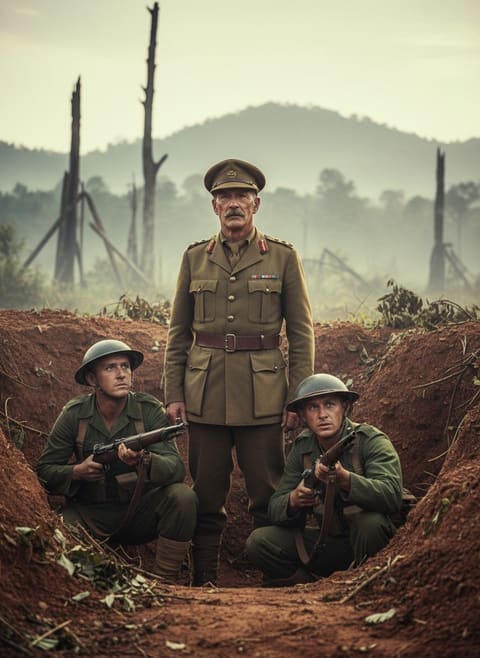
July 1944. The sun had barely begun to pierce the treeline when the 15th Scottish Division prepared to cross the Odon River.
The Forgotten Battlefield of Bocage
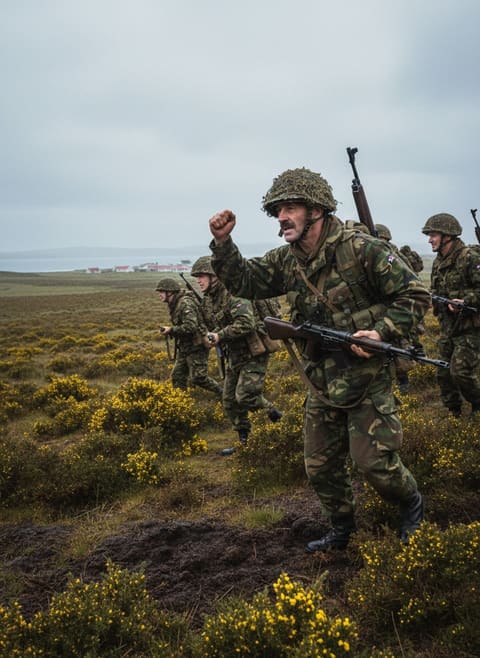
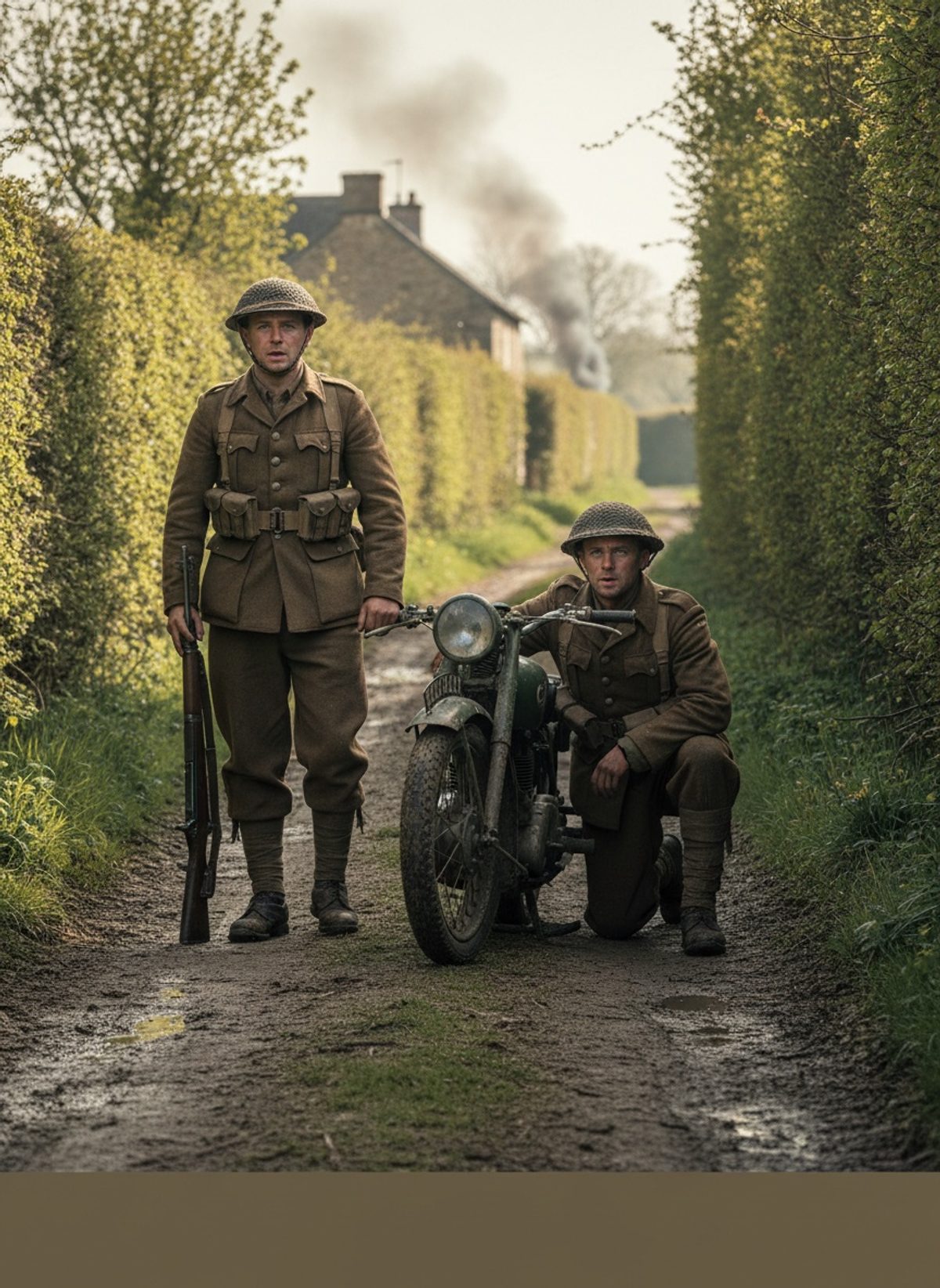
The morning dew still clung to the leaves as the Scottish soldiers moved cautiously through the dense and unforgiving terrain of bocage country. This landscape, with its thick hedgerows and undulating fields, offered a natural fortress to the entrenched German forces. It was a battlefield like no other in the Normandy campaign, one that the generals had underestimated and for which the men were woefully unprepared. The operation was supposed to be swift, lasting only a few days, but none could foresee the bloody endurance test that lay ahead.
Bocage was an unexpected adversary. Comprising earth-filled banks topped with thick hedges, it created a series of natural barriers perfect for ambushes. It stalled movement, foiled line-of-sight, and turned every advance into a crawl. For the 15th Scottish Division, newly christened into the inferno of battle, this was a baptism by fire. Veteran units had already suffered in these claustrophobic environs, but the Scots, determined to make their mark, pressed onward under a relentless barrage of enemy fire, slowly inching their way to the ominous river Odon.
A River Runs Through It
The crossing of the Odon at dawn was a monumental task in itself, fraught with danger at every turn. The river, though narrow, was a significant natural barrier, guarded fiercely by German machine guns and artillery. As the first light broken over the horizon, the Scots launched their committed assault. Artillery fire illuminated the sky, turning the riverbanks into a chaotic battleground of fire and steel. Engineers scrambled to set up makeshift bridges under the cover of darkness, but the shells whistling overhead made every second an eternity.
Read next: When the 11th Hussars Waited in the Desert Heat, 1940
To cross the river was to leap into the unknown. Faced with a well-entrenched enemy, progress was painstakingly slow. The air was thick with the sounds of distant artillery, shouting, and the raw, visceral chaos that marks the crucible of war. With sheer grit and comradeship, the soldiers forded the river, many forgoing traditional tactics in favor of survival instinct and quick thinking. It was a testament to their resolve and courage, knowing that their success was critical for the entire operation.
The Unseen Enemy
As the Scots pushed beyond the Odon, the German defense stiffened with a fury. The men encountered a relentless resistance that sapped both strength and morale. German forces, well-versed in the art of armored warfare, launched counter-attacks with unerring precision, exploiting every weakness. In the dense woodland and narrow roads, tanks became coffins and soldiers were forced into brutal hand-to-hand combat. For the Scots, it became an exhausting week of attrition, testing not only their training but the very limits of human endurance.
Read next: When a Padre Gave Last Rites and Tea at the Clearing Station
Operation Epsom was not simply a battle against an enemy, but a struggle against the land and the conditions it imposed. The seeming miscalculations of their superiors weighed heavily on the troops. Yet amidst the strife, stories of profound bravery emerged, tales of soldiers risking their lives to rescue comrades or operate under a rain of fire to get vital supplies across. Their training had not prepared them for this kind of warfare, yet adaptability became their greatest weapon.
The Legacy of Epsom
As the dust settled on the bloody fields near the Odon, the 15th Scottish Division emerged battered but unyielding. Though intended as a swift operation, Epsom turned into a marathon battle of attrition, leaving scars both physical and mental. Many of the warriors had been pushed to their breaking points before preparations began for Operation Bluecoat. Their sacrifice, however, was not in vain. Their grueling struggle had forced German divisions to divert forces away from other critical sectors, contributing significantly to the eventual Allied breakout from Normandy.
The crossing of the Odon at dawn remains a lesser-told story of valor in the face of overwhelming odds. It offers a deeper understanding of the complexity of war, where victory is often measured not in swift maneuvers but in the resilience of spirit and the capacity to endure the unimaginable. While the textbooks may chronicle the strategic successes, it is in these untold stories, the quiet bravery of the ordinary soldier under extraordinary circumstances, that history finds its deepest resonance.