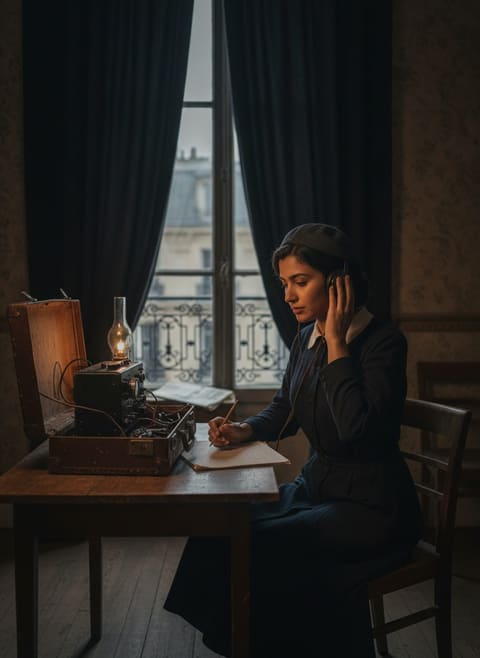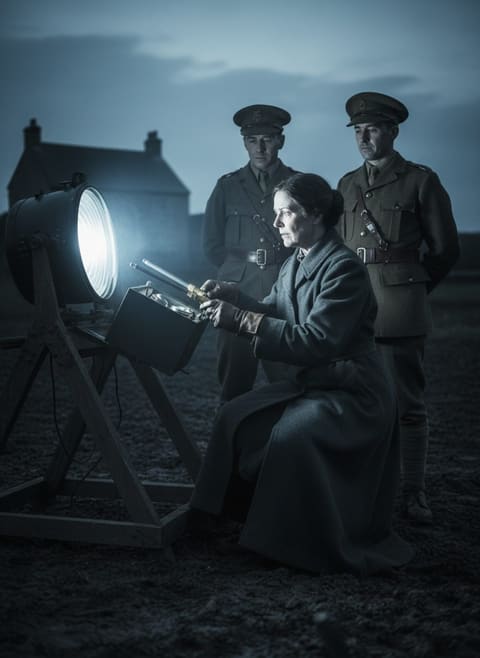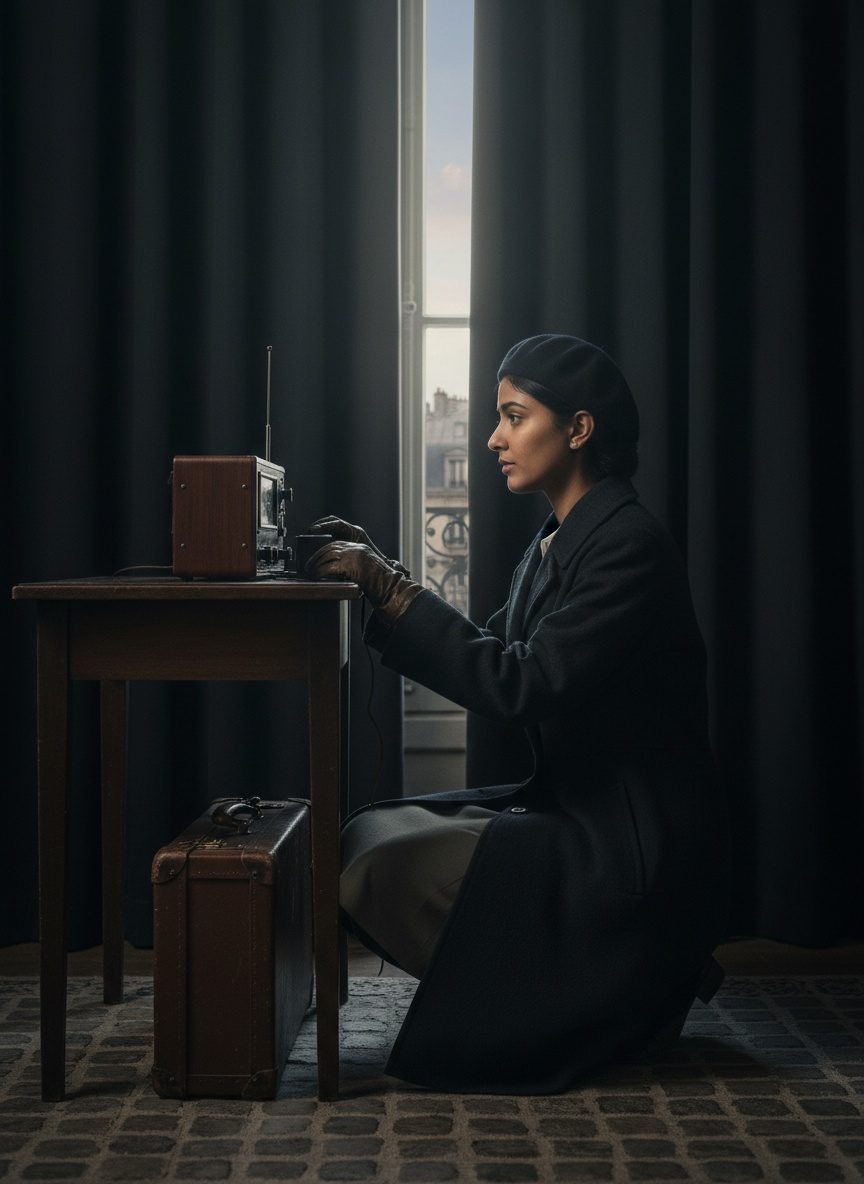
The autumn air was thick with the scent of damp earth, the kind that rises when leaves crunch underfoot in the narrow alleys of Paris. Rain had made the cobblestones slick, gleaming like an endless string of polished pearls under the dim street lamps. The city slept fitfully, unaware of the silent warrior hidden among its folds, engaged in a deadly game of cat and mouse. But for Noor Inayat Khan, every shadow, every echo, was a call to vigilance. The stakes were as high as they could be: life and liberty teetered on a knife's edge.
The Secret Mission Begins
In the dead of night in 1943, a solitary Lysander aircraft glided silently over the occupied French countryside, a ghost against a canvas of stars. Seated inside was Noor Inayat Khan, propelled into danger by a force greater than herself. The world Noor left behind in Britain was one of children's stories and music, marked by a pen that inked tales of whimsy. Yet, here she was, the unlikeliest of operatives—a poet turned warrior—in the heart of enemy territory as the first female radio operator sent by the Special Operations Executive (SOE) to Paris.
Noor's mission was fraught with peril from the start. She was tasked with maintaining the vital communication lines between resistance fighters and British intelligence. She had been trained under harsh conditions, her resilience forged in a crucible of code, stealth, and nerves of steel. Every transmission was a lifeline thrown across the waters that separated Nazi-occupied France from Britain. Each message had the power to alter the course of the war, a fact that weighed heavily on her shoulders as she stepped stealthily through the darkened streets.
Courage Under Fire
As autumn turned to winter, the clandestine operations in Paris ran into treacherous waters. The Gestapo were tightening their grip, casting wide nets in which networks were collapsing like houses of cards. Fellow agents fell, walls drawing ever closer around her. Noor watched as comrades disappeared, some vanishing into the void of internment camps, others into the silence of the grave. Yet, in the face of growing danger, she refused to abandon her post.
Read next: He Was 58, Dying, and He Still Led the Charge
Noor understood too well the importance of her mission. Without her radio signals, many operations across France could be cast adrift. Her courage in the face of such risk made her enemies take notice. To the Gestapo, she became "highly dangerous," a phantom in the night whose presence they could sense, but could not capture easily. She knew the risk, each transmission a whisper into the void, each day survival itself a victory. She disguised the danger with serenity, even when fate finally betrayed her.
Capture and Defiance
The situation in Paris grew untenable. The Gestapo captured Noor in late 1943, but her defiance blazed ever brightly. She faced her captors with unyielding resolve, her silence more potent than any confession. Despite relentless interrogation, Noor refused to yield names, codes, or the locations of fellow operatives. To her, secrecy was as sacred as the vows of a clandestine sisterhood.
Noor's spirit was unbreakable, and her courage confounded her captors. They searched for cracks in her armor, but she presented none. Instead, she attempted escape numerous times, each plan borne of intricate plotting and unparalleled bravery. For Noor, captivity was just another battlefield, a place where silence became her resistance and refusal her sword. Her captors found her tenacity so remarkable that they deemed her among the most dangerous prisoners they had encountered.
The Unyielding Spirit
Noor’s courage became legend among those who understood the stakes of secrecy in war. Her fellow prisoners bore witness to her unbroken spirit, her resilience a fortress against despair. Although physically confined, Noor's spirit roamed free, unbound by walls or chains that held her. She became a symbol of the undying light of resistance and was an echo of hope for those who waged war in the shadows.
Read next: He Stepped Forward in Lucknow and Offered His Life
Her journey reflected a tension between vulnerability and indomitable will, a woman without armor in a most hostile world. Each day of silence was a victory over tyranny, each thwarted interrogation a testament to unwavering courage. Noor was not just an agent among thousands; she embodied a defiance that could not be caged.
Legacy of Courage
Noor Inayat Khan's tale might never have graced our history books, but her legacy whispers through time, a reminder of silent heroism in the direst of hours. She fought against an oppressive machine with little more than courage and conviction. In a world engulfed by darkness, Noor was a solitary light that refused to be extinguished, reminding us that the human spirit, when kindled by belief, can fiercely illuminate even the darkest corners.
Today, Noor's story speaks to the power and cost of resistance, urging us to remember the legends untold by textbooks. Her life was cut short by the cruelty of war, but her bravery endures, a timeless lesson in the depths of courage required to remain unbroken in the face of insurmountable odds. Her refusal to speak in captivity remains a testament to unyielding conviction, a legacy of light against the shadows of history.