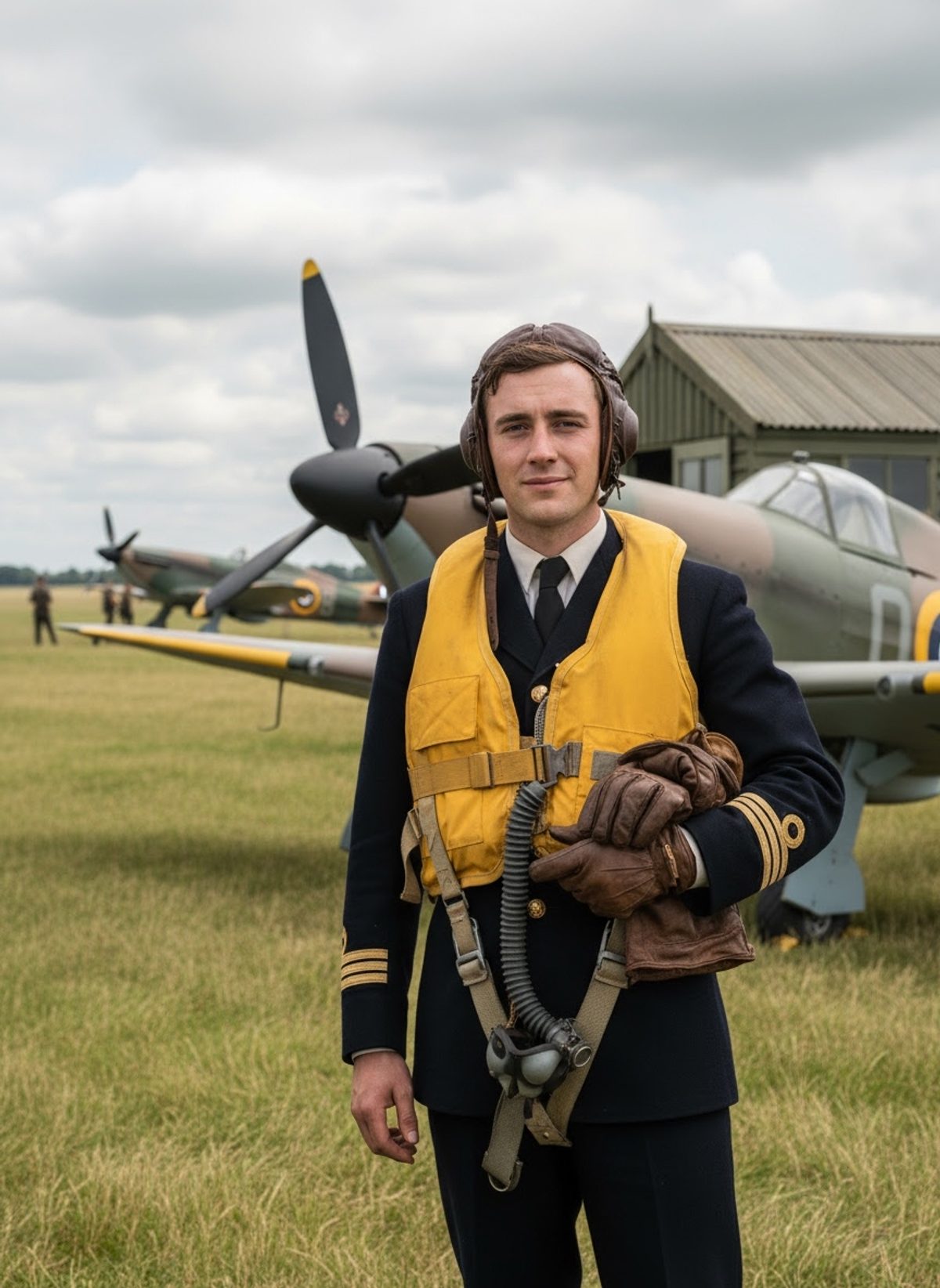
He wore Royal Navy wings. But on that fateful morning, he found himself in the cockpit of a Hurricane, staring down the Luftwaffe over the English Channel.
The Unexpected Orders
During the gathering storm of the Second World War, Britain found itself desperately in need of skilled pilots. The Battle of Britain, a pivotal moment in the summer of 1940, placed immense pressure on the Royal Air Force (RAF) as it sought to repel the relentless German aerial assault.
Yet, among the ranks of RAF Fighter Command were pilots who never imagined they'd be fighting from the skies rather than the decks of a ship. These were men from the Royal Navy's Fleet Air Arm, accustomed to the confines of naval aviation, now called upon to engage in a different kind of battle.
Nonetheless, more than fifty Fleet Air Arm pilots answered that unexpected call. The urgency of the war effort blurred traditional military boundaries, sending these navy aviators to RAF squadrons, where they quickly adapted from flying Swordfish and Fulmars to the faster, more agile Hurricanes. Their presence in Fighter Command is a chapter quietly set aside by history, with these men having left their mark albeit overshadowed by the sheer scale of the campaign.
Read next: When the World's First Armoured Car Went to War, 1914
Training for a Different Arena
The transition from naval to fighter aircraft was no small feat. Fleet Air Arm pilots were trained with very different techniques, primarily for taking off and landing on the pitching decks of aircraft carriers. Hurricanes, in contrast, roared through open skies, built for dogfighting and powered by Rolls-Royce Merlin engines that could push the limits of speed and maneuverability.
Imagine the close cockpit of a Hurricane—a far cry from the maritime environments these pilots were seasoned to. Instead of waves and wind, they now faced the glare of the sun, masking the silver streaks of enemy aircraft.
Many had never flown a Hurricane before, or even engaged in aerial combat — an astonishing fact that stresses the gravity of the call to action they received. Their training periods were brief, barely sufficient for the rigorous demands of aerial warfare, yet necessity dictated action.
On the Front Lines
Flying for Fighter Command, the Fleet Air Arm aviators scrambled alongside seasoned RAF flyers, many of whom were in their early 20s and thrust into combat with minimal notice. Every sortie was a gamble. As the Luftwaffe sent wave after wave across the Channel, the incessant air raids tested the mettle of these naval men on loan to the land-based fight for Britain’s survival.
Read next: When Fiji's Soldiers Bled for the Crown and Got Nothing Back
While they were often under-equipped and outnumbered, their determination carried through. The skies over Britain witnessed intense dogfights, punctuated by the splutter of machine guns and the dark streaks of spiraling aircraft. In this deadly dance, seven of the navy pilots sacrificed their lives, engraved forever in the annals of a battle that brought Britain to the brink but eventually turned the tide of the war.
The Valor Beyond Recognition
Despite their contribution, the recognition of these Fleet Air Arm pilots remains surprisingly muted. The legacy of the RAF is often highlighted through legends like ‘the Few,’ a premier symbol of bravery. Yet, within this narrative lies the undistinguished sacrifice of sailors in borrowed skies, who went unheralded for their valor on both sea and land.
Why does this story matter? In a time when the world teetered on a knife's edge, individuals from diverse backgrounds united under unifying banners in shared cause. These navy men-turned-aviators remind us of versatility, and of unexpected heroes arising when the world demands them — a lesson as poignant now as it was then. History quietly records their brave service, but it's time their tale was elevated and celebrated for the remarkable and selfless courage it embodies.