The sun hung low over the East African highlands, casting long shadows that draped languidly over the acacia-dotted landscape. Every step on the sun-baked earth emitted a dull crunch, a chorus of nature singing beneath a seemingly clear blue sky.
Here, the air was thick with the scent of dust and the faint, lingering freshness of morning rain, a powerful olfactory mix of the bush that guided those who patrolled it. In 1905, the dense Kenyan bush was rife with complexities. Beneath its sprawling canopies, an intricate human drama unfolded — the tireless march of the King's African Rifles confronting the indomitable spirit of the Nandi people.
The Bush: A Web of Challenges
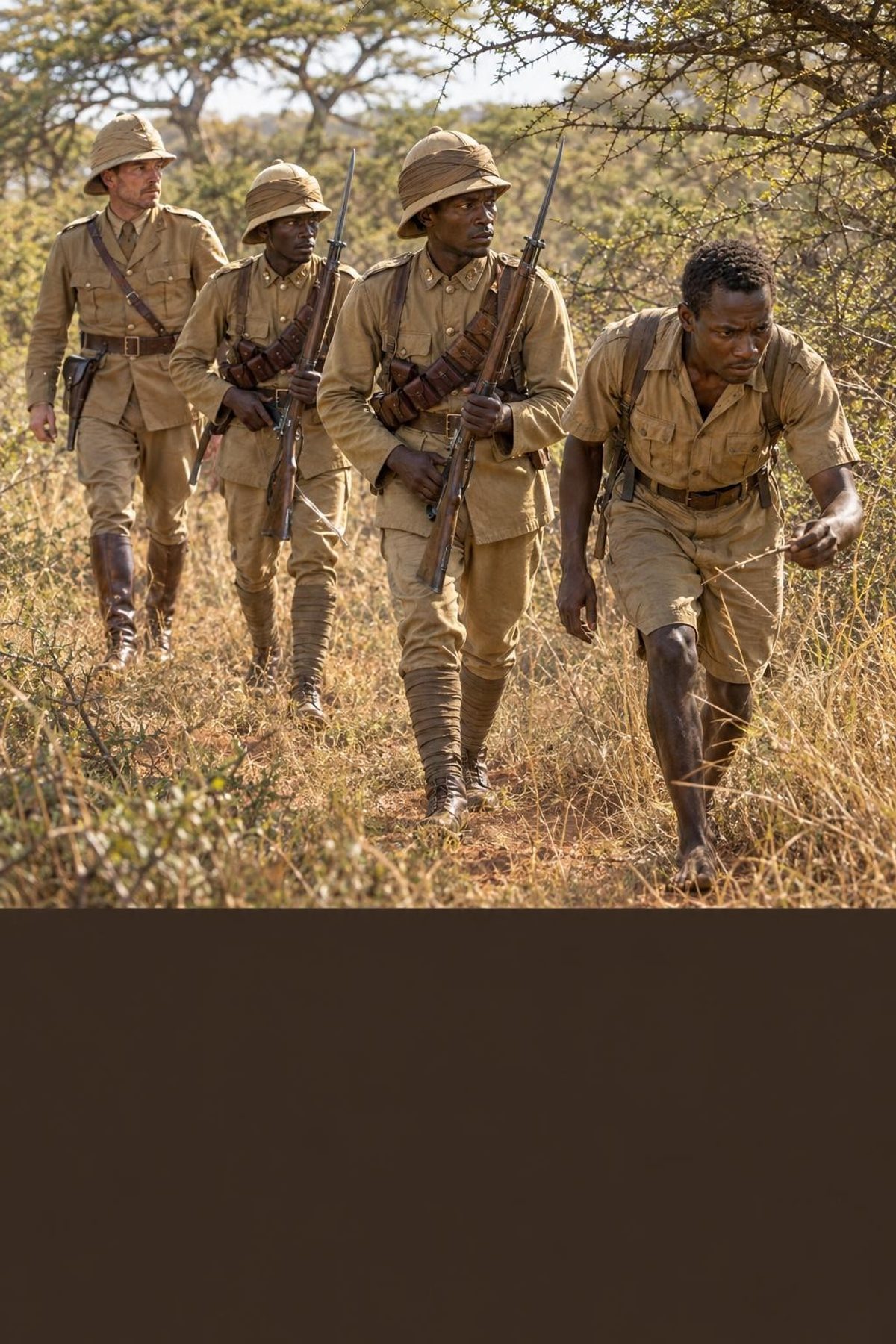
The King's African Rifles, a colonial regiment with local recruits led by British officers, was tasked with patrolling the wildernesses of British East Africa. Their way was not paved with the conveniences of modern warfare; instead, it demanded a cunning blend of resourcefulness and resilience.
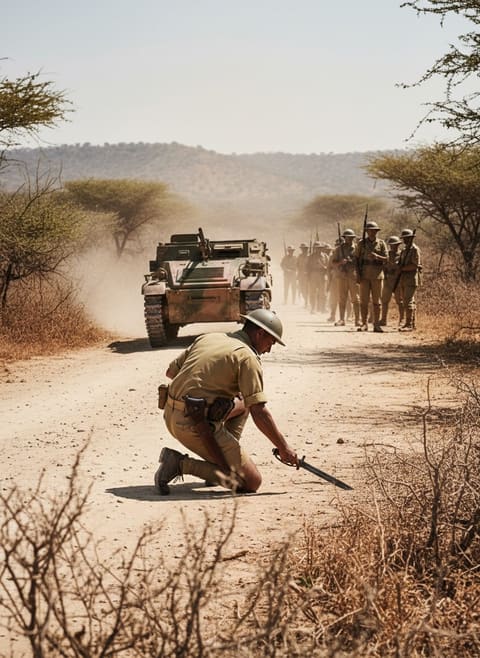
Clad in thin khaki drill uniforms — continually grimed and torn by the bush’s grasp — they moved without the common comforts of vehicles or radios. Their rifles, marked by the sheen of countless trainings and unforgiving heat, were their sole technological advantage.
Read next: When Britain Built a Gun Tank Nobody Could Outrange, 1944
The Nandi Resistance, Britain's longest-running colonial campaign in East Africa, waged its war not on open fields but in the forgotten pockets of wilderness. The British invaders were regarded as unwelcome interlopers in this storied land.
Their patrols, small outposts of empire, were led not merely by commissioned officers but by African trackers. These trackers carried knowledge that maps couldn't encapsulate and offered skills no officer's training could replace. With an almost animalistic intuitive understanding, they read tracks like written scrolls, following pathways invisible to the untrained eye.
Rainforests shrouded in mist and the ceaseless symphony of hidden life made the terrain as much an enemy as the people who knew it intimately. A misplaced step could turn living ground into a bog; a dislodged rock could set a symphony of warning cries ablaze.
The king's men learned that to tame the expanse meant adopting the ways of those who had called it home since before the empire’s maps were drawn. Here, a single misplaced sign might reveal the strategy behind what seemed randomness and reveal a way forward or hide danger until it was too late.
Allies in the Wilderness
The trackers, often overlooked in official records yet integral to the success of these missions, were masters of nature's myriad languages. They deciphered signs of recent passage left by elusive prey and enemy alike. Often moving barefoot, feeling the subtle shifts in the earth's texture, they displayed a familiarity with the land that bordered on mysticism. Their skills turned the bush from a theatre of confusion and mystery into one of vital intelligence.
The humility required to follow the guidance of their African counterparts was not easily cultivated among the British officers, yet they learned swiftly that their survival depended upon it. The Nandi Resistance was fierce, and its leaders shrewd; any false move in the intricate dance of pursuit risked disaster.
It was in these moments, deep in the bush where their lives hung in the balance, that the officers came to understand the true value of their guides. Language barriers were surmounted by gestures and shared experiences; respect was a bridge built from necessity and mutual dependence.
The trackers' understanding extended beyond mere physical acumen. They anticipated seasonal changes that might affect movement and recognized the flora that could incapacitate or heal a man faster than a medic's touch. In their presence, the regiment learned the rhythm of the bush's quiet resistance, a realm of unending patience where time moved to a different cadence — one where a single minute's hesitation could decide life or death.
Read next: When HMS Prince of Wales Sailed Into the South China Sea, 1941
Imposing Empire, Unyielding Resolve
Neither side underestimated the stakes involved as they shadowed the other through this unforgiving terrain. For the British, control over the fertile lands of East Africa seemed within tantalizing reach — a jewel in the imperial crown that promised resources and yet more reach.
For the Nandi, resistance had been the clarion call of their existence under threat. They fought for the preservation of an identity woven into the land’s very essence, every part of its intricate weave representing a history not simply forgotten but held sacred.
As colonial officials strategized in distant offices, it was the lives of men deep in the earth's womb that bore the tangible weight of their decisions. The Nandi resistance exemplified defiance against a backdrop of a vast landscape that could not easily be conquered. Shadows fell as the day wore on, blending night with day in the way the campaign intertwined human ambition with primal resistance, a web woven not of silk but of sinew, land, and blood.
While the official accounts of empire focus on victories and territorial gains, stories of lesser-known battles paint a fuller picture of history. They reveal the pulsating humanity in the march towards these victories, often forgotten when the dust of history finally settles.
Thus, the tale of the King's African Rifles and their struggles against the resilient Nandi people becomes more than a story of conquest. It illuminates the myriad ways in which cultures collide, interact, and are transformed — lessons more profound than empire itself ever acknowledged.