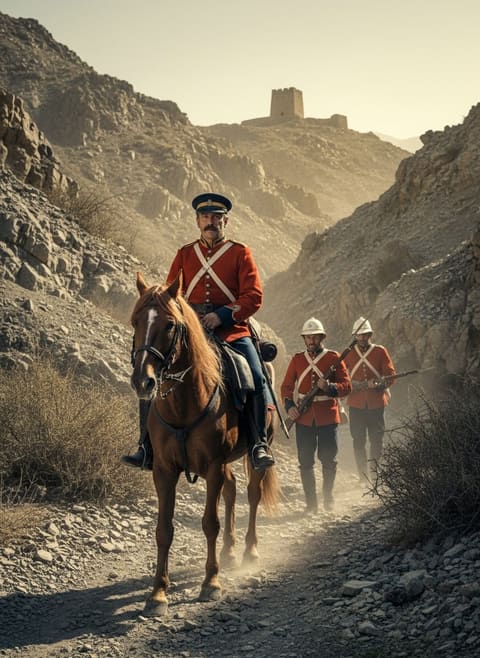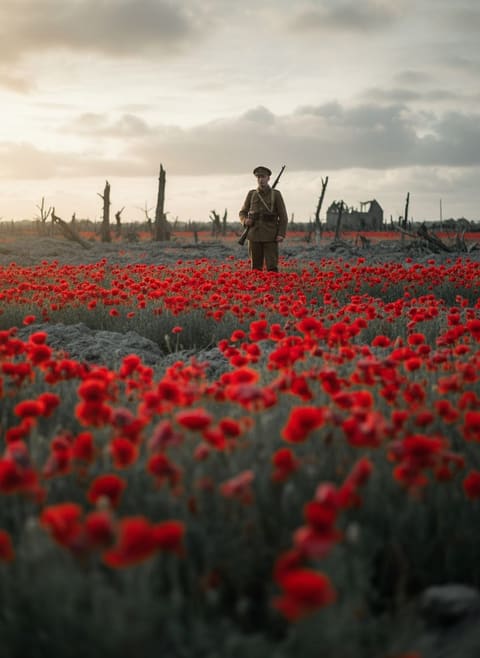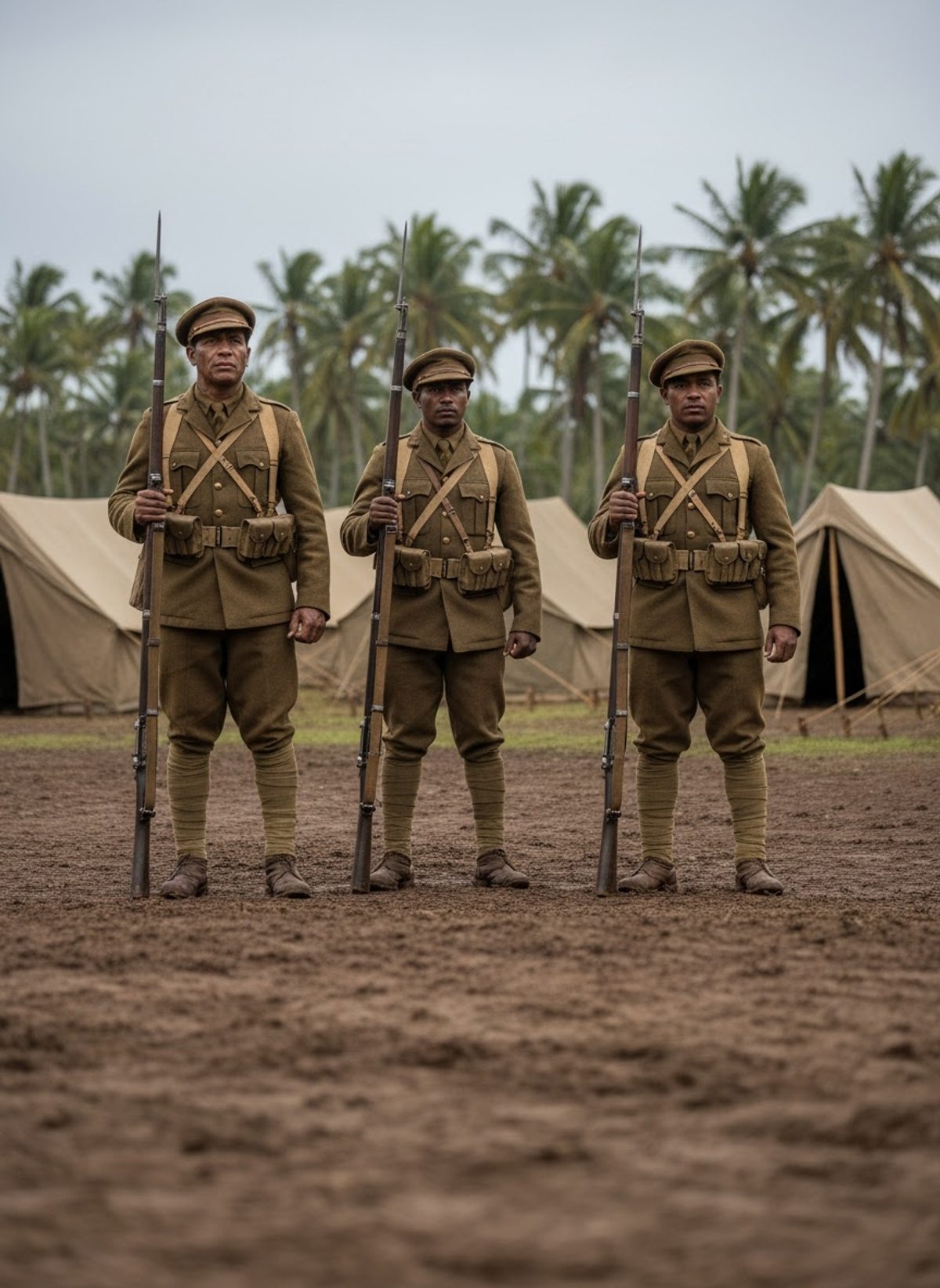
He fought for an empire he had never seen. Thousands of miles from home, a Fijian soldier stood among the ranks of Britain’s forces in World War I, wielding a rifle for the very first time.
The Call from Across the Sea
Far from the chaos engulfing Europe, the islands of Fiji basked in the tranquility of the South Pacific. Yet, that peace was disrupted when the call to arms echoed across the waves.
Fiji, a British colony since 1874, was swept into the whirlwind of World War I. The Crown appealed for men, and as loyal subjects, over 1,400 Fijians answered; a remarkable number for the scattered archipelago. These men hailed from villages where tales of ancient warriors were spoken but where warfare on a global scale was an alien concept.
Volunteering for service, these soldiers left the swaying palms and azure waters of their home, trading them for the trenches of the Western Front. For many, the idea of Europe was distant and abstract, yet loyalty to the British Crown was a tangible spur.
Read next: When the King's African Rifles Tracked Rebels Into the Bush, 1905
The British government hoped these island troops would prove the savagery of colonial warriors but deemed them more capable as laborers than as soldiers due to entrenched colonial biases. Nevertheless, Fijian contributions were pivotal, primarily in the crowded, disease-ridden fields of France.
The Harrowing March of War
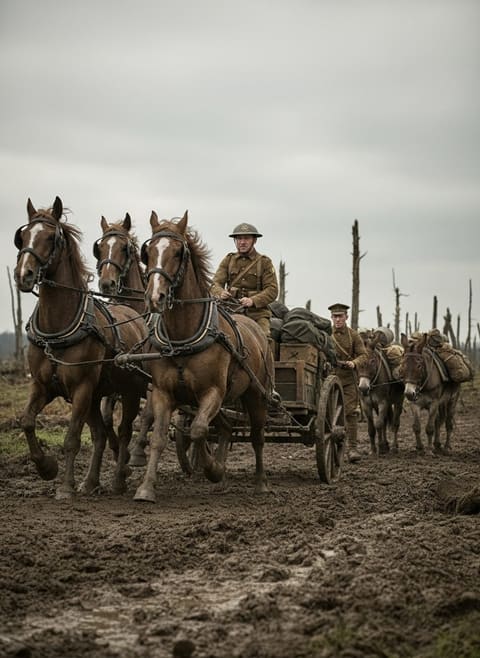
Stepping onto European soil, the Fijian soldiers faced a climate and a conflict unlike anything they had known. From humid tropics to biting European winters, the adaptation was as brutal as the transition from village life to global war. These soldiers were not just homesick but thrust into a life of unimaginable strife — the dark, muddy trenches of the battlefront scarred the landscape and their spirits.
Despite their assigned roles, Fijian soldiers eventually took up arms. Their exploits, often overshadowed by their European counterparts, included acts of bravery and resilience. They diligently advanced supplies and held lines under fire, bridging cultural gaps with camaraderie born of shared hardship. Their sacrifices, however, did little to earn them equal recognition, a silent testament to the colonial hierarchy that governed their fate.
A Return to Forgotten Shores
As the guns fell silent in 1918, the surviving Fijian soldiers began their journey home. These veterans returned to their islands, not as lauded victors, but as men haunted by war’s shadow. There were no parades or public honors for these “island soldiers”; instead, they returned to civilian life as quietly as they had departed.
Read next: When El Alamein Handed Britain a Machine Nobody Could Name
The promises of recognition and reward for their service remained mere whispers on the wind. Unlike their British counterparts, many wounded Fijian soldiers found themselves without pensions or support systems. The empire they had fought for offered little more than a silent nod, leaving them to rebuild lives interrupted and altered by conflicts devised in far-off lands.
The Echoes of Historical Injustice
Fiji’s contribution to the First World War remains an untold chapter in the grand narrative of the British Empire. While their service did not rewrite the outcome of the war, the absence of recognition for these men underscores a broader theme of colonial disregard. The Fijian soldiers returned to a society where their sacrifices were footnotes, a poignant reminder that loyalty to empire often came with unequal recompense.
Today, as we reflect upon the past, the tale of Fiji’s World War I soldiers challenges us to reconsider whose stories we honor. It prompts a deeper understanding of the layered complexities that colonial forces imposed upon their far-flung subjects.
Acknowledging their contributions enriches the fabric of history and serves as a call to recognize the overlooked threads interwoven in our modern world. It asks us to give voice to the legends the textbooks forgot and to honor the bravery and loyalty that crossed oceans in a time of global turmoil.